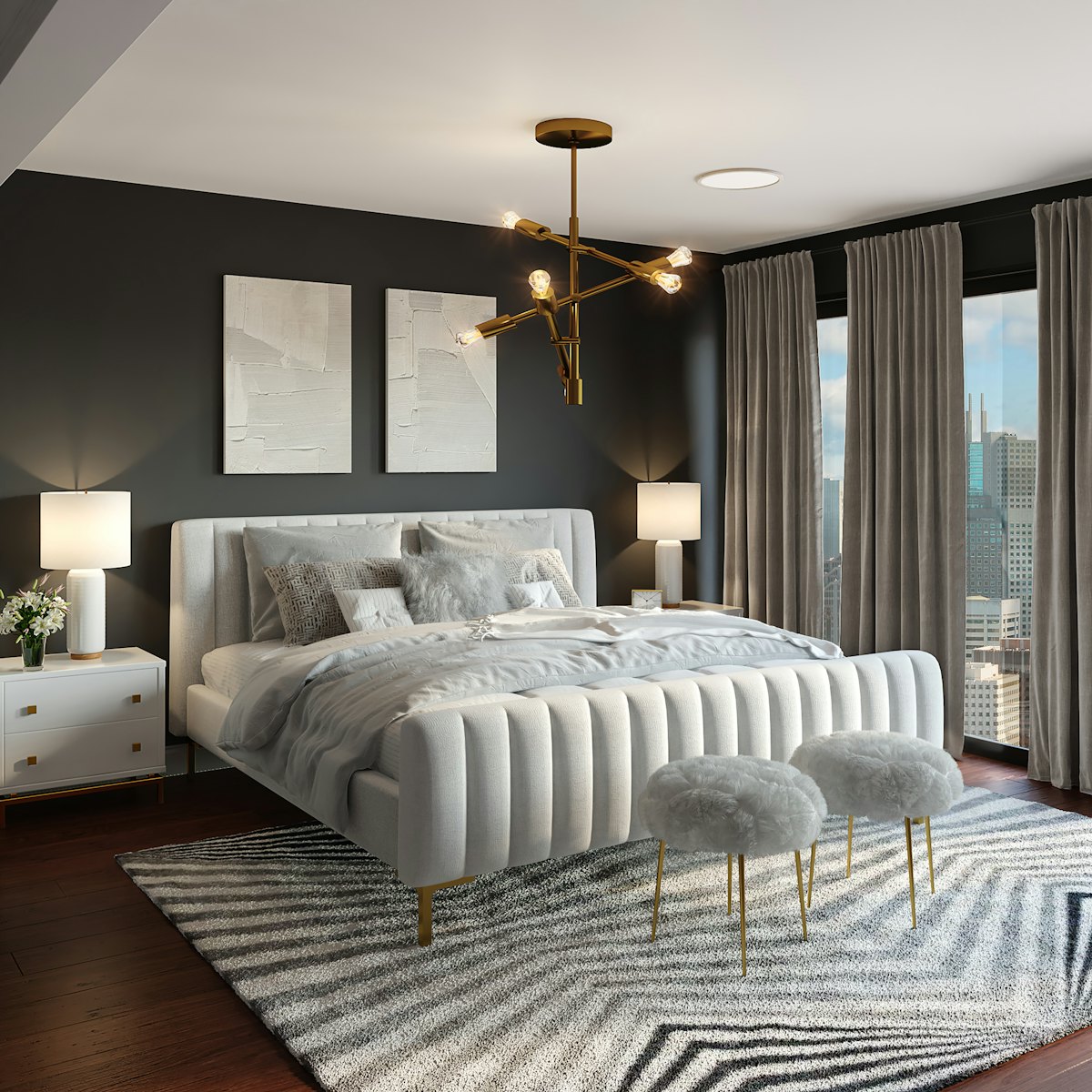
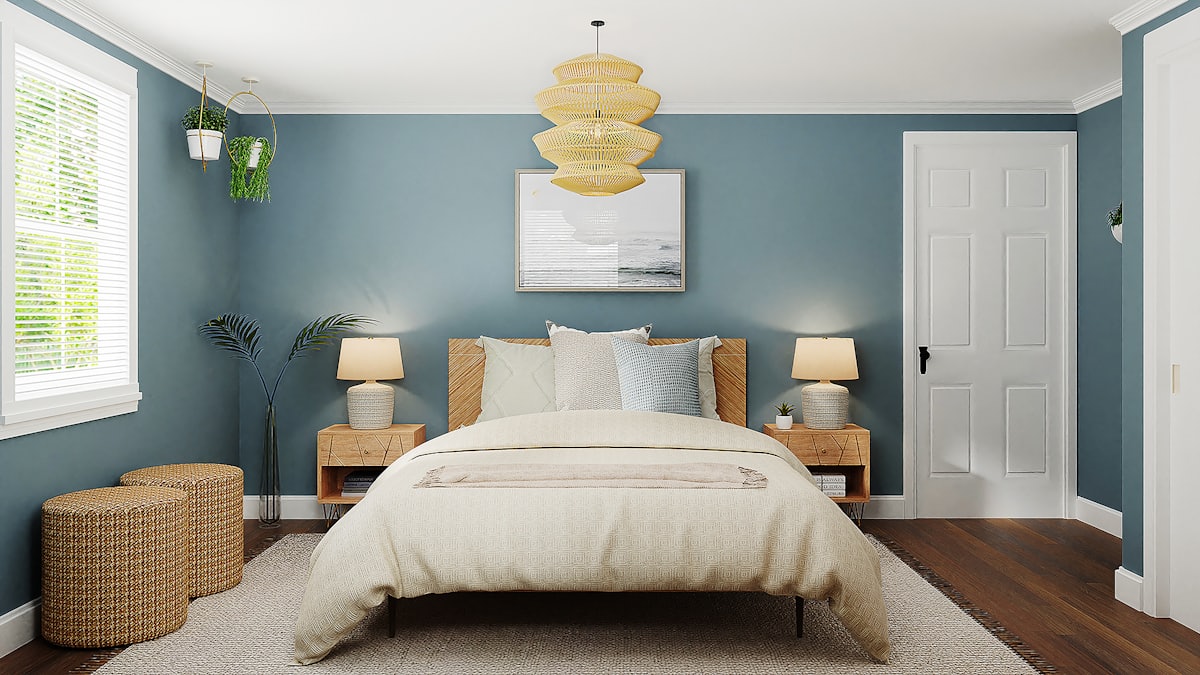
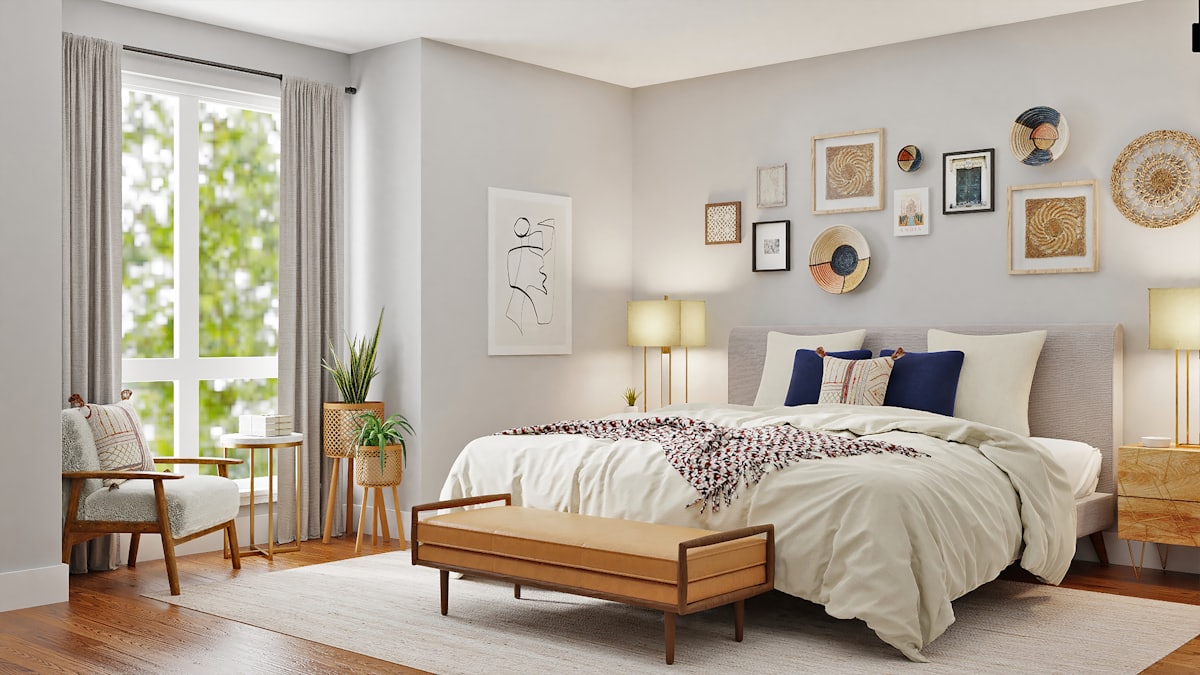
The Same Bedroom at $500, $2,000 and $5,000: What Each Budget Buys
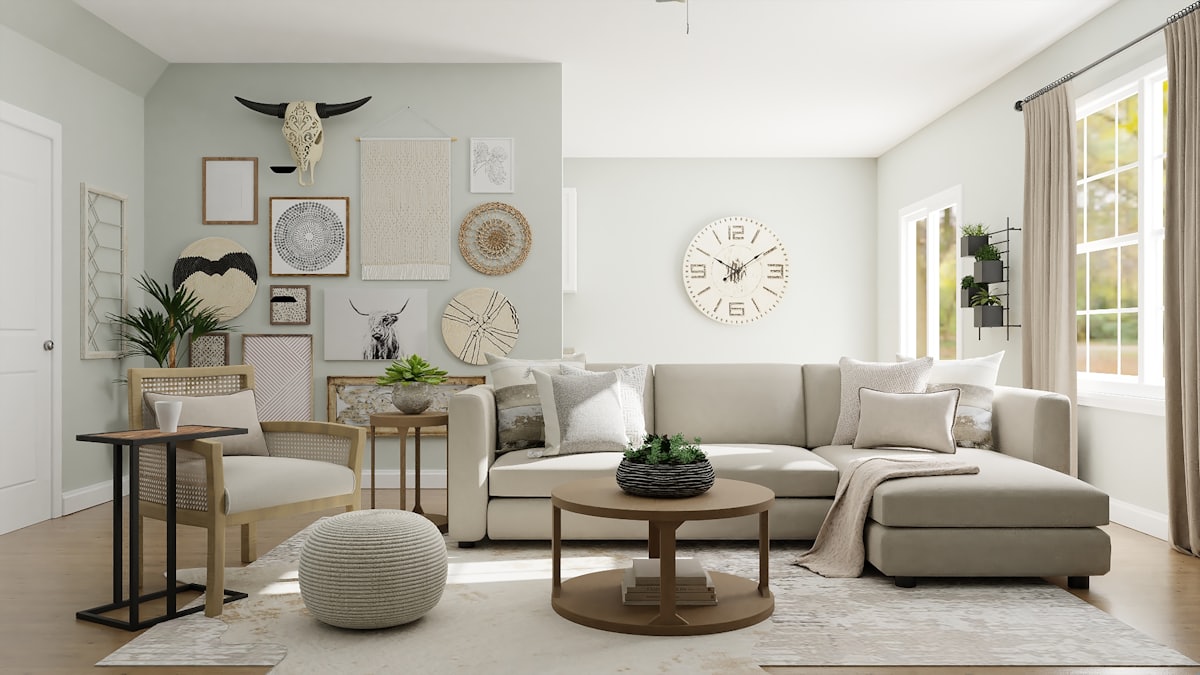
Three versions of the same 12 square metre bedroom. Same window, same door, same awkward radiator under the sill. The only variable is the budget.
Pricing them side by side is more useful than any single budget guide, because the interesting question is not what a bedroom costs. It is where the improvement stops being visible.
The $500 room
Nothing structural moves. You are working entirely on surfaces and light.
- Paint, one wall or all four: $70–140 (two gallons plus supplies)
- Bedding — duvet cover, sheets, two pillowcases: $120–180
- Two bedside lamps: $70–120
- Warm 2700K bulbs throughout, one dimmer: $35–55
- Ready-made curtains and a longer rod: $80–130
- One large mirror or piece of art: $60–100
Total: $435–725.
The existing bed stays. The existing storage stays. What changes is that the room now has a color decision, three light sources instead of one overhead, and curtains hung 15 cm above the frame and 20 cm wider on each side rather than sitting tight to the glass.
Photograph this room next to the original and the difference is substantial. It is genuinely the highest return per dollar in the entire article.
What it does not fix: a sagging mattress, a bed at the wrong scale, or storage that does not hold your things.
The $2,000 room
Everything from the $500 tier, plus the two objects that set the room’s scale.
- Everything above: $500
- Bed frame, upholstered or solid wood: $450–800
- Rug, 200 × 300 cm: $250–450
- Two bedside tables: $180–320
- Better window treatments — lined, floor-length: $180–300
- Storage: a dresser or wardrobe: $250–400
Total: $1,810–2,770.
This is where the visible jump lives. A bed frame with actual presence and a rug large enough to run under the bed and out past the sides changes the room’s proportions in a way that paint cannot. The rug is the piece people underbuy most: a 120 × 170 cm rug floating at the foot of a bed reads as an accident. It needs to extend at least 45–60 cm beyond the bed on three sides.
The $500 room looks refreshed. The $2,000 room looks designed. That is the gap worth paying for.
The $5,000 room
Everything above, upgraded rather than added to.
- Everything at the $2,000 tier: $2,000
- Mattress upgrade: $700–1,500
- Solid-wood storage rather than veneer: +$400–700
- Made-to-measure curtains, ceiling-hung, with blackout lining: $400–900
- Better lighting — wall-mounted reading lights, wired: $250–500
- Art, textiles, a bench or armchair: $300–600
Total: $4,050–6,200.
Here is the honest part: photograph this room next to the $2,000 version and most people cannot reliably say which is which. The differences are real but they are not photographic. They are the mattress you sleep on, the drawer that still slides properly in year twelve, and curtains that actually meet in the middle and actually darken the room.
Made-to-measure curtains are the most defensible line at this tier. Ready-made panels are sized for a generic window and hung at generic fullness; a curtain cut for your window, hung from the ceiling, at 2–2.5× fullness, is the difference most visitors register as “expensive” without knowing why.
Which tier is right
The pattern across the three is consistent and slightly counterintuitive.
Below $500 you are constrained to the surface, but the surface is where most of the perceived change lives. Nobody should skip this tier by jumping straight to furniture.
Around $2,000 you buy the scale — the bed and the rug — and the room resolves. This is the tier that changes what the room is.
Above $2,000 you buy time and comfort. Fifteen years of drawer runners, a mattress that does not need replacing at year six, curtains cut for your window. Genuinely worth it if you sleep badly or the windows are awkward. Not worth it if you are optimizing for how the room looks.
For most people redoing a bedroom they will live in for five or more years, the middle tier is the answer, with the mattress pulled up from the top tier if the current one is past its life. That single substitution — $2,000 room plus a $900 mattress — is a better $2,900 than any even distribution across $5,000.
Decide the direction before the tier
All three of these rooms assume the same aesthetic direction. Change the direction and the numbers move: a mid-century scheme wants a low platform bed and tapered legs, a warm minimalist scheme wants one large upholstered mass and almost no small furniture, a layered traditional scheme wants more objects and therefore more lines in the budget.
Settling that first is what makes the tier meaningful. The fastest way is to put your own room through several full schemes and see which one your window, your floor and your ceiling height actually suit — the styles gallery does exactly that on a photograph, and the themed worlds will show you the more committed end of the range if you are considering going further than a standard style.
Then pick the tier, because you will know what you are buying rather than guessing. What each plan covers is set out on the pricing page.
FAQ
How much does a bedroom makeover cost?
A cosmetic refresh of a bedroom you already live in runs $400–700 and covers paint, bedding, lighting and window treatments. A rebuild that replaces the bed and rug runs $1,800–2,500. A full room with solid-wood storage, a quality mattress and made-to-measure curtains runs $4,500–6,000. The steepest improvement per dollar happens between the first and second tier; above roughly $2,500 you are buying durability and fit rather than visible change.
What is the cheapest way to make over a bedroom?
Paint one wall, change every bulb to 2700K, hang the existing curtains 15 cm higher and 20 cm wider than the frame, and buy one good set of bedding. That is roughly $200 and it changes the room more than a $600 piece of furniture would. Rearranging the layout costs nothing and is frequently the largest single improvement, particularly in rooms where the bed was placed against whichever wall was convenient on moving day rather than the one that suits the room.
Is it worth spending more than $2,000 on a bedroom?
It depends what you are buying. Above $2,000, extra money goes into the mattress, solid-wood construction and custom-fit window treatments — things you feel every night and things that last fifteen years rather than five. It does not go into how the room looks in a photograph, which is largely settled at the $2,000 tier. If you sleep badly or the room has awkward windows, the upper tier earns its cost. If neither applies, the middle tier is the honest answer.
What should I spend the most on in a bedroom?
The mattress, then the bed frame, then the window treatments. The mattress is the only object in the house you spend a third of your life in direct contact with, and the useful band is $600–1,500 where materials and construction genuinely differ. The frame sets the room’s scale and lasts decades. Window treatments are the most underrated line because they control both light and how tall the room reads. Bedside tables, lamps and decorative objects are where saving costs you nothing.
Keep reading