Coastal Interior Design Ideas: Calm, Light and Breezy Rooms
Coastal style is one of those looks everyone recognises and almost everyone gets slightly wrong. Done badly, it turns into a gift-shop display of anchors, rope and “Beach This Way” signs. Done well, it is one of the calmest, most liveable interiors you can build — a room that feels like the moment you step onto a porch with the sea breeze coming through. These coastal interior design ideas focus on that second version: light, breezy and grown-up, not themed.
The good news is that coastal is forgiving. It is built on restraint, natural texture and good light, so you do not need a sea view or a beach house to pull it off. A city flat, a suburban semi or a rented bedroom can all wear it well. Below is how the look actually works, broken into the decisions that matter.
Start with the palette: whites, blues and sandy neutrals
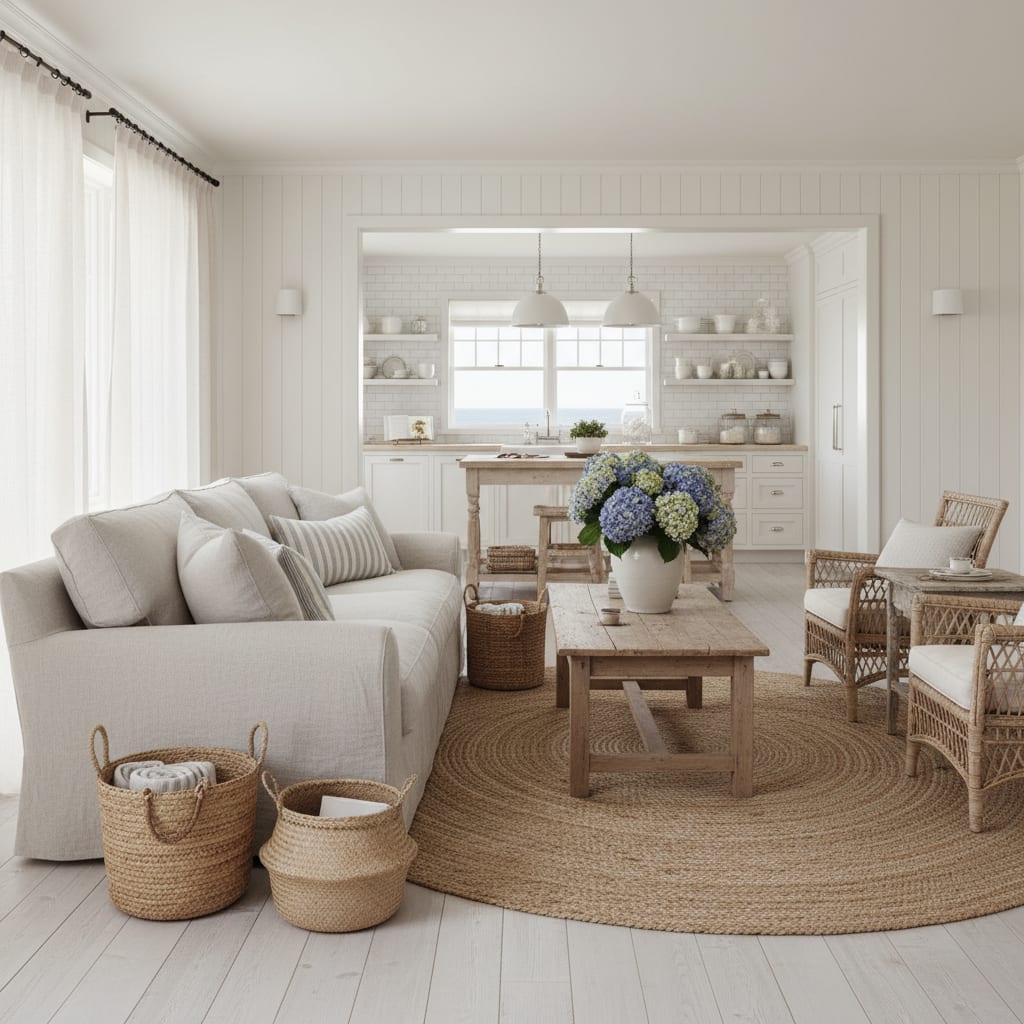
Every coastal room begins with colour, and the formula is simpler than it looks. Build a base of soft whites and warm off-whites — think chalk, oyster and bone rather than stark builder white. Layer in sandy neutrals: oatmeal, putty, driftwood grey and pale taupe. These are your walls, your large upholstery and your floors.
Then add the sea. Blues are the signature, but the trick is to keep them muted and varied rather than primary. Reach for misty sky blue, faded denim, soft teal and a deeper navy used sparingly as an anchor. A little sun-bleached green-grey — the colour of dune grass or sea glass — keeps the palette from feeling cold.
The ratio is what sells it: roughly 70% neutrals and whites, 20% blues, and 10% accent. Crowd the room with too much blue and you tip into “themed.” Keep blue as the accent on top of a calm neutral base and it reads as effortless coastal calm.
Lean on natural materials: rattan, linen and jute
If the palette is the soul of coastal, natural materials are the body. This is a texture-led style, and the textures are deliberately humble and tactile.
- Linen for everything soft: slipcovered sofas, loose curtains that puddle slightly, bedding you actually want to crumple. Its gentle wrinkle is a feature, not a flaw.
- Rattan and cane for structure and warmth: a peacock chair, cane-fronted cabinet doors, a rattan pendant light. They add curve and craft without weight.
- Jute and sisal underfoot: a chunky natural-fibre rug grounds the room and brings in that beach-grass roughness.
- Weathered and whitewashed wood for tables, shelving and frames — reclaimed timber, limed oak or painted finishes that look like they have seen a few summers.
Mixing these matters. A linen sofa, a jute rug, a rattan chair and a slab of pale wood in one room give you the layered, collected feel that makes coastal interiors look relaxed rather than decorated.
Keep layouts light and airy
Coastal rooms breathe. The whole point is the sense of air and light moving through the space, so the layout should never feel crowded or heavy.
Float the furniture slightly off the walls, keep walkways generous, and favour pieces with visible legs so you can see the floor underneath — it makes a room feel larger and lighter. Choose low-profile, open silhouettes over bulky overstuffed ones. At the windows, swap heavy drapes for sheer linen panels or simple roman blinds that let daylight flood in. Mirrors placed opposite windows bounce that light around and double the airiness.
Keep surfaces calm too. A few well-chosen objects — a bowl of shells, a stack of sun-faded books, a single trailing plant — beat a crowded shelf every time. White space is part of the design.
Nautical, without the cliche
You can absolutely nod to the sea — just whisper it instead of shouting. The line between charming and tacky is mostly about quantity and literalness.
Good restraint looks like: one navy-and-white stripe (a cushion, a throw, an upholstered bench), natural rope used as a real handle or curtain tie, brass or weathered-bronze hardware that recalls a ship’s fittings, and art that suggests water — a moody seascape, an abstract wave, a single framed botanical of seagrass. Bring in life with driftwood, a clutch of shells in a glass jar, or coral-like ceramics.
What to skip: anchor motifs on everything, “beach” word-art, fishing nets stapled to the wall, and an armada of sailboat figurines. One or two genuine nautical references in a neutral room feel intentional. A dozen feel like a theme park.
Coastal grandmother vs modern coastal
Coastal splits into two popular directions, and knowing which you want makes every other choice easier.
Coastal grandmother is the cosy, layered, lived-in version — slipcovered sofas, floral and stripe mixes, ruffles, vintage finds, books everywhere and a slightly cluttered, nostalgic warmth. It is Nancy Meyers meets seaside cottage: soft, generous and unpretentious.
Modern coastal strips that back. It keeps the palette and natural materials but pairs them with cleaner lines, more negative space, and a near-minimalist discipline — a Scandinavian-coastal hybrid. Fewer objects, larger pale surfaces, sharper architecture.
Neither is better; they suit different rooms and temperaments. Pick one as your North Star so your accessories and furniture pull in the same direction.
See it on your own room with Architectural AI
The hardest part of any style is imagining it in your actual space. With Architectural AI you skip the guesswork: upload a photo of your real room and preview a full coastal restyle in seconds — same walls, same windows, reimagined in soft blues, linen and rattan.
Try the Coastal style and watch your living room or bedroom turn breezy and bright. Then compare it against a few neighbours — the airy Scandinavian look, or something warmer — to find your exact lane. Start from the demo and drop in a photo, browse the full Coastal style for inspiration, or wander the themed worlds for bolder seaside moods. Not sure where to begin? Just ask Architectural AI for a recommendation based on your room.
Coastal design rewards restraint, light and honest natural texture. Get the palette and materials right, keep it airy, hint at the sea rather than spelling it out, and your room will feel like a long, calm exhale — wherever it actually sits.
Keep reading