Why the Room You Redid Yourself Feels Better — and How to Keep It That Way
There is a reliable and slightly strange fact about home projects: the room you did yourself feels better to you than an identical room somebody else did.
This is not sentimentality and it is not self-deception. Effort invested in something changes how much you value it — the effect has been demonstrated repeatedly, and anyone who has assembled flat-pack furniture and then defended it against criticism knows the sensation from the inside.
It is worth understanding, because it works in both directions.
The upside is real
A room you built yourself carries something a delivered room does not. You know which wall took three coats. You know the shelf is level because you leveled it. That knowledge attaches you to the space, and attachment is most of what people mean when they say a home feels like theirs.
It is also why modest DIY rooms frequently satisfy their owners more than expensive designed ones satisfy theirs. The money spent is not the variable. The involvement is.
None of this is a reason to hire less. It is a reason to be deliberate about which parts you keep for yourself.
The cost is also real
The same mechanism that makes you value your work makes you defend it.
A decision you paid someone else to execute is easy to reverse — you dislike it, you change it. A decision you spent two weekends executing is a decision you have a stake in. The wall color that is not quite right gets lived with. The tiling with the drifting grout line becomes something you stop seeing. Rooms carry these compromises for years, not because the owner cannot fix them but because fixing them means conceding the weekend was wasted.
This is the actual risk in DIY, and it is not the risk people plan for. Everyone worries about doing the job badly. Almost nobody plans for being unable to see it.
Split the project in two
The practical response is to sort every task by how expensive the mistake is, before starting anything.
Reversible, $50–200 to undo:
- Paint
- Curtains and rods
- Textiles, cushions, bedding
- Furniture arrangement
- Lighting fixtures on existing points
- Shelving and hanging art
Do all of it yourself. If it goes wrong, a Saturday and a $60 gallon of paint puts it back. The attachment you gain is free.
Irreversible, $800–5,000 to undo:
- Tiling
- Flooring
- Cabinetry and built-ins
- Anything permanently colored: dyed grout, painted brick, lacquered units
- Structural changes
Here the effort effect stops being a bonus and becomes a liability, because you are committing two weekends and $1,200 to something you will then be motivated not to re-examine.
Never, regardless of confidence:
- Electrical beyond a like-for-like fixture swap on an isolated circuit
- Gas, in any form
- Structural work, including opening or removing walls
- Waterproofing — shower trays, wet room tanking, roof work
These share a shape: the failure is hidden, it surfaces late, it can invalidate insurance, and it appears in a survey when you sell.
What the savings actually are
Labor is typically 40–60% of a renovation quote, so the numbers are worth having.
- Painting a standard room: saves $300–700
- Hanging curtains, shelves, art across a project: saves $150–400
- Tiling a bathroom: saves $800–2,000
- Laying laminate or engineered flooring: saves $2–5 per square foot
- Fitting flat-pack kitchen units: saves $2,000–5,000
- Assembling furniture: saves $80–200 per large piece
Set against tools you may not own and the reliable fact that a first attempt takes about twice as long as the tutorial implies.
De-risk the irreversible half
The way to keep the benefit without the trap is straightforward: make the irreversible decisions before you become invested in them.
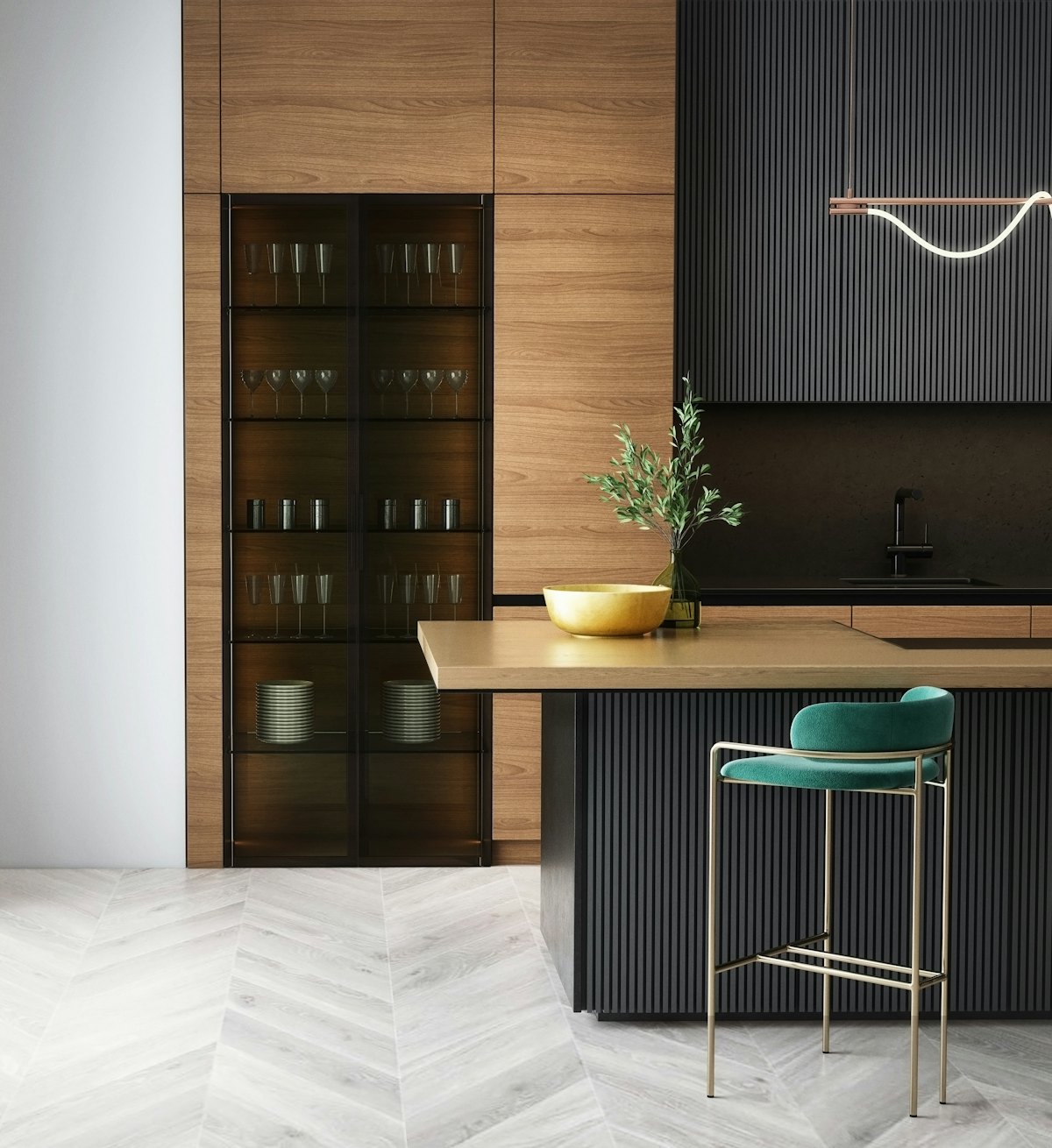
Photograph the room and see the finished result first — the tile, the dark cabinets, the wood floor, the whole scheme — applied to your actual space rather than to a showroom. It takes minutes, it costs nothing to change your mind, and critically it happens before you have any labor sunk into the outcome. You are still able to look at the idea and say no.
That window closes fast. Two weekends into a tiling job, the honest assessment stops being available to you.
The styles gallery will apply complete directions to your own photo, which is the fastest way to check whether the scheme in your head survives contact with your floor and your light. If the plan is more ambitious than a standard style — a committed themed room, a bold color story — the worlds will show you the full version of it on your room, and finding out for free that an idea goes too far is one of the cheapest possible outcomes.
Finished rooms across both ends of the range are in the gallery.
The version worth aiming for
Do the reversible work yourself, all of it. It is where the attachment comes from and the downside is a weekend.
Preview the irreversible work before you commit, while you can still change your mind for free.
Hire the hidden work without negotiating with yourself about it.
You end up with a room that is genuinely yours, built mostly by you, without the one compromise nobody plans for — the mistake that survives because admitting it would mean admitting the effort.
FAQ
Is a DIY room makeover worth it?
For cosmetic work, almost always. Painting a room yourself saves $300–700, hanging your own curtains and shelves saves a few hundred more, and the finished room genuinely means more to you than a hired equivalent would. The calculation changes for anything requiring a trade certificate or hidden behind a wall, where the savings are larger but so is the downside. The useful test is not whether you can do it, but whether a poor result is cheap to undo.
What home projects should you not DIY?
Anything electrical beyond changing a fixture on a circuit you have isolated, anything involving gas, anything structural including removing or opening walls, and anything that waterproofs — shower trays, wet room tanking, roof flashing. These share a profile: the failure is invisible until it is expensive, it can void insurance, and it will be flagged at survey when you sell. Tiling a floor badly costs you the tiles. Waterproofing a shower badly costs you the ceiling below it.
How much can you save doing a room makeover yourself?
Labor is typically 40–60% of a renovation quote, so the savings are substantial. Painting a standard room saves $300–700. Tiling a bathroom saves $800–2,000. Fitting flat-pack kitchen units saves $2,000–5,000. Assembling furniture, hanging curtains and installing shelving save $150–400 across a project. Against that, budget for tools you do not own and for the fact that a first attempt at anything takes roughly twice as long as the tutorial suggests.
Why do I like my DIY furniture more than something I bought finished?
Because you invested effort in it, and effort changes how people value an object — an effect studied enough to have a name in behavioral research. The assembled bookshelf is not objectively better than the delivered one, but you value it more, and that is a real feeling rather than an illusion. It has a useful side and a costly one: the attachment makes a modest room feel like yours, and it also makes it much harder to notice when something you built is genuinely not working.
Keep reading