Furniture Arrangement Rules: Practical Tips for a Balanced Room
A beautiful sofa and a stunning rug can still add up to a room that feels awkward. The difference between a space that works and one that fights you usually comes down to a handful of furniture arrangement rules. They are not arbitrary design dogma. They are the measurements and proportions that let people move, sit, talk, and relax without thinking about it.
The good news is that these rules are simple, repeatable, and easy to test before you move a single heavy piece. In this guide we walk through the practical furniture arrangement tips that designers lean on every day, and show how you can preview them instantly with Architectural AI.
Start With Clearances and Walkways
Before you place anything, plan the empty space. Pathways are the skeleton of a good layout, and crowding them is the most common mistake people make.
A few reliable clearances to memorize:
- Major walkways (the routes people use to cross a room): keep at least 30 to 36 inches (76 to 91 cm) clear.
- Minor paths (squeezing past a chair or around a table end): 24 inches (61 cm) is the minimum.
- Between a sofa and a wall or media unit: leave breathing room so the piece doesn’t feel jammed against the surface.
Walk the route in your head. If you have to turn sideways to reach the window or the back door, the layout is too tight. Generous walkways make even a small room feel calm and intentional.
Sofa-to-Coffee-Table Distance
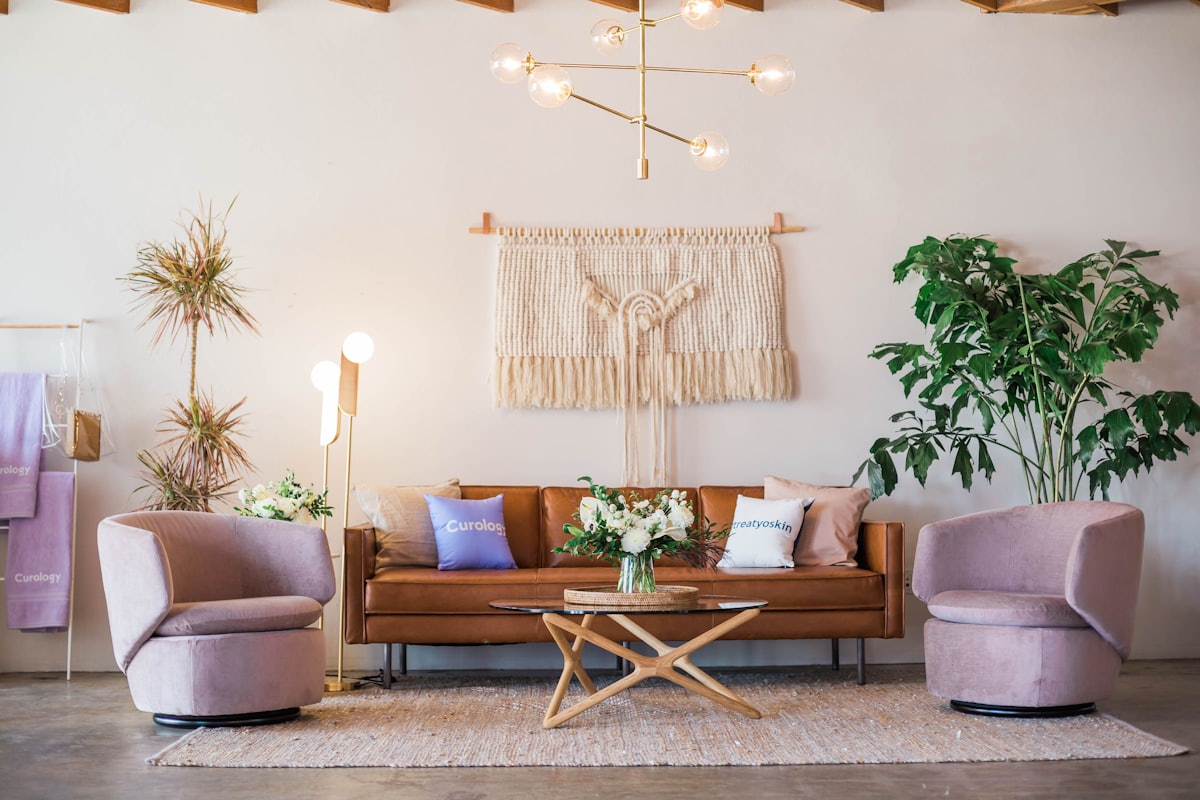
This is the single rule that fixes the most living rooms. The sweet spot between your sofa and coffee table is 14 to 18 inches (36 to 45 cm).
Closer than 14 inches and you bang your knees getting up. Further than 18 inches and you have to lean forward awkwardly to set down a cup. Aim for the middle of that range and the seating area instantly feels “right.”
Two more proportional tips for the coffee table itself:
- The table should be roughly two-thirds the length of the sofa.
- Its height should sit at, or slightly below, the seat cushion height.
These ratios keep the table from looming over the sofa or disappearing in front of it.
Get the Rug Size Right
Rugs are where good layouts go to die. Too small a rug makes furniture look like it’s floating on a raft. The rule of thumb: the rug should be large enough to anchor the seating group.
There are three accepted approaches:
- All legs on: every piece of furniture sits fully on the rug. This needs a large rug but reads as luxurious and cohesive.
- Front legs on: the front legs of each sofa and chair rest on the rug while the back legs sit on the floor. This is the most flexible and forgiving option.
- Floating: only a central coffee table sits on the rug. Use this sparingly and only for defined nooks.
Whichever you choose, leave 8 to 24 inches of bare floor between the rug edge and the walls so the rug frames the room rather than wallpapering the floor. Browse our style library to see how rug scale changes the whole mood of a space.
Build Conversation Groupings
Furniture exists so people can talk to each other. A conversation grouping arranges seating so that no one is more than about 8 feet (2.4 m) apart. Beyond that distance, people raise their voices and the intimacy disappears.
Practical grouping tips:
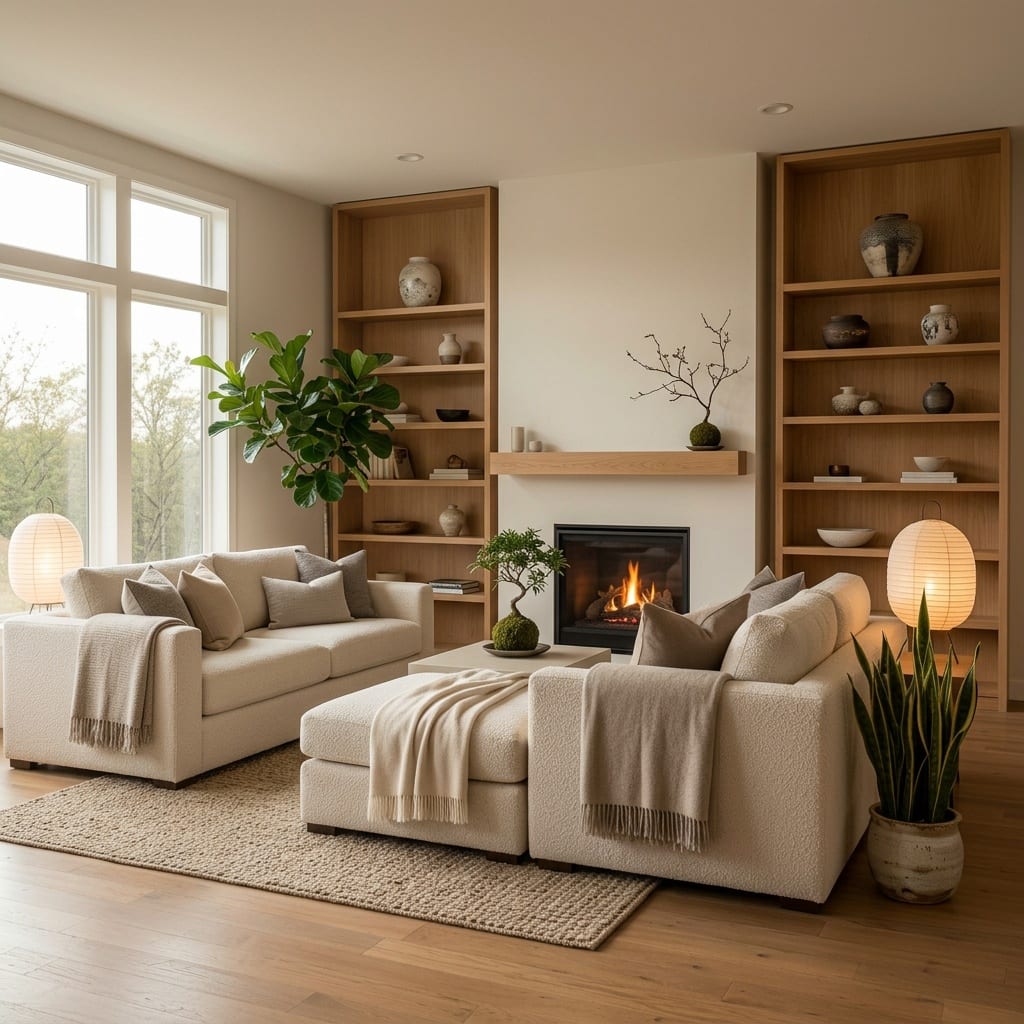
- Angle chairs slightly toward the sofa instead of lining everything against the walls. “Wall-hugging” is the layout default that makes living rooms feel like waiting rooms.
- Create a clear focal point: a fireplace, a window view, or a media wall. Orient the grouping toward it.
- In large rooms, build two smaller groupings rather than one enormous circle nobody can talk across.
If you are designing a whole environment rather than a single room, our room worlds show how groupings adapt across different spaces.
Balance Visual Weight
Every object carries “visual weight” — a sense of heaviness based on size, color, and density. A dark, chunky armoire feels heavier than a slim glass console even if they occupy the same footprint.
To balance a room, distribute that weight so no single corner pulls the eye and tips the space off-axis. If you have a large sectional on one side, counter it with something substantial opposite: a bookshelf, a pair of tall plants, or a piece of bold art. A room with all its weight on one wall feels like it’s slowly sliding into the floor.
Color and contrast matter here too. A small but high-contrast object can balance a larger, muted one. Train your eye by squinting at the room — the blurriest, darkest shapes are your heaviest elements.
Symmetry vs Asymmetry
Symmetry — matching lamps, paired chairs, a centered sofa — feels formal, calm, and restful. It’s the easiest way to make a space look pulled together, which is why hotels and traditional interiors lean on it.
Asymmetry feels relaxed, dynamic, and modern. Instead of mirror-image pieces, you balance different objects of similar visual weight: a floor lamp on one side, a stack of books and a small sculpture on the other.
Neither is more “correct.” Use symmetry when you want serenity (bedrooms, formal living rooms) and asymmetry when you want energy and personality (studios, creative spaces). The trap to avoid is accidental asymmetry — imbalance that reads as a mistake rather than a choice.
Preview It Before You Lift a Thing
Here is the secret professionals rely on: they never guess. They test arrangements before committing.
That’s exactly what the Redesign Layout preview in Architectural AI does for you. Snap a photo of your room, and the app proposes furniture arrangements that respect these clearances, groupings, and balance principles — so you can see a finished layout instead of imagining one. You can swap rug sizes, shift the sofa-to-table distance, and compare symmetric versus asymmetric setups in seconds.
Not sure which rule applies to your specific room? You can ask our design assistant for tailored advice, and explore more guides on the Architectural AI blog.
Furniture arrangement rules aren’t about restriction — they’re shortcuts to a room that simply works. Memorize a few clearances, respect the proportions, and let the space breathe.
Ready to see your room reimagined? Try the free Architectural AI demo and preview a balanced layout in under a minute.
Keep reading