Greek Mythology Room Ideas: Marble, Gold & Olympus
Greek mythology room ideas have been three thousand years in development, and it shows: no other theme hands you marble, gold, columns and a cast of gods as a starting brief. Whether you want a bedroom fit for Olympus or just a Greek-revival whisper of laurel and stone in a modern flat, this guide covers the architecture, the palette and the details that make the look feel grand rather than gimmicky. Best of all, you can preview the entire transformation on a photo of your real room with Architectural AI before you commit to a single plinth.
The Olympus aesthetic: grandeur with restraint
The mistake most themed rooms make is clutter; the Greeks made the opposite mistake impossible. Classical interiors are built on symmetry, proportion and empty space — a few perfect objects in a calm, light-filled room. That is what you are recreating: not a museum storeroom of busts, but the sense of standing somewhere the gods might drop by.
Hold to three anchors: white as the ground, gold as the reward, stone as the truth. Whites and marble textures dominate, gold appears sparingly where the eye should rest, and real materials — stone, plaster, linen, timber — do the talking. The ready-made Classical Greek world in the app renders this balance on real rooms, and seeing your own space Olympified is the fastest way to understand how far you want to take it.
Columns and architecture: the bones of the look
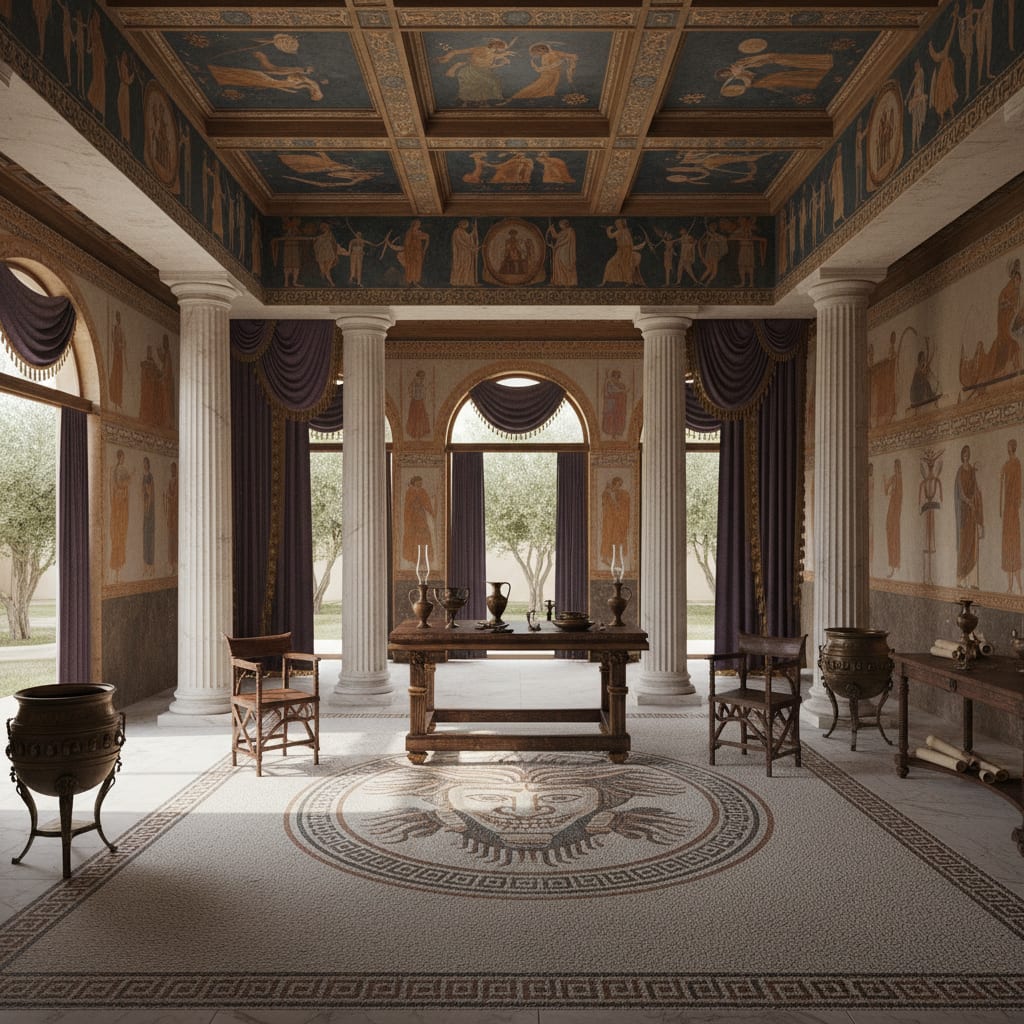
Nothing signals classical Greece like a column — and you do not need a renovation to get one. Freestanding half-columns and pedestals work as plant stands, lamp tables and plinths for a bust. Fluted pilaster mouldings (or convincing peel-and-stick versions) can frame a doorway, a bed wall or a mirror. Even echoing the fluted silhouette in a lamp base or vase carries the message.
Arched niches, dentil cornices and a strong horizontal line at picture-rail height complete the architectural grammar. If you rent, keep everything freestanding and leaning — a pair of pedestals flanking a doorway transforms it without a single screw.
Decor tips:
- Palette: chalk white walls, stone-grey details, gold hardware
- Materials: plaster, fluted wood or composite mouldings, limestone-look surfaces
- Lighting: uplights behind columns or plinths for instant temple drama at night
- Hero piece: a pair of pedestal columns flanking a doorway, window or bed
White, marble and gold: the palette of the gods
The classical palette is deceptively simple: layered whites (chalk, ivory, warm plaster), marble veining for movement, and gold in deliberate, small doses. The secret is variation within white — matte walls, honed stone, soft linen — so the room reads rich rather than sterile. Marble can arrive honestly (a real offcut as a side-table top) or convincingly (marble-effect contact film on a console, marble-print bedding or a rug).
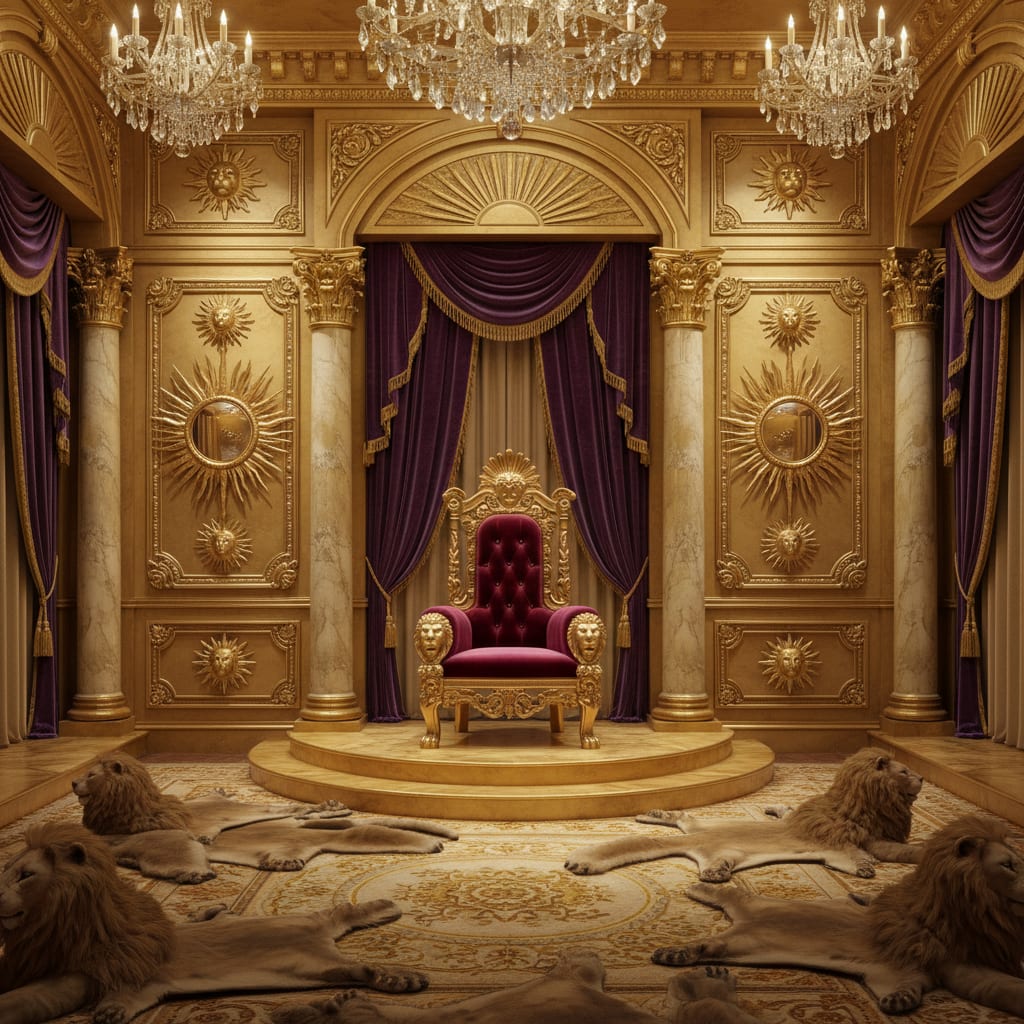
Gold belongs on frames, candlesticks, hardware, a sunburst mirror — points, not planes. Add one supporting colour at most: Aegean blue or olive green, in a single throw or artwork. If you want to calibrate the base before the theming, the Luxury and Minimalist directions in the styles library are the two closest launch pads.
Decor tips:
- Palette: three whites, one gold, one optional accent (Aegean blue or olive)
- Materials: marble and marble-effect, plaster, brushed brass, linen
- Lighting: warm-white bulbs — cool light turns marble morgue-like
- Hero piece: a sunburst or arched gold mirror above the main furniture piece
Statues, laurels and myth: the storytelling layer
This is where mythology enters the room. A plaster bust or torso — Apollo, Aphrodite, a horse’s head — instantly classicises whatever it stands on; modern plaster reproductions cost little and photograph like the real thing. Layer in laurel motifs: a gilded laurel wreath on the wall, laurel-embroidered cushions, a Greek key border on a rug or bedding. Frame prints of classical scenes, amphora silhouettes or archaeological sketches in thin gold frames.
An olive tree (real or faux) in a terracotta or stone pot is the finishing touch — Athena’s gift to Athens, and coincidentally the most forgiving houseplant silhouette in the classical repertoire. Keep the mythology to three or four gestures; the gods favour restraint.
Decor tips:
- Palette: white plaster against white walls — contrast comes from shadow
- Materials: plaster, terracotta, aged gold, olive branches
- Lighting: a directional lamp raking across a bust doubles its sculptural depth
- Hero piece: one bust on a pedestal, positioned where it catches side-light
The island route: Santorini instead of the temple
If the marble-and-gold register feels formal, Greece offers a second, sunnier dialect. Santorini style trades columns for soft whitewashed curves, gold for weathered timber, and temple solemnity for sea light: chalky rounded walls, Aegean-blue doors and textiles, woven jute and sun-bleached wood.
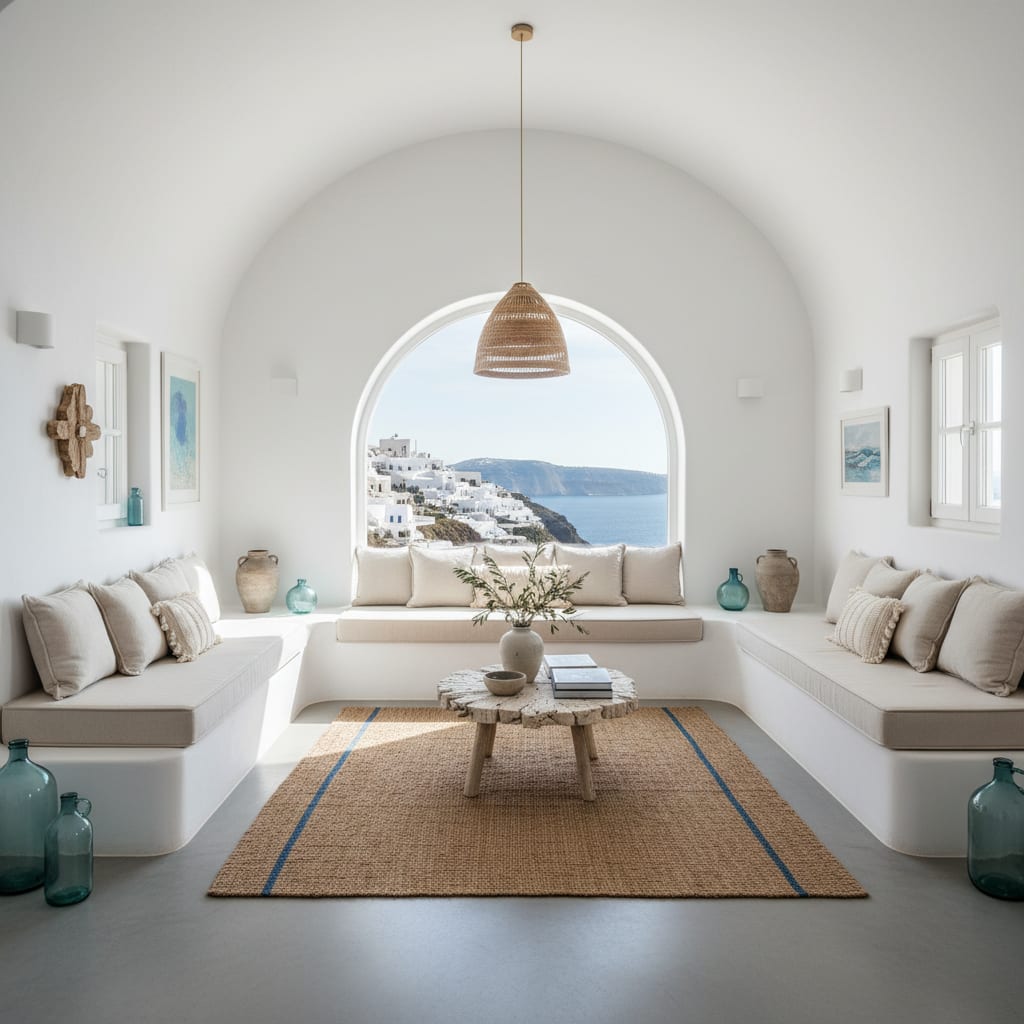
It suits small and awkward rooms especially well — the curves and whitewash flatter imperfect walls that formal symmetry would expose. Render both directions on your own photo and the choice usually makes itself in seconds.
The arena route: gladiator drama
At the other end of the classical spectrum sits the arena: torch-warm stone, iron, leather and imperial drama. It borrows Rome’s colosseum rather than Athens’ temples, but shares the same architectural DNA — and it shows how far the classical world can stretch when you want power instead of serenity.

Temple, island or arena — all three live in the Themed Worlds catalogue, and rendering each on the same photo of your room is a genuinely useful way to find out which ancient Greece you actually want to live in.
How to get the look on your own room
- Take one clear daylight photo of your room from a corner — classical looks depend on proportion, so get the full wall height in frame.
- Open the Classical Greek world — or type a custom prompt like “Greek revival bedroom, marble, fluted columns, gold laurel accents, olive tree”.
- Upload and generate — your real walls and windows stay; Olympus arrives around them.
- Iterate between dialects: render the temple version, the Santorini version and the arena version and compare side by side.
- Use the render as a build plan — note where the AI placed the bust, the mirror and the columns, and shop those positions.
- Save your favourites to the gallery as your reference set.
The community gallery is full of before-and-afters if you want proof of what one photo can become.
Frequently Asked Questions
What is a Greek mythology room?
An interior built on classical Greek architecture and myth: white and marble surfaces, column details, gold accents, laurel and key-pattern motifs, and statue or bust accents. It ranges from full Olympus drama to a light Greek-revival touch on a normal room.
What colours are used in Greek-inspired interiors?
A base of whites — chalk, ivory and marble-veined — with warm gold accents and touches of Aegean blue or olive green. Keep the palette to three tones and let texture (stone, plaster, linen) provide the depth.
How can I add columns without renovating?
Use freestanding half-columns or pedestals as plant stands and plinths, frame a doorway or bed wall with fluted pilaster mouldings or peel-and-stick versions, and echo the shape in lamp bases and candlesticks. The silhouette matters more than structural stone.
Can AI show my room in a Greek mythology style?
Yes — upload one photo of your room to Architectural AI and open the Classical Greek Themed World, and the AI redesigns your actual space with marble, columns and gold in seconds while keeping your real layout.
What is the difference between Greek revival and Santorini style?
Greek revival is the formal, classical look — columns, symmetry, marble and gold, rooted in temples and Olympus. Santorini style is the relaxed island cousin: soft whitewashed curves, sea-blue accents and sun-bleached wood. Both are Greek; one is a palace, the other a cliffside house.
Three thousand years of design confidence, one photo of your room, thirty seconds of rendering. Open the demo, pick your Greece — temple, island or arena — and see whether your bedroom was secretly built for Olympus all along.
Keep reading