Hobbit House Bedroom Ideas: Cosy Bag End Style
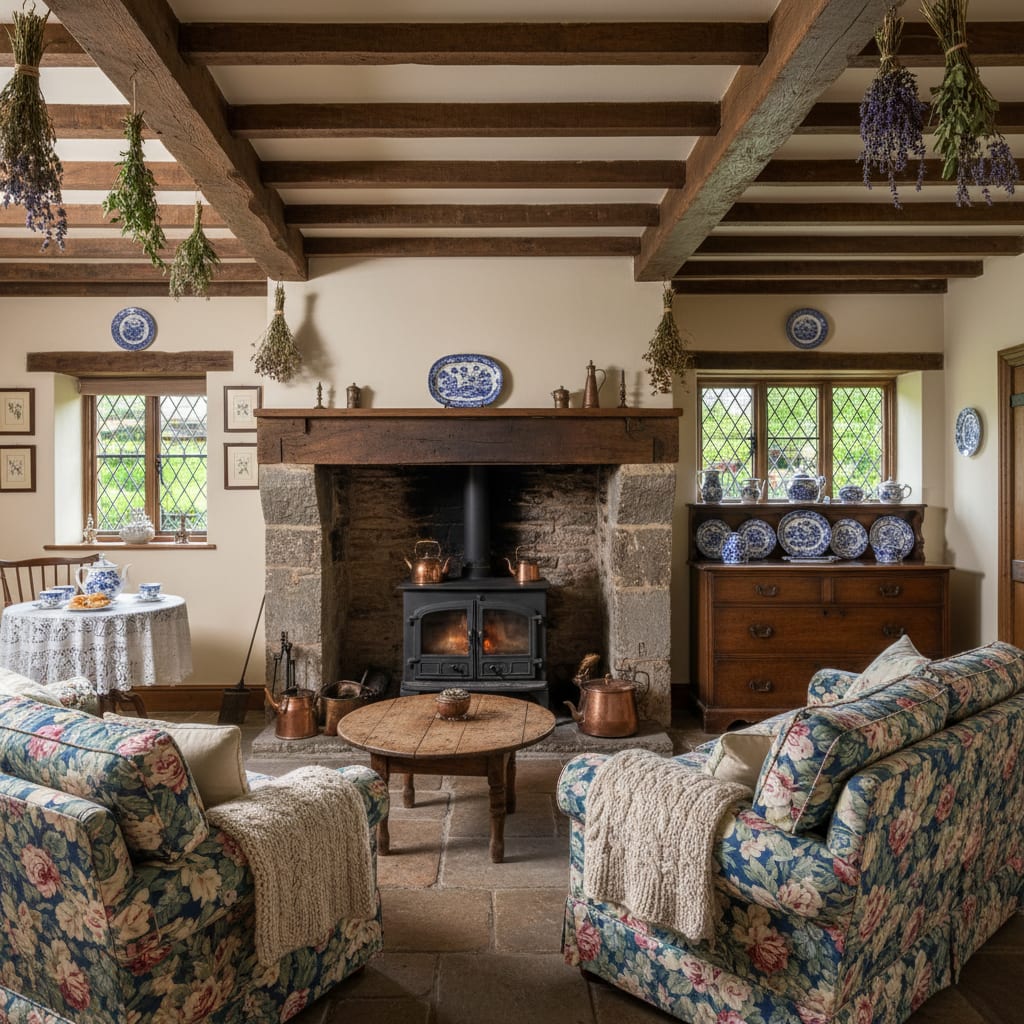
Hobbit house bedroom ideas all chase the same feeling: that first glimpse inside Bag End — round doorways, honeyed timber, firelight on plastered walls, and the sense that comfort has been perfected over generations. You don’t need a hillside or a renovation to get there. This guide breaks the hobbit-hole look into pieces that work in an ordinary bedroom, and shows you how to preview the whole thing on a photo of your real room with Architectural AI before you change a single thing.
Hobbit house bedroom ideas begin with the round and the low
Two shapes define a hobbit home: the circle and the low horizon. Doors are round, windows are round, tunnels curve; and everything — ceilings, furniture, lamps — sits closer to the ground than we’re used to. Together they produce the burrow feeling: protective, enclosing, deeply calm.
In a normal room you translate rather than rebuild. Repeat circles wherever you can: a large round mirror, a circular rug, arched or curved-top furniture, round paper or rattan lampshades. Then pull the visual weight downwards — a low bed, floor cushions, lamps at knee and table height rather than overhead.
The quickest sanity check is to see it before you commit. Upload a photo of your room to the demo, describe Bag End in a sentence, and the render will show you exactly how much “round and low” your particular room can take.
An earthy palette borrowed from the Shire
The hobbit palette is a garden palette: moss, hazel, honey, cream and terracotta. There are no cold colours in a hobbit hole — even the greens lean warm — and nothing is saturated to the point of shouting. Walls want soft plastery cream or warm white; the colour arrives in textiles, wood and plants.
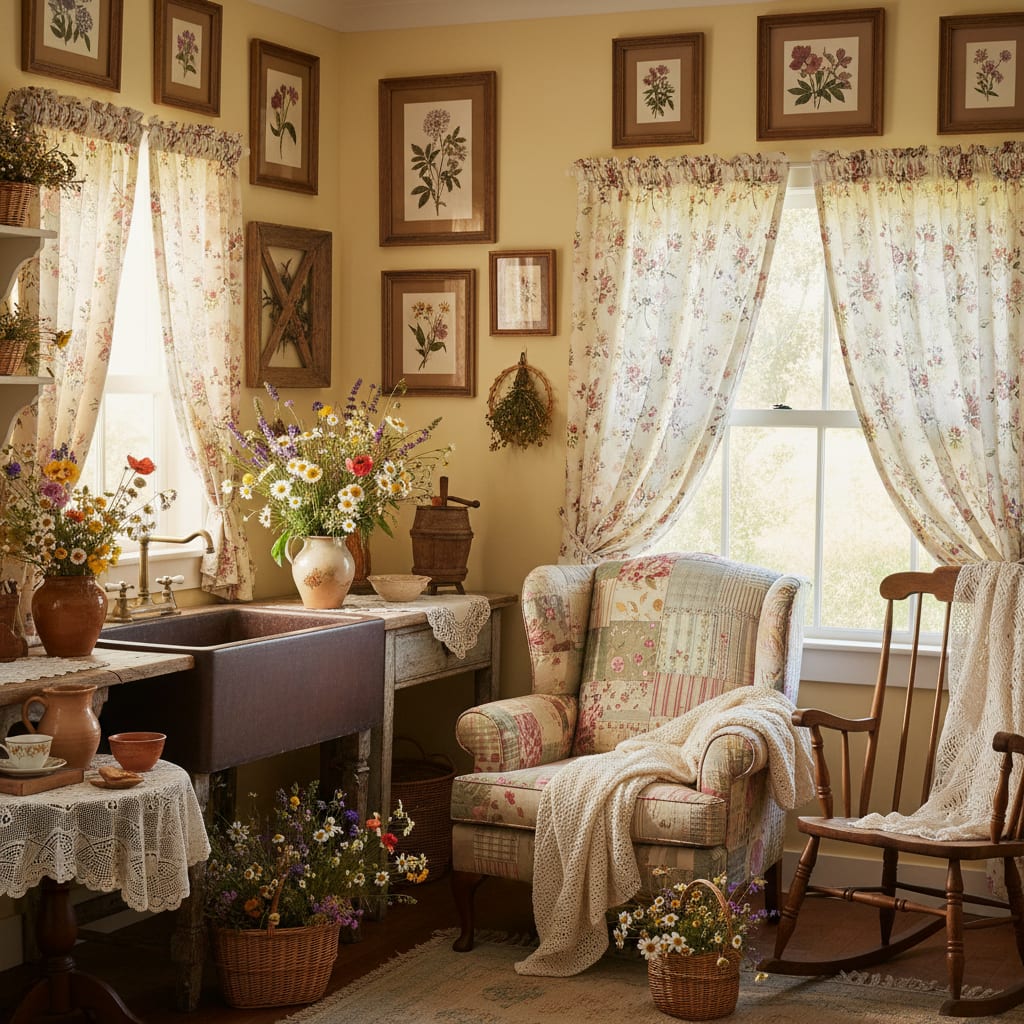
Pattern matters as much as colour. Small florals, leaf motifs, gentle checks and hand-loomed textures all belong; sleek geometry and high-gloss surfaces don’t.
Decor tips:
- Palette: moss and sage green, honey brown, cream plaster, terracotta, buttery yellow accents.
- Materials: wool, linen, jute, quilted cotton — layered generously.
- Lighting: keep colours warm under warm light; test swatches at night, not just midday.
- Hero piece: a moss-green quilted bedspread stacked with mismatched earthy cushions.
Timber, curves and the round-door illusion
Wood is the structure of the look — ideally honey-toned and visibly grained, with rounded edges wherever possible. A timber-panelled or wood-effect wall behind the bed does the heavy lifting; chunky shelves, a hazel-toned wardrobe and a well-worn bedside table finish it.
The famous round door itself becomes an illusion. An oversized round mirror framed in wood reads instantly as a hobbit window; an arched headboard or a curved alcove painted a shade deeper than the wall suggests a tunnel; even a semicircular fan of pictures over the bed pushes the same idea.
Decor tips:
- Palette: honey oak, hazel, walnut accents — avoid grey-washed or black-stained wood.
- Materials: solid or convincingly solid timber, rattan, cork, aged brass handles.
- Lighting: graze light along wood surfaces to bring out the grain.
- Hero piece: one huge round wooden-framed mirror — the “round door” of the room.
Snug low lighting: candle-warm layers
Hobbit light is firelight: low, golden, flickering, and never from directly overhead. Kill the ceiling light. Replace it with four or five small warm sources at different heights — a squat table lamp, a lantern on a shelf, LED candles in a cluster, a string of warm fairy lights woven along a beam or headboard.
Aim for pools of light and pockets of shadow; the contrast is what makes the room feel like a burrow rather than a showroom. Dimmers or smart bulbs set to their warmest tone earn their keep every single evening.
Decor tips:
- Palette: amber and candle-tone light (2200–2700K) only.
- Materials: brass, ceramic and wood lamp bases; linen or paper shades.
- Lighting: five small sources beat one big one; keep at least one at floor level.
- Hero piece: a proper lantern — brass or black iron — glowing on a bedside shelf.
Bring the garden inside
No hobbit hole is complete without the garden pressing in at the windows. Indoors, that means plants in real quantity: trailing ivy along a shelf, ferns in terracotta, herbs on the sill, dried flowers hanging from a hook. Add botanical prints and a leaf-patterned cushion or two, and the room starts to breathe.
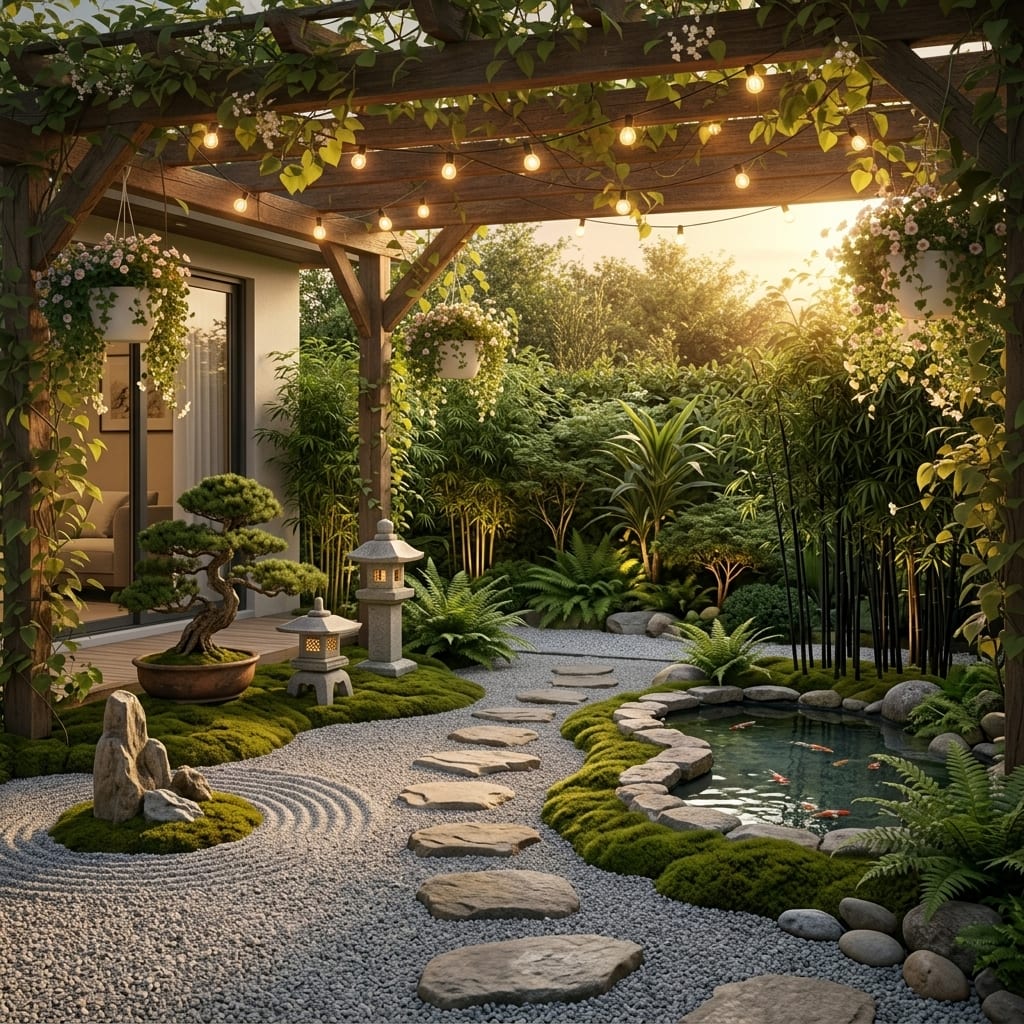
If you’re unsure how much greenery your room can take before it tips into jungle, generate a couple of variations — modest and abundant — and compare them side by side in your gallery.
Decor tips:
- Palette: every green you can gather, in terracotta and aged ceramic pots.
- Materials: clay, wicker baskets as planters, weathered wood plant stands.
- Lighting: position at least one plant where lamplight catches it at night.
- Hero piece: one generous trailing plant cascading from the highest shelf.
How to get the look on your own room
- Take one clear daylight photo of your bedroom from a corner, so the AI sees walls, window and bed in a single frame.
- Open Architectural AI and browse the Themed Worlds — the English cottage and cottagecore atmospheres are the closest ready-made neighbours — or go straight to a custom prompt.
- Describe Bag End in your own words: “hobbit-hole bedroom: round timber shapes, honey-toned wood, moss green and cream, quilted textiles, plants everywhere, snug candlelit lighting.”
- Generate and iterate. More curves, warmer light, extra greenery — refine the prompt until the render feels like home; a Rustic base style underneath can deepen the timber.
- Compare versions and save your favourites to the gallery as a literal shopping list — mirror, quilt, lantern, plants.
Because the AI keeps your real layout, you’re seeing your room as a hobbit hole — not a fantasy set you could never live in.
Frequently Asked Questions
Can AI make my bedroom look like a hobbit house?
Yes. Upload one photo of your room to Architectural AI and describe the look as a custom prompt — “hobbit-hole bedroom, round timber shapes, earthy greens and browns, candlelit and snug” — and the AI renders it on your actual room in seconds.
What colours make a room feel like a hobbit hole?
Earthy, sun-warmed tones: moss and sage green, honey and hazel browns, cream plaster, terracotta and a little buttery yellow. Nothing stark, nothing cool — every colour should look like it came out of a garden.
How do I get the round-door hobbit look without renovating?
Suggest curves instead of building them: a round mirror as the “window”, an arched headboard, curved-edge shelves, a circular rug and rounded lamp shades. A few repeated circles convince the eye without a single structural change.
Is there a ready-made Lord of the Rings world in Architectural AI?
No — but the look is easy to generate from your own words. Type it as a custom prompt, or start from a close Themed World such as an English cottage or cottagecore look and refine it towards Bag End.
Does hobbit-style decor work in a modern apartment?
Yes, surprisingly well. Keep the bones modern and layer the warmth on top — timber furniture, earthy textiles, plants, low golden lighting and round accents — and even a plain rental reads as snug and Shire-like.
There’s a version of your bedroom with a round mirror glowing in lantern light and moss-green quilts on the bed — and it takes about a minute to meet it. Snap one photo, type one sentence, and let the demo open the round door.
Keep reading