Minimalist Home Design Ideas You Can Preview on Your Own Room
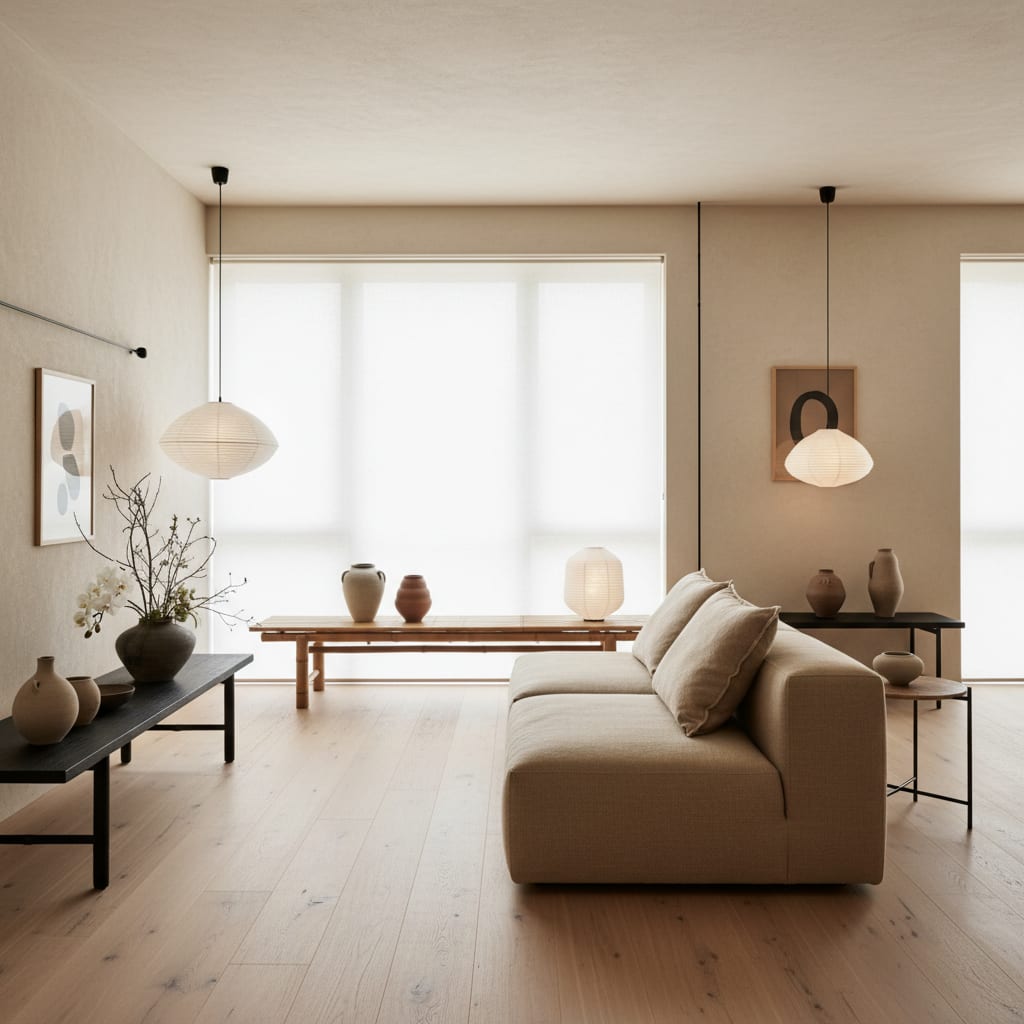
Minimalism is not about owning nothing. It is about owning the right things and giving them room to breathe. The best minimalist home design ideas are simple to describe and hard to execute, because the work is mostly subtraction. With Architectural AI you can take a photo of any room and preview those subtractions before you lift a finger — clear the clutter, repaint a wall, even empty the space entirely to see what is really there.
Less but better
The guiding principle of minimalism is “less but better.” Every object in the room should earn its place. Instead of buying more storage to hide more stuff, you start by reducing what you own, then keep only what is useful or genuinely loved.
This is the hardest part to imagine, because we are used to our rooms exactly as they are. Architectural AI’s Delete 3 Items mode is built for this: point it at the three things that bother you most — a bulky chair, a tangle of cables, an over-full shelf — and see the room without them. Suddenly the trade-off becomes obvious. You can run the same photo through the Minimalist style to see where “less but better” naturally leads.
A neutral, quiet palette
Colour does a lot of the work in minimalist rooms. A tight, neutral palette — warm whites, soft greys, oatmeal, putty — lets architecture and light take over from decoration. One or two muted accents are enough; everything else stays calm.
If your walls are fighting the room with a strong colour, you do not have to commit to repainting to find out what works. Change Wall Color mode lets you test a chalky off-white or a soft greige in seconds, so you can compare options side by side. For a warmer, more tactile take on the same restraint, preview the Japandi style, which pairs minimalist discipline with natural wood and earthy tones.
Hidden storage keeps surfaces clear
A minimalist room is defined as much by its empty surfaces as by its furniture. Clear coffee tables, bare counters and uncrowded shelves are what make a space feel calm — and the secret behind them is almost always hidden storage.
Built-in cabinetry, lift-up ottomans, under-bed drawers and closed sideboards let you keep what you need without putting it on display. When you plan a room, look for the surfaces that collect clutter and ask what could absorb it out of sight. To picture a fully resolved version, run Clean Room mode: it tidies and stages the space so you can see the calm end state you are aiming for, then work backwards to the storage that makes it possible.
Negative space is a design element
In minimalist design, the empty space is not wasted — it is the point. Negative space gives the eye somewhere to rest, makes a single beautiful object feel intentional, and makes a small room feel larger. Crowding furniture against every wall does the opposite.
The fastest way to understand a room’s bones is to strip it back completely. Empty Room mode removes the furniture entirely so you can see the floor, the windows and the proportions with nothing in the way. From that blank canvas it is far easier to decide what genuinely needs to go back in — and how much space to leave around it. Browse the worlds to see how different rooms use emptiness to set a mood.
Declutter room by room
Whole-home decluttering is overwhelming, so do it one room at a time and let each finished space motivate the next.
- Living room: clear the coffee table and media surfaces first; they set the tone for the whole space.
- Kitchen: counters should hold only what you use daily. Everything else goes behind a door.
- Bedroom: the floor and nightstands are the fastest wins. A clear bedside is the difference between restful and chaotic.
- Entryway: one hook, one tray, one mirror. This is the first and last thing you see each day.
For each room, photograph it, use Delete 3 Items to remove the worst offenders, then Clean Room to preview the tidy result. Seeing the payoff in advance makes the real-world effort far easier to commit to.
Start with one photo
Minimalism rewards iteration. Test a neutral wall, empty the room, delete what does not belong, then settle on a style — Minimalist for strict and graphic, Japandi for warm and grounded. Because every edit happens on a photo of your actual room, you are never guessing.
Ready to try it? Upload a room photo on the demo page and run a few modes, then browse the full set of styles to find the restrained look that fits your home.
Keep reading