How to Design a New House After Moving In: A Calm, Room-by-Room Plan
The keys are in your hand, the boxes are everywhere, and every wall is a blank canvas. It’s exciting — and a little overwhelming. If you’re wondering how to design a new house after moving in, the good news is that you don’t need to decide everything in week one. The best homes come together over months, not weekends. This guide gives new homeowners a calm, repeatable plan: start with a vision, measure carefully, sequence the rooms, blend old and new furniture, get paint and lighting right, and pace the spending so your bank account doesn’t panic.
Start With a Whole-Home Vision
Before you buy a single cushion, zoom out. A home that feels cohesive starts with one shared idea that runs through every room — a color story, a material palette, and a mood. Walk through your empty space and ask: do I want warm and earthy, cool and minimal, bright and coastal, or moody and dramatic?
Write down three or four words that describe the feeling you want. Pull a handful of reference images. Then look for a thread that can connect spaces: a recurring wood tone, a metal finish for hardware, or a consistent neutral on the walls. You don’t need every room to match — you need them to belong to the same family.
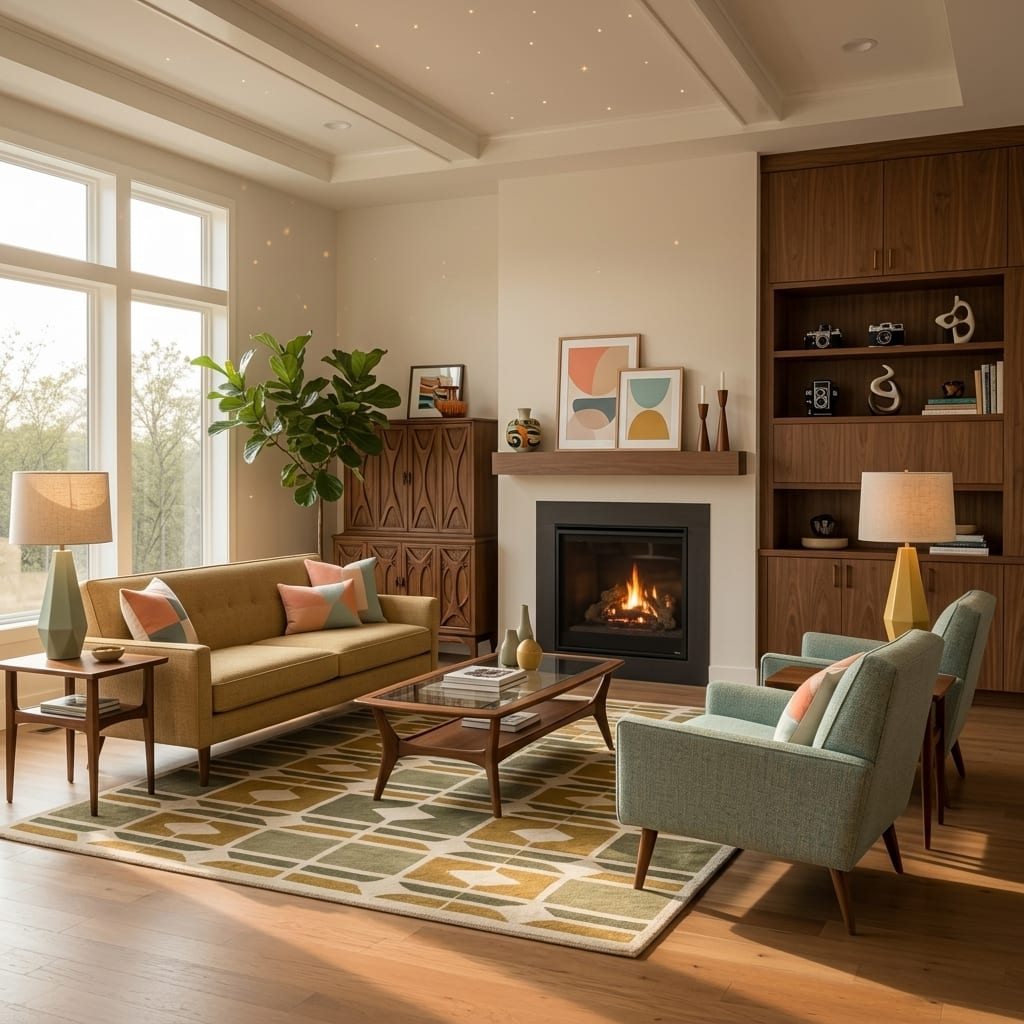
This is also the moment to get inspired without committing money. Browse our design styles to see how Scandinavian, Japandi, mid-century, and industrial looks actually read in a real room, and explore curated worlds that bundle a complete mood for a whole space. A clear vision now prevents a dozen mismatched impulse buys later.
Measure Everything and Plan Your Layouts
A tape measure is the cheapest design tool you own, and it saves the most money. Sketch each room and record wall lengths, ceiling height, window and door positions, and the location of every outlet, radiator, and vent. Note which way doors swing and where natural light lands during the day.
With dimensions in hand, plan layouts before furniture arrives. Leave roughly 75–90 cm of walkway through main paths, keep a coffee table about 40 cm from the sofa, and make sure doors and drawers can fully open. Use painter’s tape on the floor to mock up a sofa or bed footprint — it’s startling how often a piece that looked perfect online swallows the room in real life.
Getting layout right on paper means fewer returns, fewer regrets, and furniture that actually fits the first time.
Decide Which Rooms to Tackle First
Trying to design every room at once is the fastest way to burn out and overspend. Sequence the work by daily impact:
- Bedroom first. You need real rest after a move. A made bed, working curtains for blackout, and a couple of lamps turn chaos into a sanctuary.
- Kitchen and a usable eating spot. Cooking at home steadies your routine and your budget.
- Living room. The social heart — but it’s also where people overspend, so go slow and let the vision guide you.
- Bathrooms. Quick wins: storage, mirrors, towels, lighting.
- Extras last. Home office, guest room, hobby corners come once the essentials feel settled.
Living with a room before fully furnishing it is a feature, not a bug. You’ll learn where the light is best, where you actually drop your keys, and which corner begs for a reading chair.
Mix Existing Furniture With New Pieces
You almost certainly arrived with furniture, and not all of it needs to go. The skill is blending what you own with what you buy so the result looks intentional rather than accidental.
Start by being honest: keep pieces that are well-built, the right scale, or sentimental. A solid wood dresser or a quality sofa frame is worth keeping even if the finish feels dated — paint, new legs, or a slipcover can transform it. Let your new purchases fill genuine gaps rather than duplicate what you have.
To make old and new feel unified, repeat a finish or color at least three times across a room — echo a warm brass lamp with brass drawer pulls and a brass picture frame, for example. Anchor the space with one or two new “hero” pieces and let your existing items play supporting roles around them.
This is exactly where previewing pays off. With Architectural AI you snap a photo of your actual room — keeper furniture and all — and see how a new rug, sofa, or paint color would sit alongside it before you spend a cent. Try it on your own space in the demo and test whether that new piece truly fits your existing layout, style, and proportions.
Get Paint and Lighting Right
Paint and lighting do more for a room than any single piece of furniture, and they’re among the most affordable changes you can make.
For paint, always test before you commit. Buy sample pots, paint large swatches on two different walls, and watch them across morning, afternoon, and evening light — colors shift dramatically with the sun. Neutrals with a slight undertone (warm greige, soft off-white) flatter most furnishings and tie a whole-home palette together.
For lighting, layer it. Aim for three sources in every main room: ambient (overhead or uplight), task (reading and work lamps), and accent (a small lamp or picture light for mood). Swap harsh cool bulbs for warm 2700K LEDs, and put main lights on dimmers. A dim, layered room at night feels expensive; a single bright ceiling bulb feels like an office.
Not sure how a bolder wall color will land? Preview it virtually first — testing paint and lighting moods on a photo of your real room removes the guesswork and the wasted paint.
Pace the Budget Over Months
The most underrated design tip is also the simplest: spread the spending out. Set a rough total budget, then break it into monthly chunks tied to your room sequence. Tackle bedroom essentials this month, kitchen next, living room the month after.
Separate needs from wants in each phase. A bed frame, a sofa, and proper window coverings are needs; the designer accent chair can wait for a sale. Keep a running wishlist so you buy the right version of a thing once, instead of a cheap placeholder you’ll replace twice. Watch for end-of-season sales, and remember that the empty corners give your room time to breathe while your savings recover.
Pacing also lets your taste mature. The style you love at move-in may evolve after a few months of living in the light and flow of your new home.
Bring Your Plan to Life
Designing a new house after moving in is a marathon you’ll actually enjoy if you start with a vision, measure twice, sequence smartly, and pace the budget. And you don’t have to guess — Architectural AI lets you preview each room from a single photo, testing furniture, style, and layout fit before you commit real money.
Ready to see your rooms transformed? Start with the demo, get tailored guidance from our ask assistant, and find more practical guides on the blog. Your dream home is closer than the boxes make it look.
Keep reading