Builder-Grade to Beautiful: High-Impact Upgrades You Can Preview First
The upgrades that make a builder-grade house feel custom are the cheap, fast ones: swap the generic light fixtures, replace flat cabinet and door hardware, hang a real mirror, and treat one wall with paint, molding, or paneling. None require a contractor, each costs tens to low hundreds of dollars, and every one is visible the moment someone walks in. Preview each on a photo of your actual room first, so your money goes to the change that reads — not the one that quietly disappears.
New homeowners often look around a fresh build and feel the space is fine but generic, without being able to name why. The why is almost always the finishes: the developer picked the cheapest version of every fixture to hit a price. The good news is that those are the exact things you can change yourself, for very little, with outsized results.
What does “builder-grade” actually mean?
Builder-grade is the baseline, lowest-cost finish level a developer installs to keep a house’s price down — functional, generic, and designed to be upgraded. The flush ceiling lights, the plain brushed-nickel cabinet knobs, the builder-basic mirror glued over the bathroom sink, the hollow-core doors and standard blinds: none of it is broken, and none of it is meant to be permanent. It’s a blank canvas priced into the house.
Reframing it that way takes the sting out. You didn’t buy a house full of flaws — you bought one with room to add your taste cheaply. Here’s where that money works hardest.
Which upgrades give the most impact per dollar?
Ranked by how much visible change you get for the effort and cost:
| Upgrade | Impact | Effort | Rough cost | DIY? |
|---|---|---|---|---|
| Light fixtures (entry, dining, bedroom) | High | Low–medium | $ | Yes (kill the breaker) |
| Cabinet, drawer and door hardware | High | Low | $ | Yes |
| A statement mirror (entry or bath) | High | Low | $–$$ | Yes |
| One accent wall (paint, molding, paneling) | High | Medium | $ | Yes |
| Real window treatments vs builder blinds | Medium–high | Low | $$ | Yes |
| Faucets and showerheads | Medium | Medium | $$ | Mostly |
| Painting builder cabinets | High | High | $$ | Weekend project |
The pattern: the biggest wins are small parts you swap, not surfaces you rebuild. Start at the top of that list and you’ll change how the whole house feels for the cost of a nice dinner out.
Lighting: the fastest builder-grade tell to fix
Nothing dates a room faster than the flush “dome” ceiling light every builder installs by the dozen. Swapping one for a pendant, a semi-flush fixture, or a small chandelier over the dining table instantly reads as custom — it’s the single upgrade that most changes a room’s character per dollar. Turn off the breaker, unscrew the old one, wire in the new one; most are a genuine 20-minute DIY job.
While you’re at it, stop relying on that single overhead source. Layered lighting — a fixture overhead, lamps at eye level, something low and warm — is what makes builder rooms feel like designed ones. Our guide to lighting ideas for every room covers how to build those layers without rewiring anything.
Hardware: the cheapest “jewelry” swap
Cabinet pulls, drawer knobs, and door levers are the jewelry of a house, and builders always pick the plainest set. Replacing them with matte black, aged brass, or a heftier profile is the lowest-effort upgrade on the list — often just a screwdriver. One tip that saves a return: measure the existing hole spacing (center to center) on your cabinet pulls before you buy, so the new ones line up with the existing holes. The same logic extends to your doors — swapping builder levers, and even matching the visible hinges to the same finish, is a small detail that quietly signals the whole house was considered rather than just assembled.
Mirrors and wall treatments
Two more high-impact, contractor-free moves:
- A real mirror. Swap the frameless builder mirror glued above the bathroom vanity for a framed one, and add a large leaning mirror in the entry or bedroom. Mirrors bounce light and add depth, which is why they make small builder rooms feel bigger.
- One treated wall. You don’t need to touch every wall. Board-and-batten, picture-frame molding, limewash, or simply a painted accent wall turns a flat builder box into a room with a focal point. Deciding which wall gets the treatment matters as much as the finish — accent wall ideas walks through how to choose.
In what order should you tackle them?
Work entry-first and quick-wins-first. The things a visitor — and you — see within ten seconds of walking in (the entry light, the entry mirror, the first hardware you touch) deliver the most felt change for the least effort, so start there and let the momentum carry you. Bank a few of those fast wins before you take on a slower project like painting cabinets, which eats a whole weekend and is far harder to reverse.
A useful reframe for a post-closing budget: builder-grade to custom is a hardware-store project, not a renovation. Lighting, knobs, a mirror, and a can of paint for one wall change how the whole house reads for roughly the cost of a single designer throw pillow — and none of it needs a permit, a contractor, or a decision you can’t undo next year. Spread it across a few weekends and the “generic new build” feeling is gone before you’ve unpacked the last box.
Preview each upgrade before you commit (especially the kitchen)
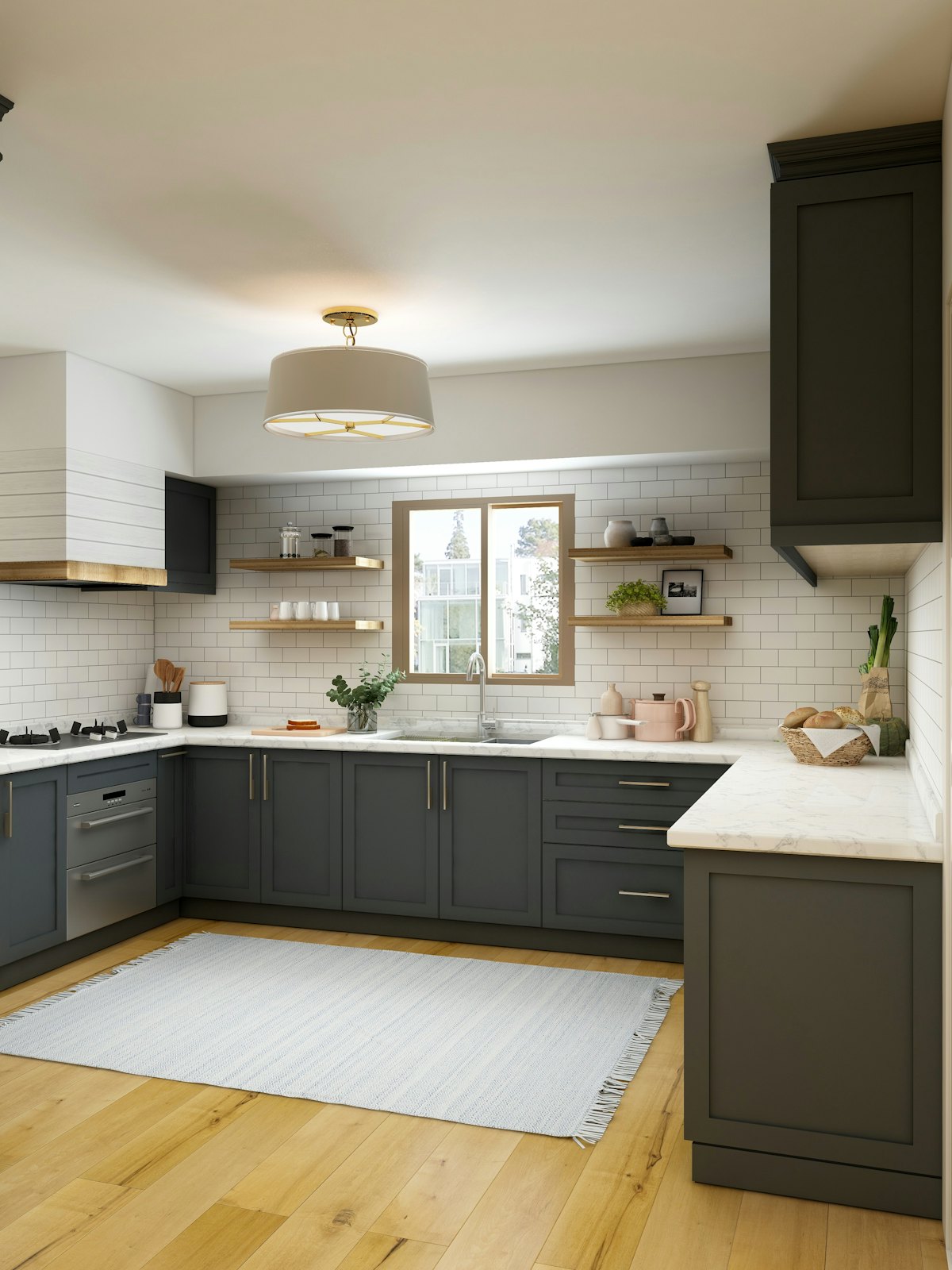
The kitchen is where builder-grade tempts new owners into big spending — and where a wrong guess costs the most. Before you rip out cabinets or commit to a hardware finish and paint color, preview it on a photo of your actual kitchen. Architectural AI’s one-tap edits let you change wall color, swap the lighting mood, or restyle a space on your real room photo in seconds, so you can see whether black hardware or brass suits your cabinets before either is on your card. Try it on the live demo, and for a fuller kitchen direction, modern kitchen design ideas shows what’s possible before you spend.
Previewing keeps you honest about impact. Some upgrades transform a room; others you’ll never notice once they’re in. Test first, buy the ones that read, and skip the ones that vanish. That’s how a builder-grade house becomes yours for a fraction of a renovation.
Ready to see an upgrade on your own room before you buy it? Architectural AI is free to download and previews real changes on your real space in seconds — try it on the App Store.
FAQ
What does builder-grade mean? Builder-grade is the baseline, lowest-cost finish level a developer installs to keep a house’s price down — functional, generic fixtures, hardware, and lighting meant to be upgraded later. It isn’t defective; it’s a blank canvas.
What are the highest-impact builder-grade upgrades? Swapping the generic light fixtures, replacing flat cabinet and door hardware, hanging a real mirror, and treating one wall with paint or molding. All are DIY-friendly, cost tens to low hundreds of dollars, and are visible the moment someone walks in.
Can I upgrade a builder-grade home without a contractor? Most of the high-impact changes, yes — lighting, hardware, mirrors, window treatments, and paint are weekend DIY jobs. Save a contractor for anything involving moving walls, plumbing, or major electrical work.
How do I know an upgrade will look good before I buy it? Preview it on a photo of your actual room. Testing a new wall color, lighting mood, or accent wall on your real space first keeps you from spending on a change that disappears once it’s installed.
Keep reading