What's Your Interior Design Style? Six Questions That Actually Tell You
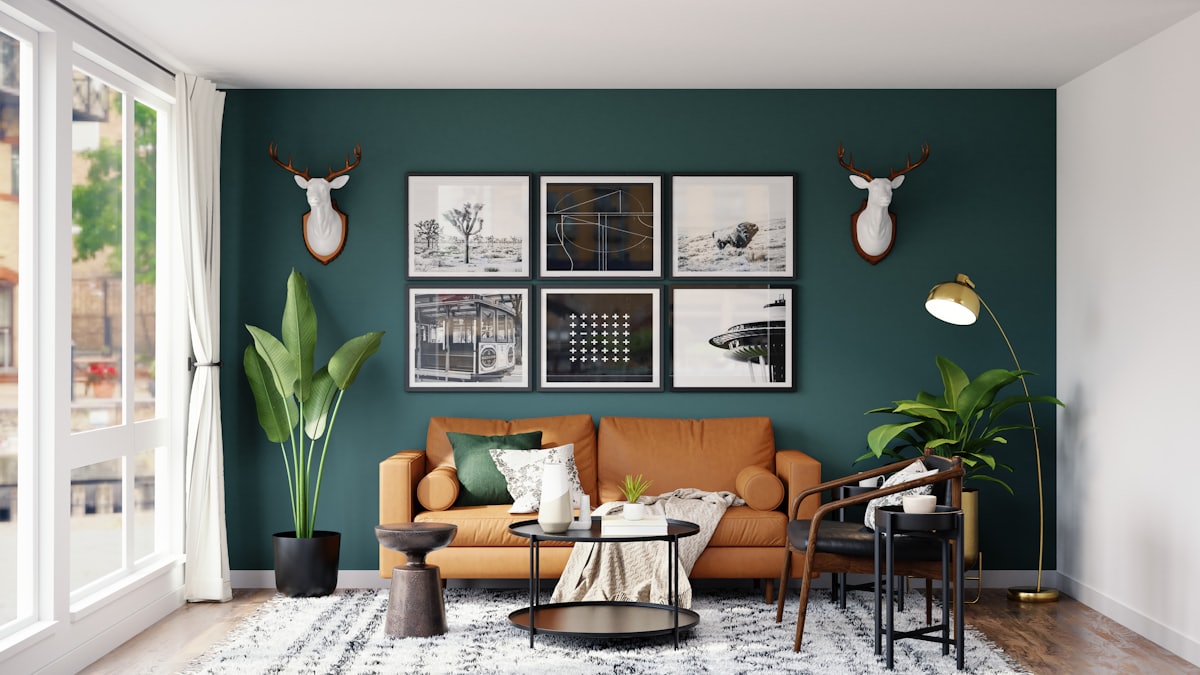
Every design style quiz has the same flaw. It shows you photographs of beautiful rooms and asks which you prefer, and you answer as the person you would like to be rather than the person who lives in your house.
That is why so many people finish a quiz, get told they are a minimalist, and then look up at a shelf holding forty-one objects they have no intention of removing.
The six questions below ask about behavior instead. They are less flattering and considerably more accurate.
1. What do your horizontal surfaces look like right now?
Not what you wish they looked like. Look at the coffee table, the kitchen counter, the shelf by the door.
- Clear, with one or two deliberate objects — you belong in the minimalist family: warm minimalism, Japandi, contemporary Scandinavian.
- Layered but organized — you belong in the curated middle: mid-century modern, modern traditional, transitional.
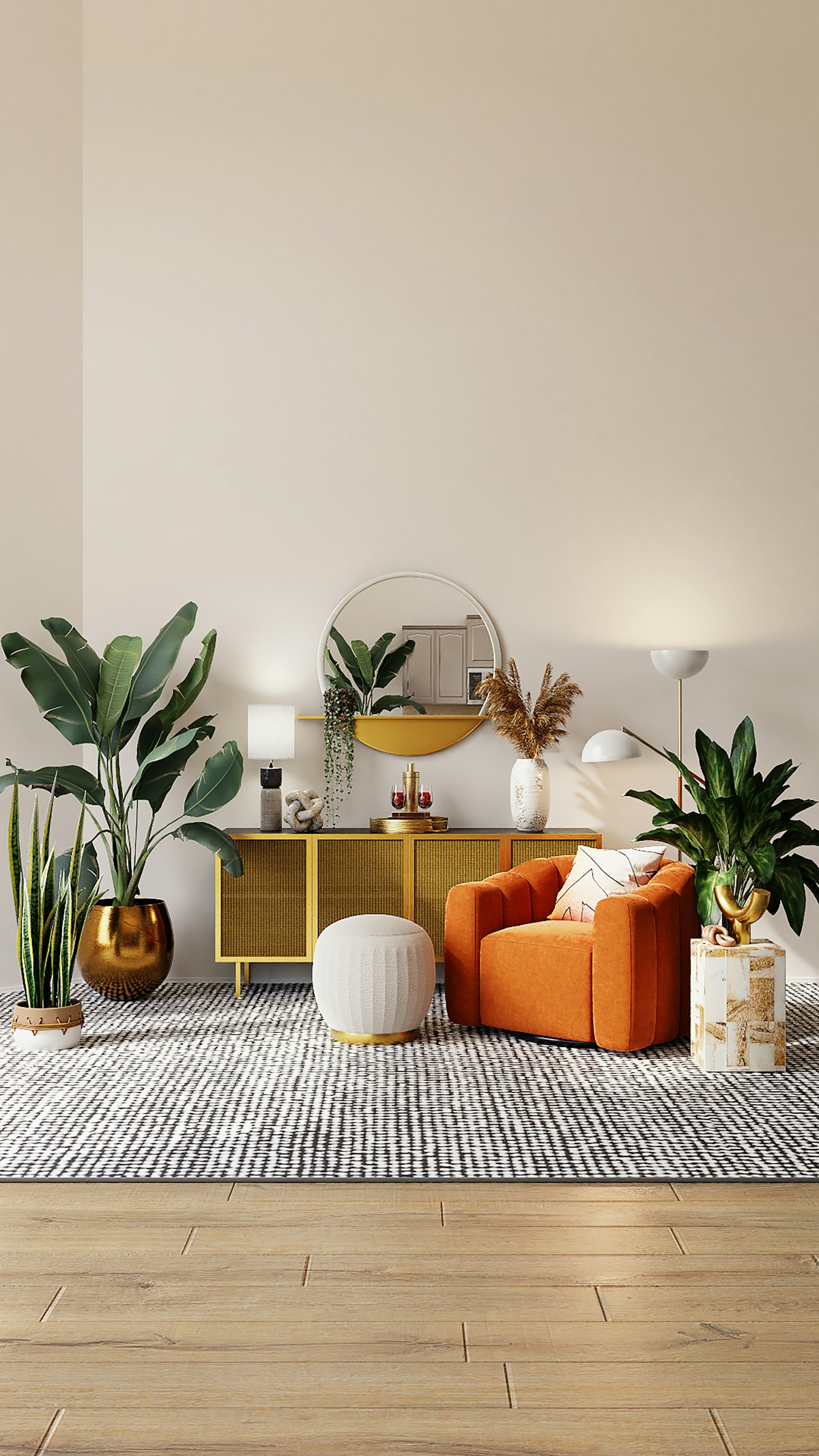
- Full and accumulating — you belong in the collected family: maximalism, eclectic, bohemian, English country.
This is the single most predictive question in the set, because it is the one nobody performs. A minimalist scheme imposed on a person who accumulates does not produce a minimalist home. It produces a minimalist home with piles in it.
2. Which direction do you reach for in color?
Ignore individual colors. Ask about temperature.
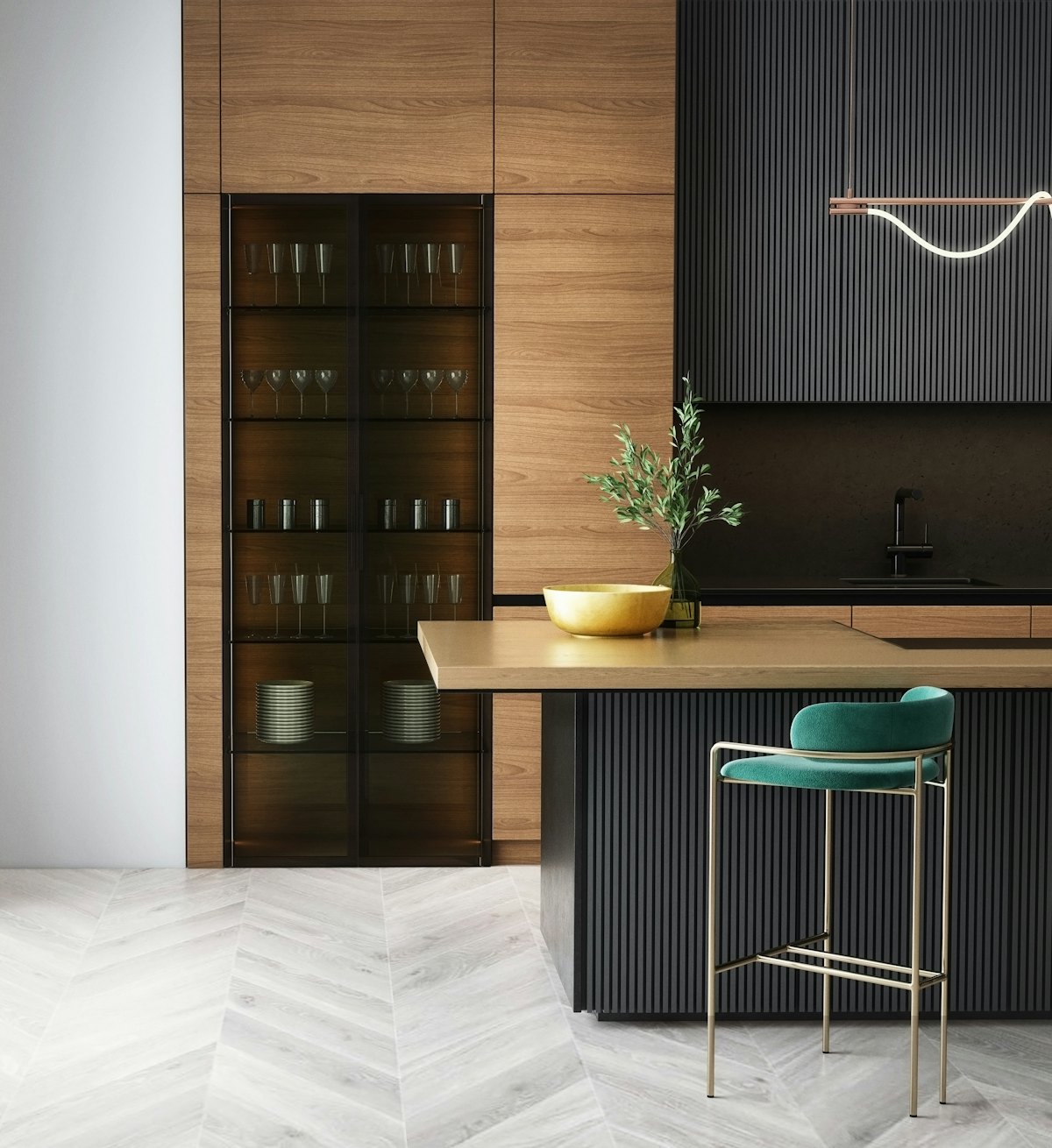
- Warm — cream, clay, camel, terracotta, honey-toned wood. Points toward organic modern, Mediterranean, English country, mid-century.
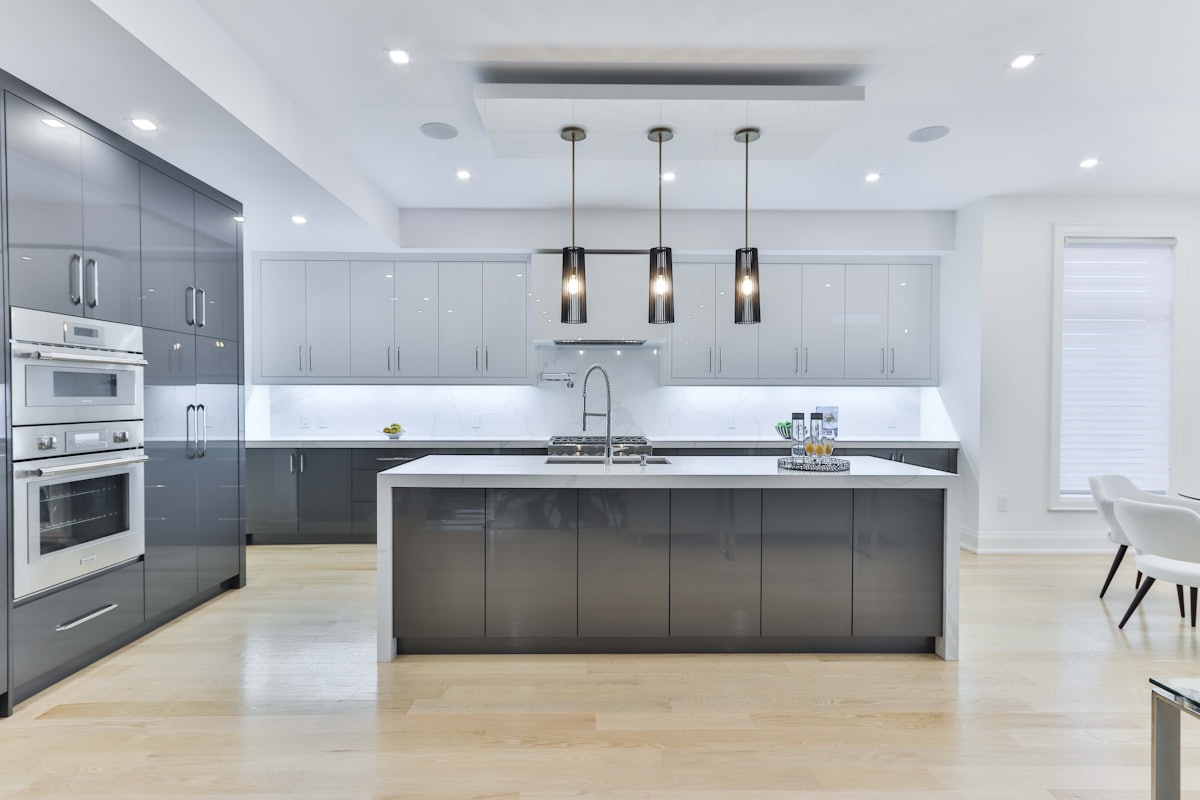
- Cool — gray, blue, black, chrome, pale ash. Points toward contemporary, industrial, Scandinavian, modernist.
- Neither, strongly — genuine neutrality points toward Japandi and warm minimalism, which are built on it.
Check this against your wardrobe rather than your saved images. People are remarkably consistent across the two, and their clothes are the honest sample.
3. Which materials do you touch by choice?
Walk around and notice what your hand goes to.
- Wood, linen, wool, rattan, unglazed ceramic — natural and tactile. Organic modern, Japandi, coastal, rustic.
- Metal, glass, polished stone, leather — hard and precise. Industrial, contemporary, modernist.
- Velvet, silk, brass, lacquer, pattern — rich and decorative. Art deco, maximalism, Hollywood regency, traditional.
4. How do you light a room in the evening?
- One overhead light on, everything visible — you are functionally minded, and contemporary or Scandinavian schemes suit you.
- Several lamps, overhead off — you are atmosphere-led, which is the mid-century, traditional and organic modern territory.
- Candles, dimmers, one pool of light — you belong at the moody end: dark academia, English country, deco.
This question separates people more cleanly than any color preference does, and it is also the cheapest thing to change if the answer surprises you.
5. At what point does pattern become too much?
- One patterned object per room — minimalist family.
- Two or three, related — mid-century, transitional, Scandinavian.
- Pattern on pattern, and more is better — maximalist, bohemian, English country, eclectic.
6. What do you want visible?
- Nothing. Storage should be closed — minimalist family, and you should be shopping for cabinetry rather than shelving.
- Books, records, ceramics, a few things — the curated middle.
- Everything I love — the collected family, and you need display designed in from the start rather than added later.
Reading your answers
Count where your six answers cluster.
Five or six in one family — you have a clear dominant style, and you should commit to it properly. Half-committed schemes are the ones that read as unfinished.
Four and two — the normal result. Your dominant style governs the large decisions: walls, flooring, seating, window treatments. Your secondary appears in objects, textiles and one or two pieces of furniture. Roughly 70/30.
Three and three — you are not undecided, you are two-styled, and the resolution is division by category rather than compromise. Let one direction own the fixed and large elements and the other own materials and objects.
Check your room before you commit
Preferences are only half the input. The other half is already installed.
Your floor, kitchen cabinets, window frames, fireplace and door style are not moving, and they eliminate options before your taste does. Orange-toned oak floors fight cool contemporary schemes. Period cornicing resists strict minimalism. A brick fireplace pushes toward industrial, rustic or English country whether you like it or not.
Work with them. A style chosen in opposition to a room’s fixed elements requires you to spend money hiding your own house.
Confirm it on your own room
The final step is the one that turns a result into a decision.
Photograph the room and apply your top two directions to it. Not to a similar room, not to a moodboard — to yours, with your floor, your window and your ceiling height. The wrong one usually announces itself within seconds, in a way that no amount of scrolling through other people’s homes ever does.
The styles gallery covers the full range described above and will apply any of them to your photo, so you can see the 70/30 split you scored rather than imagine it. If your answers landed you firmly in the collected or atmospheric families, the themed worlds push considerably further and are worth trying on the same photograph — the point at which a direction becomes too much for your particular room is a genuinely useful thing to discover for free.
Finished examples across every family are in the gallery. Look at those after you have your result, not before. Looking first is how you end up back where the quizzes leave everyone: with a style you admire and a house you actually live in.
FAQ
How do I find my interior design style?
Stop looking at rooms you like and look at how you actually live. Whether you keep surfaces clear or covered, whether you reach for warm or cool colors, which materials you touch by choice, how much pattern you tolerate before a room feels busy, and what you want on display — those five behaviors predict which style you will still be happy with in three years far better than any collection of saved photographs. Aspirational taste and daily habit disagree in roughly half of households, and the habit always wins.
What if I like more than one design style?
That is the normal outcome and it is also what most well-resolved homes actually are. Pick a dominant direction at around 70% and a secondary at 30%, then let the dominant one govern the large decisions — walls, flooring, seating, window treatments — while the secondary appears in objects, textiles and one or two pieces of furniture. What does not work is a 50/50 split, because neither style ever gets to establish a rule the other can break interestingly.
What is the most popular interior design style right now?
Warm minimalism and its close relatives — Japandi, contemporary Scandinavian, organic modern — remain the most-chosen directions, largely because they sit comfortably in ordinary rooms with ordinary light and do not demand period architecture. Mid-century modern is still the most durable furniture vocabulary, and traditional and maximalist styles have recovered ground after a decade of decline. Popularity is a poor reason to choose, though; it tells you a style is workable, not that it is yours.
Can two people with different design styles share a home?
Yes, and the method is division by category rather than by room. One person leads on the fixed and large elements, the other leads on materials and objects, and each has one room where their preference is uncontested. The alternative — negotiating every item to a compromise both parties tolerate — produces a house neither likes. Where couples reliably get stuck is arguing about an imagined room, which is why previewing both directions on a photograph of the actual space tends to end the discussion quickly.
Keep reading