How to Brighten a Dark Rental (Without Rewiring a Thing)
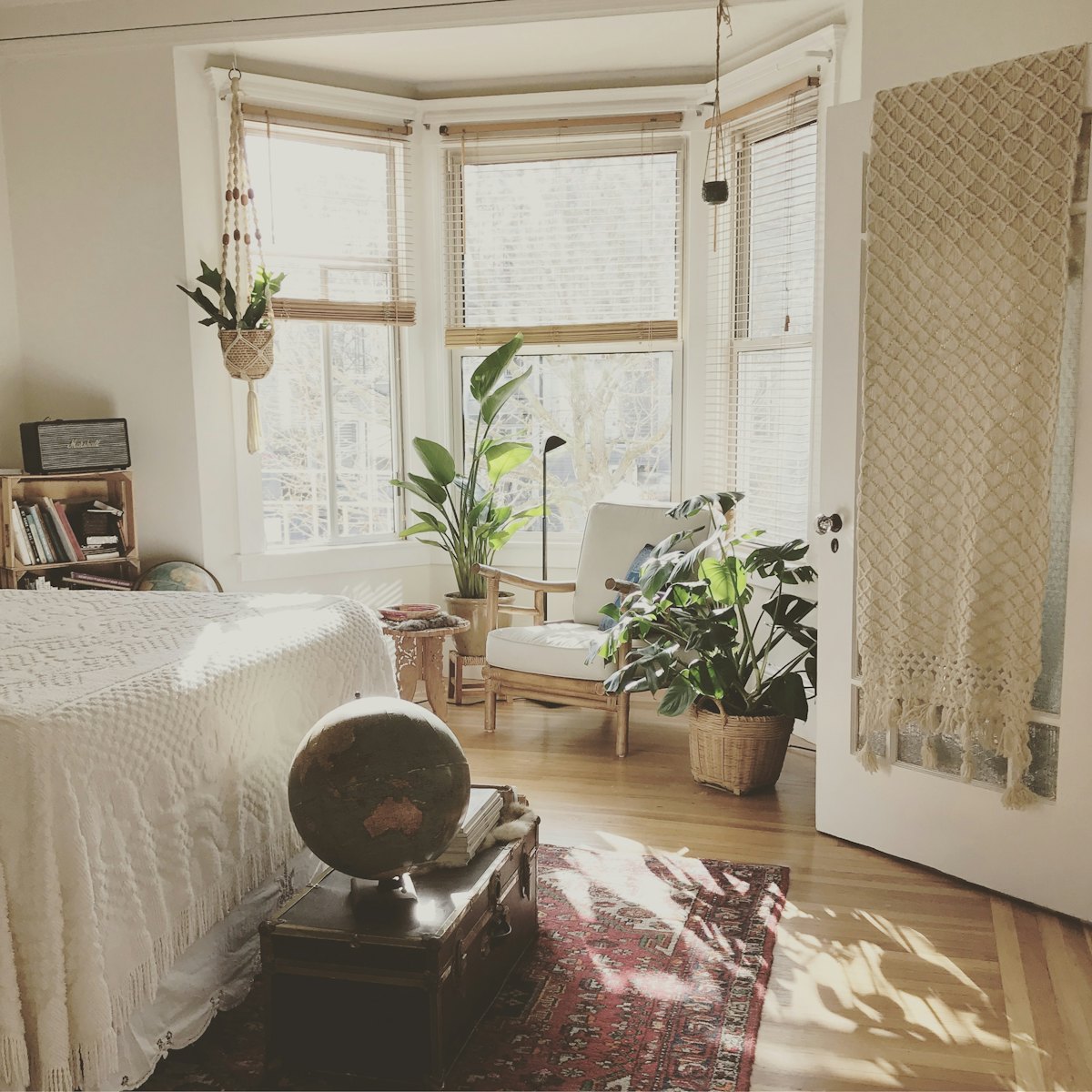
You can brighten a dark rental dramatically without touching the wiring by doing three things: layering plug-in light at different heights, bouncing the light you already have with mirrors and pale surfaces, and letting more daylight in through sheer window treatments. None of it requires an electrician, a drill or your landlord’s permission, and none of it risks your deposit. A gloomy rental is almost never a wiring problem you can’t solve — it’s usually too few light sources, too much light-absorbing color, and windows working at half capacity. Here’s how to fix all three, renter-style.
Why is my rental so dark?
Rentals tend toward gloom for predictable reasons: a single central ceiling fixture doing all the work, north-facing or small windows, and the landlord-standard flat beige or grey that quietly swallows light instead of reflecting it. You usually can’t change the windows or repaint, so the strategy is to work around all three constraints at once — add light sources, make surfaces bounce more of what’s there, and stop blocking the daylight you do get.
The organizing idea is layered lighting: instead of one bright overhead source, a well-lit room uses several smaller sources at different heights — ambient, task and accent. Layering is what makes a space feel warm and dimensional rather than flatly lit or cavelike, and every layer below is plug-in, so it’s entirely within a renter’s control.
Layer plug-in light at three heights
Overhead light alone flattens a room and leaves the edges dark. Replace the reliance on it with three plug-in layers:
- Ambient (the base): a floor lamp in a corner throws soft, room-filling light upward and outward. An uplight or a tall lamp with a fabric shade is the single highest-impact purchase for a dark rental.
- Task (where you do things): a desk or reading lamp exactly where you work, read or cook adds usable brightness without lighting the whole room evenly. This is also what makes a dim room feel functional, not just prettier.
- Accent (the corners): a small lamp on a shelf or a plug-in picture light lifts the dark pockets that make a room feel closed-in.
Two upgrades multiply the effect. Swap dim, cool bulbs for higher-lumen warm-white LEDs — brightness lives in lumens, not watts, and warm white reads as cozy rather than clinical. And add smart bulbs so you can shift brightness and warmth by time of day from your phone, no switch or wiring involved. Our lighting ideas for every room guide goes deeper on placement and bulb choice if you want to dial it in.
Bounce the light you already have
Adding light sources is half the battle; the other half is stopping your surfaces from eating the light. This costs almost nothing and needs no permission.
- Mirrors are the biggest lever. A large mirror opposite or beside a window bounces daylight deeper into the room and effectively doubles your window. Lean a big one against the wall — no drilling, fully renter-safe. Just don’t aim a mirror at a dark blank wall, which reflects nothing useful.
- Go light and reflective on the movable surfaces. A pale rug, light-toned throw, off-white cushions and a lighter slipcover reflect far more than dark textiles. Since you can’t repaint, these movable pieces are how you introduce the light neutrals that would otherwise come from wall color.
- Add a little sheen. A glass-topped table, a metallic lamp base, a glossy ceramic — small reflective touches catch and scatter light in a way matte-everything can’t.
A word of caution that matters in rentals: dark, matte, light-absorbing surfaces don’t just dim a room, they shrink it. If your rental already feels tight, our guide to design mistakes that make a room look smaller covers the overlaps — because the moves that brighten a room are largely the same ones that make it feel bigger.
Let more daylight in
Before buying a single lamp, make sure you’re not fighting your own windows.
- Swap heavy drapes for sheers. Thick, dark curtains block the very daylight you’re short on. Light, sheer panels diffuse and admit it. Keep blackout only where you truly need it — the bedroom — on a separate layer.
- Hang curtains high and wide. Mounting the rod above the frame and extending it past the glass on each side lets the panels clear the window when open, so nothing covers the actual glass. Use tension rods or landlord-approved brackets to keep it deposit-safe.
- Clean the windows and clear the sills. Grime and clutter on the glass cost you real light. A ten-minute clean and a clear sill measurably brighten a room for free.
- Pull furniture back from the windows so nothing tall casts the room into its own shadow.
Preview a brighter room before you spend
Here’s the trap: you buy a floor lamp, and the room’s still dim — because it needed lighter color, not more light. Or you buy pale cushions, and it’s still gloomy — because it needed a second light source. Guessing which lever to pull means buying three things to fix one problem.
Previewing solves that. Upload a photo of your actual room and see a brighter, warmer version before spending anything — added lamps, lighter textiles, sheer curtains, a mirror bouncing the window. An AI redesign app can also show the same room in day-versus-night lighting, so you can judge how it’ll feel at 3pm and at 9pm, and separate “this room needs more light” from “this room needs lighter color.” That tells you exactly where your money should go. You can try it on your own photo in the interactive demo and compare a couple of directions side by side before you buy a thing.
The bottom line for renters
A dark rental is a solvable problem, not a life sentence, and you solve it without a single wire. Layer plug-in light at three heights, bounce daylight with mirrors and pale movable surfaces, and let your windows do their job with sheers hung high and wide. Preview the brighter version first so you buy the right fix, and a gloomy box turns into a warm, livable space you’ll actually want to come home to.
Frequently Asked Questions
How do I brighten a dark room without overhead lighting?
Build light in layers with plug-in fixtures: a floor lamp for ambient glow, a task lamp where you read or work, and a smaller accent lamp to lift a dark corner. Three modest light sources at different heights beat one harsh overhead bulb and need no wiring, so they’re fully renter-safe.
What color makes a dark room look brighter?
Light, warm-leaning neutrals bounce the most light — soft whites, warm greys, pale sand and greige. Since renters usually can’t paint, you get the same effect with large light-toned art, pale curtains, a light rug and reflective decor. Preview a lighter scheme on your room photo before buying to see how much it actually helps.
Do mirrors really make a room brighter?
Yes, when placed well. A mirror opposite or beside a window bounces daylight deeper into the room and doubles the apparent light source. Large leaning mirrors need no drilling, so they’re ideal for renters — just avoid aiming one straight at a dark wall, which reflects nothing useful.
Can I preview lighting changes before buying lamps?
Yes. Upload a photo of your room and preview brighter and warmer versions — added lamps, lighter textiles, day-versus-night lighting — before spending anything. It’s the quickest way to see whether the room needs more light, lighter color, or both, without buying three lamps to find out.
Stuck with a dark rental and not sure what will actually fix it? Preview a brighter version first with Architectural AI — download it on the App Store, test lamps, lighter textiles and day-versus-night lighting on a photo of your real room, and spend only on the changes that work.
Keep reading