Design Hotel Style at Home: Budapest, Wes Anderson and the Boutique Room Formula
There’s a specific disappointment in coming home from a good hotel. The room you stayed in was smaller than your bedroom, had less storage, and cost a fortune — and it still felt better. That’s not a coincidence or a budget effect. Hotel rooms are designed under constraints that happen to produce good interiors, and most of those constraints are free to adopt.
Why hotel rooms feel better than bedrooms
Three structural reasons:
1. Severe editing. A hotel room contains exactly what’s needed and nothing else. No spare chair holding clothes, no accumulated objects on the dresser, no boxes under the bed. Your bedroom probably has thirty more items in it than a hotel room, and that difference is most of the gap.
2. Layered lighting. Hotels never light a room from a single ceiling fixture. There’s a bedside reading light per side, an ambient source, something washing a wall, and often a light near the mirror — all warm, most of them dimmable.
3. One bold gesture. A good hotel room commits to a single strong idea: an oversized headboard, a saturated wall colour, one dramatic material. Bedrooms tend to have four medium ideas instead, which read as none.
The five-piece formula
Almost every well-designed hotel bedroom contains exactly this:
- A bed with a substantial headboard — taller and wider than you’d instinctively choose.
- Two matching bedside tables.
- Two matching lamps — wall-mounted or table, with individual switches.
- One chair, bench, or stool.
- One large mirror or one large artwork.
That’s it. If you’re trying to make a bedroom feel like a hotel, the fastest route isn’t buying — it’s removing everything that isn’t on that list and seeing what’s left.
The headboard deserves special attention. It’s the single piece that most separates hotel rooms from home bedrooms, and an upholstered panel taller and wider than the mattress reads as designed in a way a standard bed frame never does.
Lighting, specifically
The setup that works:
- Bedside lights on both sides, each independently switched, ideally wall-mounted to free the table surface.
- A warm ambient source — a floor lamp or an uplight — not a central ceiling fixture.
- Something grazing a wall or a curtain to give depth.
- 2700K bulbs throughout, dimmable.
- A bedside switch that kills everything without getting up. Hotels always have one; homes almost never do.
That last one is small and disproportionately satisfying.
Bedding: the hotel standard
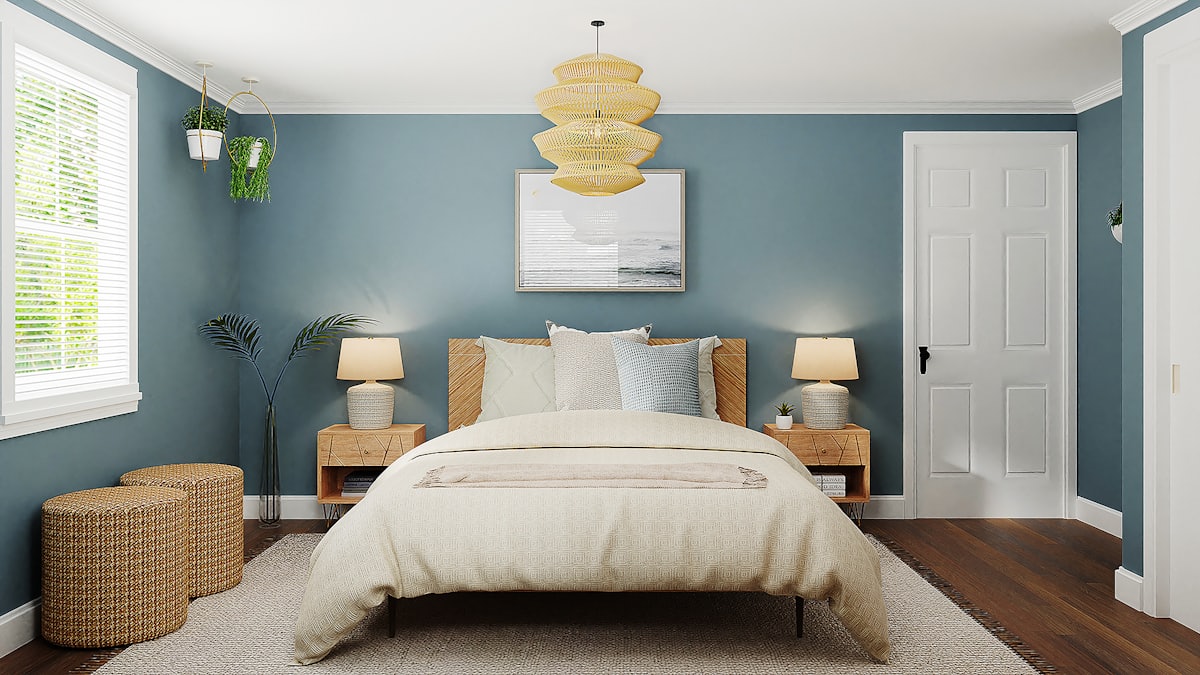
- White, always. It’s what makes a bed read as hotel rather than domestic.
- A high-quality fitted sheet, tightly made.
- A duvet with real loft, folded back at the top third.
- Four to six pillows, arranged, not piled.
- One textured throw across the foot for colour and weight.
Our five-star Airbnb bedroom formula covers this in more depth if you’re styling a rental.
Curtains and the window
Floor-to-ceiling, wall-to-wall, and heavy. Hotel windows are dressed generously: the track sits near the ceiling and the fabric extends well past the frame on both sides.
Add blackout lining. It’s the most reliably “hotel” sensory experience there is, and cheaper than most people assume.
The bathroom
Hotel bathrooms trade on a small number of consistent moves:
- Everything hidden except a single tray.
- Folded white towels in a stack, plus a robe on a hook.
- A large mirror with light at face height.
- One good material — stone, a tiled niche, a timber shelf.
- Matching refill bottles.
Our spa bathroom guide covers the calm variant of the same idea.
Picking a hotel register
“Design hotel” isn’t one look. Four distinct directions, all workable at home:
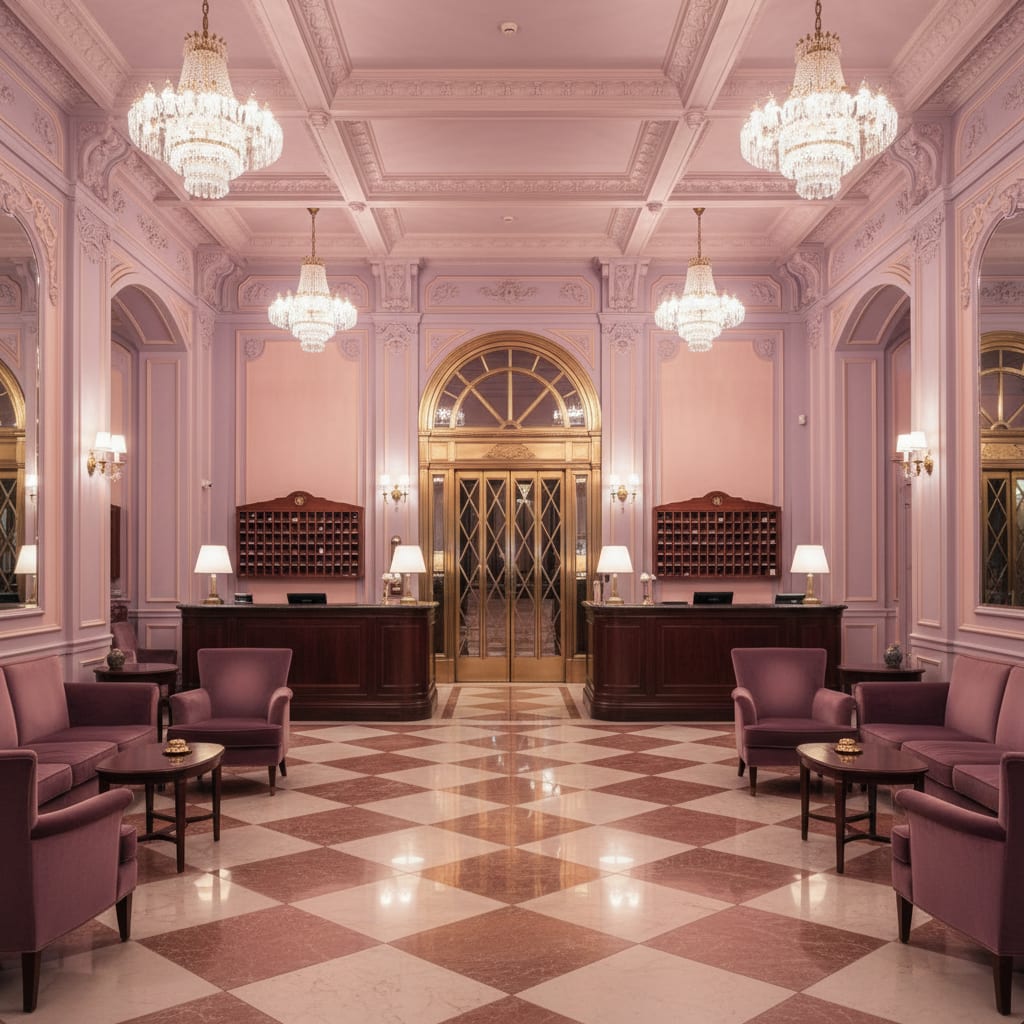
Grand European (Budapest-style). Symmetry, saturated pastel colour blocking, mouldings, brass, patterned carpet. Wes Anderson’s Grand Budapest Hotel is the stylised version of this and translates surprisingly well: one saturated pastel wall, symmetrical pairs, gold detailing. See also our Wes Anderson symmetrical room ideas.
Dark boutique. Deep tones, moody lighting, brass and leather, a members-club feel. The John Wick Continental world is the extreme version.
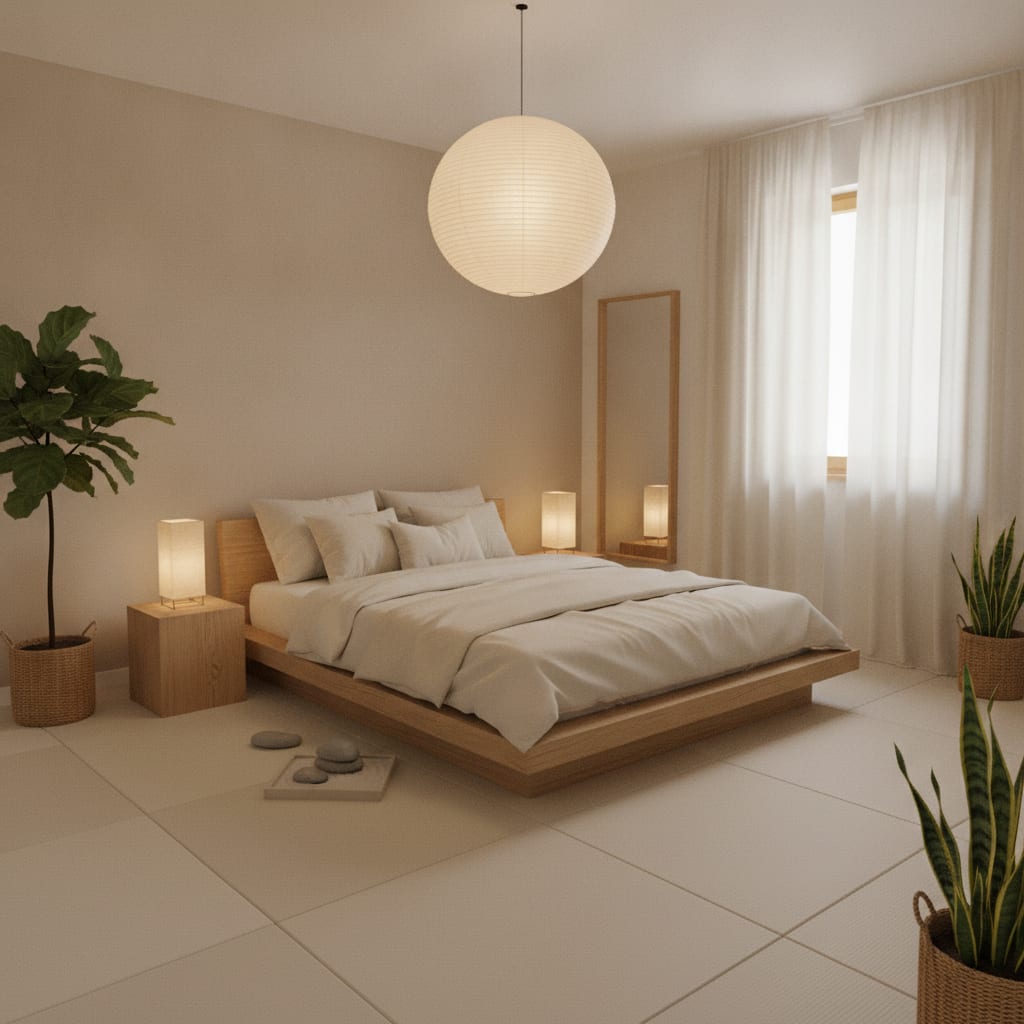
Minimal Japanese. Ultra-reduced, natural materials, hidden storage. The Tokyo Capsule Hotel shows how far reduction can go.
Warm modern. Oak, linen, plaster tones, a single bold artwork. The most broadly liveable.
Pick one. The most common mistake in hotel-inspired bedrooms is combining a dark boutique headboard with minimal Japanese bedding and grand European mouldings.
The details that cost almost nothing
- A luggage bench at the foot of the bed.
- A tray on the dresser holding the few objects allowed out.
- Real hangers, matching, in the wardrobe.
- A carafe and glass on the bedside table.
- Nothing on the floor, ever. Hotels have no floor clutter and it’s a large part of why they feel calm.
Preview the register before you buy the headboard
Deep tones, saturated pastels, and large headboards are all high-commitment purchases that behave differently in different rooms.
With Architectural AI, photograph your bedroom and compare hotel registers side by side on your actual room — Grand Budapest, Wes Anderson, Tokyo Capsule, the Continental. Try the demo, browse the worlds catalog, or ask our AI designer which register suits your light.
The bottom line
Hotel rooms feel better because they contain less, are lit better, and commit to one idea. Remove everything outside the five-piece list, put warm dimmable light on both sides of the bed, hang the curtains from the ceiling, and pick a single register. None of that is expensive, and it closes most of the gap.
Download Architectural AI and check into your own bedroom.
FAQ
What makes a design hotel room look different from a normal bedroom? Three things: severe editing, layered lighting, and one deliberate bold gesture. A hotel room contains only what is needed, lights the room from four or five low sources rather than one ceiling fixture, and commits to a single strong idea — a colour, a headboard, a material — instead of several competing ones.
How do I make my bedroom feel like a boutique hotel? Start with the five-piece formula: bed with a substantial headboard, two matching bedside tables, two matching lamps, one chair or bench, and one large mirror or artwork. Remove everything else. Then add white hotel-grade bedding, floor-to-ceiling curtains, and warm dimmable lighting. The editing matters more than the spending.
What is the Grand Budapest Hotel interior style? It is Wes Anderson’s stylised take on Central European grand-hotel design: strict symmetry, saturated pastel colour blocking in pinks and purples, ornate mouldings and lift cages, patterned carpet, and everything centred and flat-on. As a room style it translates to one saturated pastel wall, symmetrical furniture pairs, and gold or brass detailing.
Can I preview a hotel style on my own bedroom? Yes. Architectural AI includes Grand Budapest Hotel, Wes Anderson, Tokyo Capsule Hotel and John Wick Continental worlds that restyle a photo of your real bedroom into each hotel look in seconds, which lets you compare registers before buying bedding or repainting.
Keep reading