Luxury Interior Design on a Normal Budget: What Actually Reads as Expensive
The most useful thing anyone can tell you about luxury interiors is that the signals your eye reads as “expensive” are mostly not expensive. They’re decisions. A room can contain twenty thousand pounds of furniture and read as cluttered; another can contain a second-hand sofa and read as considered.
Here’s what your eye is actually responding to, and how to buy it.
Signal 1: a restricted palette
Almost every room that reads as luxury runs on three or four tones. A base occupying around 60% (walls, large surfaces), a secondary at 30% (upholstery, curtains), an accent at 10% (metal, art, one cushion).
Rooms that read as chaotic typically have seven. This is the single cheapest correction available, because removing a colour costs nothing.
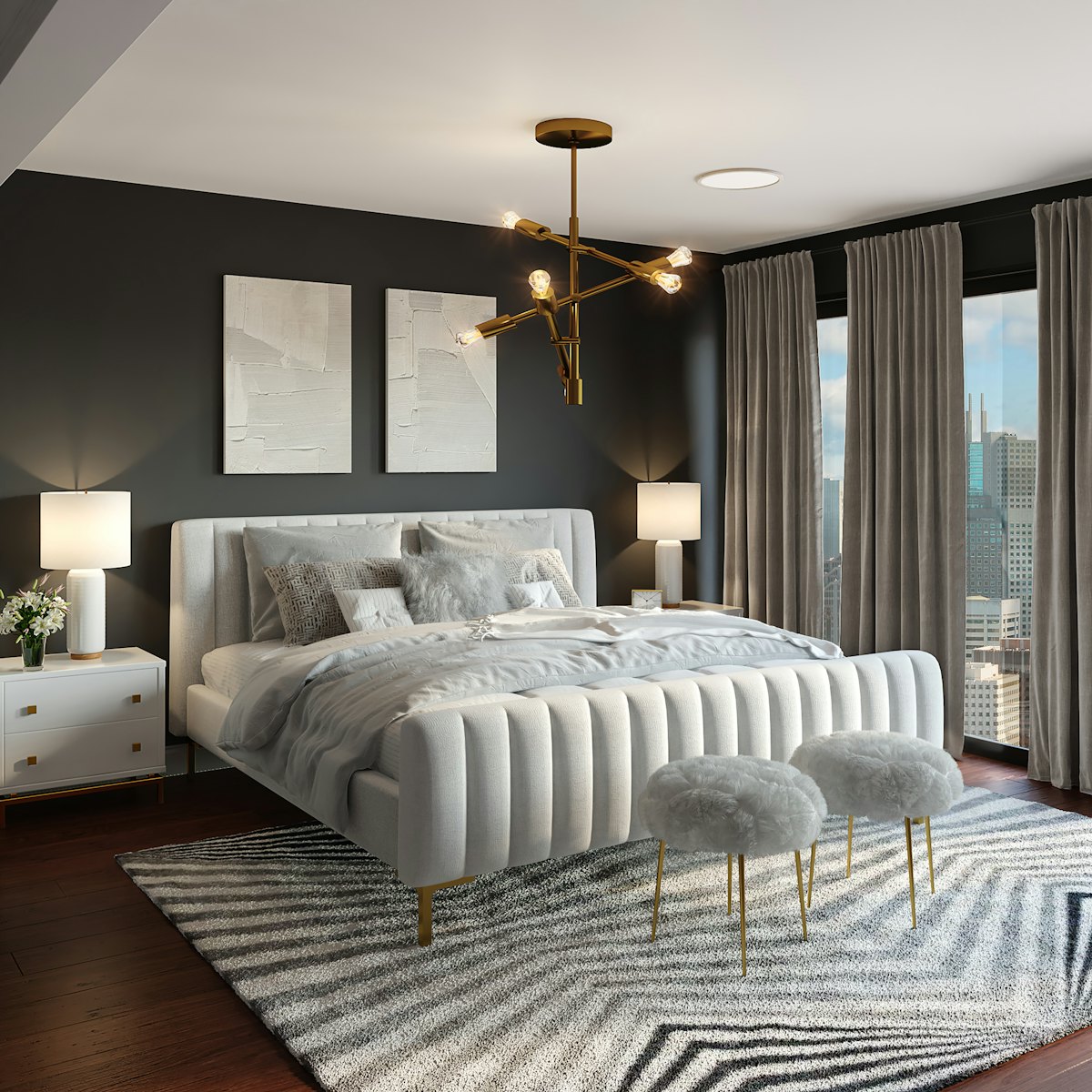
Combinations that reliably work: cream with walnut and brass; greige with pale oak and matte black; deep green with stone and bronze. For coherence across a whole home, see our whole-house colour scheme guide.
Signal 2: empty space
This is the one that’s hardest to accept, because the instinct is that a full room looks generous.
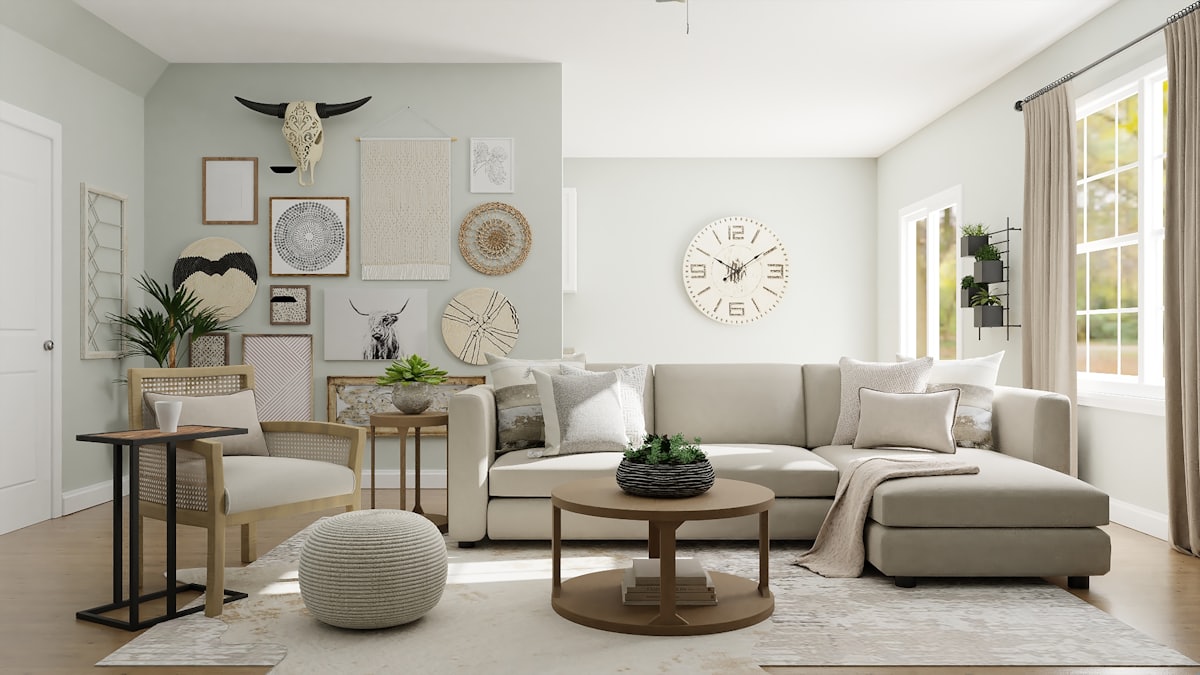
Look at any photograph of a high-end interior and count the objects on the surfaces. Two or three, not fifteen. Wide gaps between furniture. Walls that aren’t covered in frames. A dining table with nothing on it but one arrangement.
If your room has good furniture but doesn’t feel elegant, the problem is almost certainly what’s in it rather than what’s missing. Removing about 40% of the decorative objects is the highest-return luxury intervention that exists, and it’s free.
Our guide to virtual decluttering covers how to see the payoff before doing the work.
Signal 3: warm, layered, dimmable light
Lighting is where amateur and professional interiors diverge most visibly. One ceiling fixture at full output flattens any room, regardless of what’s in it.
A luxury scheme uses at least three layers:
- Ambient — general, soft, on a dimmer.
- Task — reading lamps, under-cabinet light, bedside sconces.
- Accent — a picture light, a concealed strip in a shelf, a table lamp creating a pool of light.
Temperature matters as much as quantity: 2700K reads as hotel; 4000K reads as office. Swapping bulbs and adding dimmers costs very little and changes the perceived quality of an entire home after dark.
Signal 4: generous textiles
Two specific failures make otherwise good rooms look cheap, and both are easy to fix:
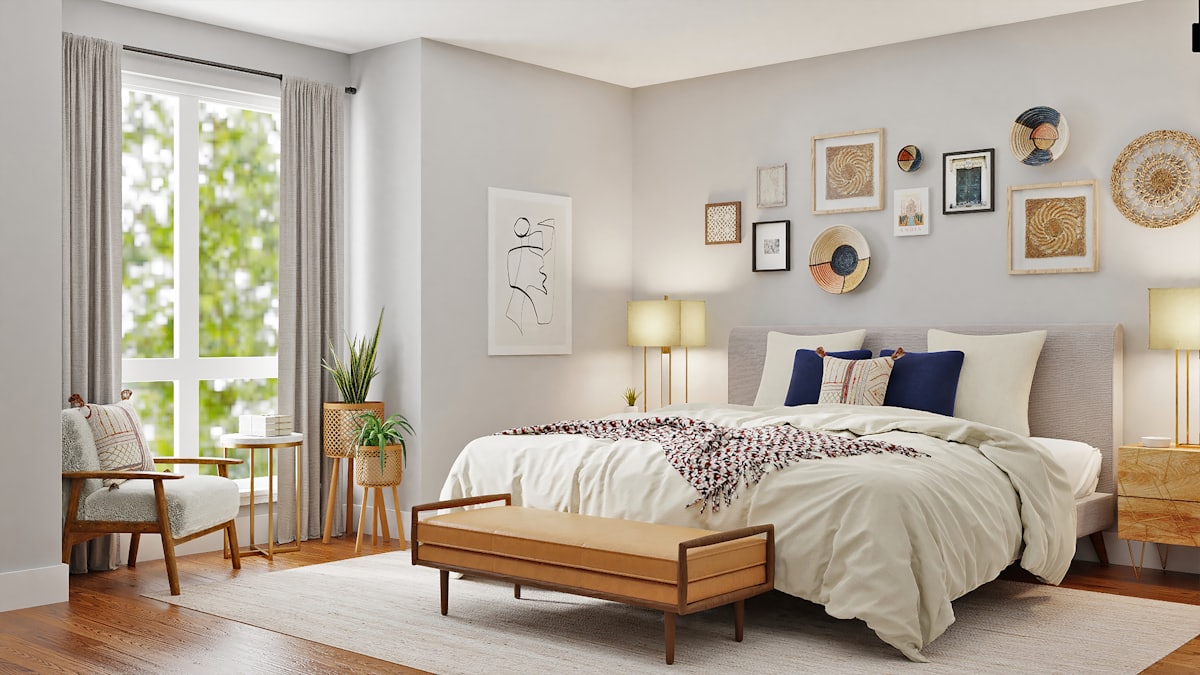
Short curtains. Hung from the window frame, ending mid-wall. Hang the track just below the ceiling, extend it well past the frame on both sides, and let the fabric reach the floor. Linen or a heavy weave with real drape.
Small rugs. A rug floating in the middle of a seating group is the most common styling error there is. Go a size up from what seems necessary — at minimum, the front legs of every seat should sit on it.
Both changes are moderate in cost and disproportionate in effect.
Signal 5: fewer, larger pieces
Six small pieces make a room feel smaller than three large ones. Small pieces multiply edges, legs, and shadows; large pieces create clean masses.
In practice: one generous sofa instead of a sofa plus two armchairs. One wide coffee table instead of two side tables. Full-height joinery instead of a dresser plus wall shelves.
Signal 6: one focal point
A luxury room has an obvious protagonist — a fireplace, a view, one large artwork, a sculptural light. Everything else is subordinate.
Ostentation is the absence of hierarchy: six things competing. If you walk into your living room and don’t know where to look first, that’s a hierarchy problem, not a budget one.
Signal 7: material honesty
Concentrate spending on the few surfaces that are touched and seen closely — a stone or timber coffee table top, real metal hardware, a solid-wood console. One authentic material outperforms ten imitations distributed around a room.
The rule of thumb: if it’s touched daily, make it real. If it’s three metres up, imitation is fine.
Where to spend and where to save
Spend on: the sofa, lighting, curtains, the mattress, and hardware (handles and knobs are a remarkably cheap way to upgrade existing cabinetry).
Save on: side tables, shelving, decorative accessories, and art — a well-framed large print does the same work as an expensive original in almost every room.
The free checklist
If you do nothing else, do these five. All are free or nearly so:
- Remove 40% of the objects on display.
- Swap every bulb to 2700K and add dimmers where possible.
- Rehang curtains from just under the ceiling, floor length.
- Reduce the palette to three tones.
- Turn off the ceiling light in the evening and use lamps only.
Do these before buying anything. Most people find they need less than they thought.
Preview it on your own room
Palette, materials, and lighting temperature are all hard to imagine and expensive to undo once executed.
With Architectural AI, photograph your living room, bedroom, or kitchen and preview luxury directions on your real space in seconds — compare a marble-and-brass approach with a wood-and-linen one, test a deep wall tone with Change Wall Color, or see the room cleared with Clean Room to check how much it gains from subtraction alone.
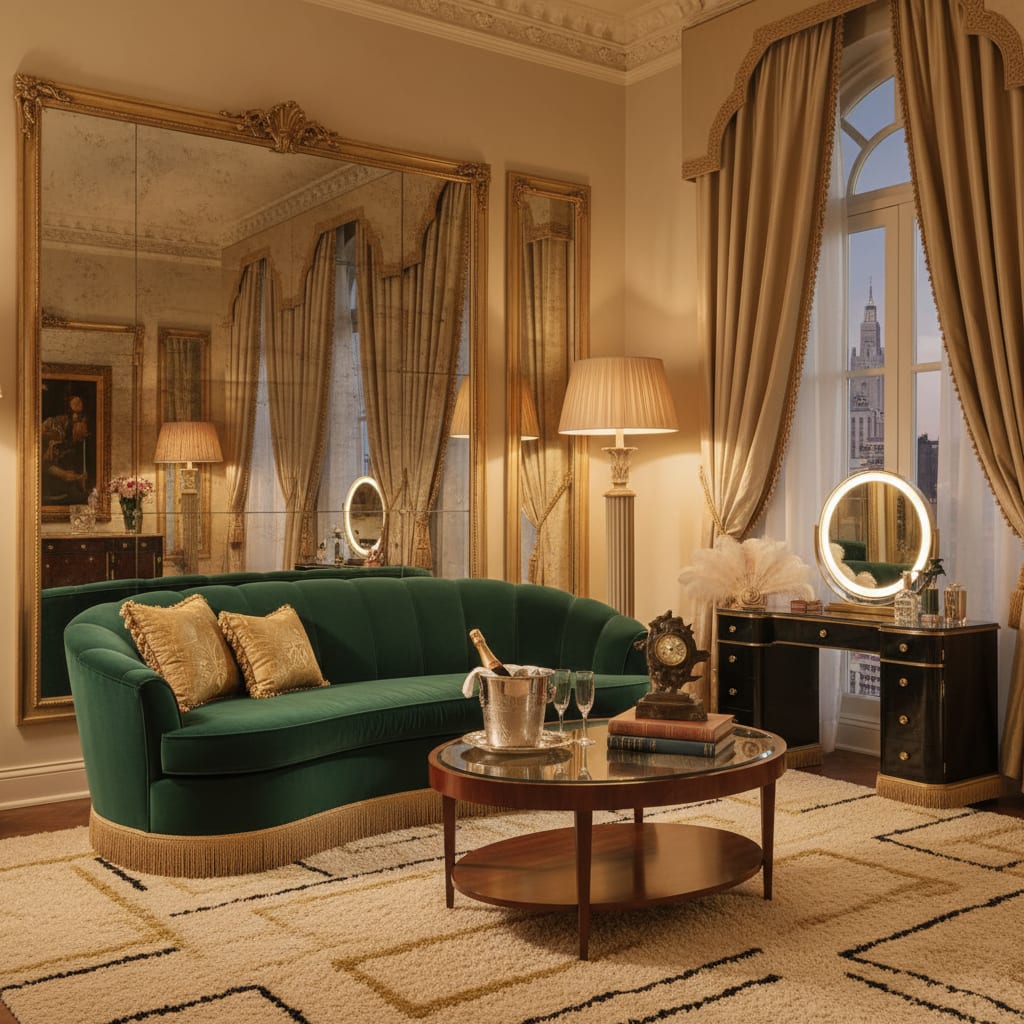
Start in the demo, browse the styles gallery, or explore reference environments like the Dubai Sky Penthouse, Hollywood Glamour and Organic Modern in the worlds catalog. For the bedroom-specific version, see our luxury bedroom design ideas.
The bottom line
Luxury reads as fewer things, better chosen, better lit, with more space between them. Three of the seven signals — palette discipline, subtraction, and lighting temperature — cost essentially nothing and account for most of the effect. Do those first and let the budget go to the sofa and the curtains.
Download Architectural AI and see your room at the high end before spending anything.
FAQ
What makes a room look expensive? Four things, none of which are the price of the furniture: a restricted palette of three or four tones, deliberate empty space around fewer and larger pieces, warm layered lighting on dimmers instead of one bright ceiling fixture, and generous textiles — floor-to-ceiling curtains and a rug large enough for the seating group.
What is the cheapest way to make a room look luxurious? Remove about 40% of the objects on display, swap every bulb to warm 2700K, and rehang the curtains from just below the ceiling instead of from the window frame. All three are effectively free and together they change the perceived quality of a room more than any single piece of furniture would.
Where should you spend money in a room? On what you touch daily and what covers large visual area: the sofa, the lighting, the curtains, the mattress, and door and cabinet hardware. Save on side tables, shelving and decorative accessories. One excellent sofa surrounded by simple pieces reads as considered restraint, while four mid-range pieces read as a catalogue.
What is the difference between luxury and ostentation in interiors? Luxury is restraint — few materials, very good, with space between them, and one clear focal point. Ostentation is accumulated price signals with no hierarchy. A practical test is to count the focal points in a room: a luxury interior has one or two, an ostentatious one has six competing for attention.
Keep reading