One Bedroom, Two Sleep Styles: Design Compromises That Work
Sharing one bed with two different sleep styles works when you design for two people instead of averaging them into one — split lighting so a night owl and an early riser don’t collide, two separate duvets so a hot and a cold sleeper each stay comfortable, and clear his-and-hers nightstand rules so a minimalist and a pile-keeper can coexist. Most bedroom tension between couples isn’t a relationship problem; it’s a design problem with known, tested solutions. Here are the ones that actually work.
Design for two people, not an average
The core mistake couples make is decorating the bedroom as if one composite sleeper lived there — one light level, one duvet weight, one tidiness standard. But you’re two people with genuinely different bodies and habits, and splitting the difference tends to leave both of you slightly uncomfortable. The better approach borrows from how good design handles any shared space: give each person their own zone and controls where it matters, and keep only what genuinely needs to be shared, shared. Once you stop chasing a single compromise setting, most of these conflicts have clean fixes.
The light conflict: night owl vs early riser
This is the classic. One of you wants to read at midnight; the other is up at six and needs the room pitch dark. Overhead light is the enemy of both — it’s all-or-nothing. The fix is to split and localize:
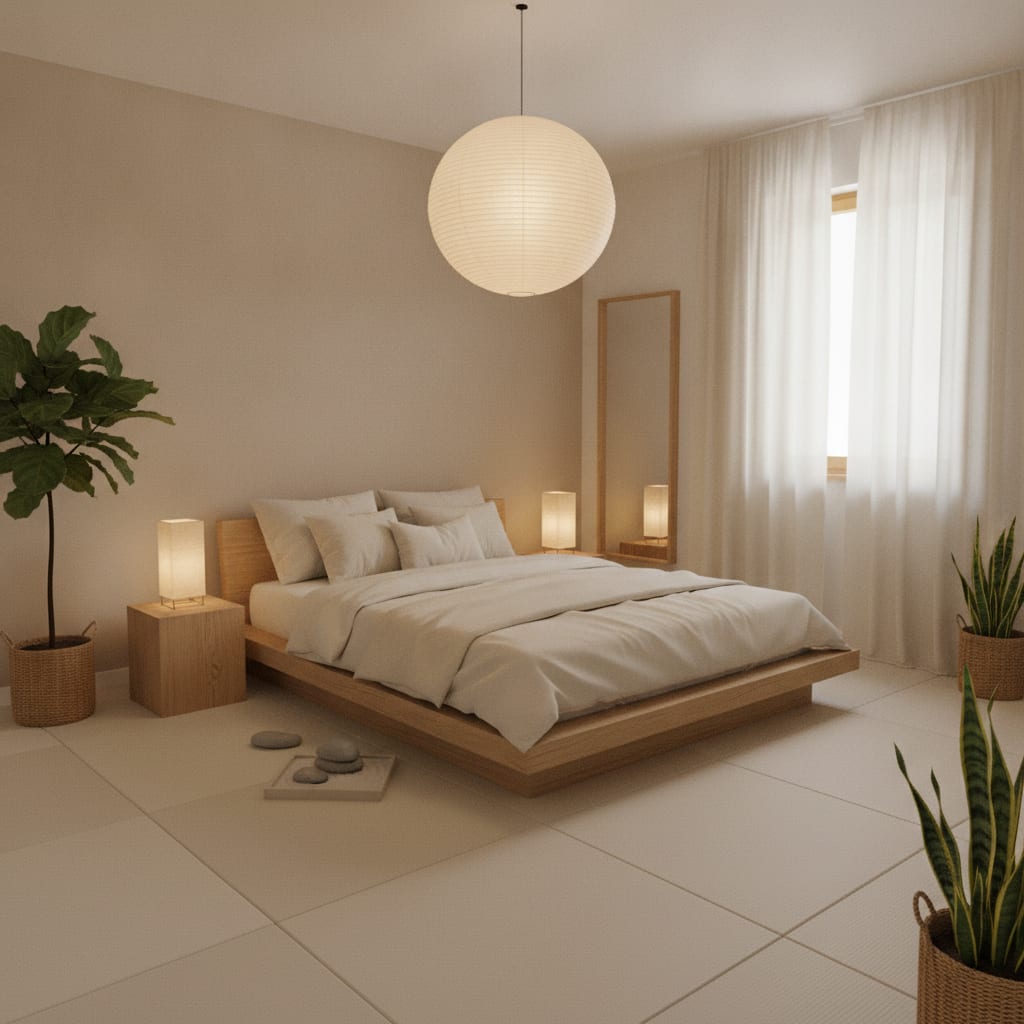
- Individual reading lights. Give each side its own dimmable, warm-toned wall or nightstand light aimed at that person’s book, not the whole room. The night owl reads; the sleeping partner stays in the dark.
- Warm, low color temperature at night. Cool white light suppresses melatonin. Warm, dim light signals sleep and spills less across the bed.
- Blackout curtains for the early riser. They keep streetlight and early sun out, which helps the person who’s asleep while the other winds down — and helps the early riser sleep past dawn on weekends.
Layered, controllable lighting is the backbone of a restful bedroom generally, not just for couples — our guide to calming bedroom ideas for better sleep goes deeper on getting the light right.
The temperature conflict: hot sleeper vs cold sleeper
One of you kicks the covers off; the other is in socks and a hoodie. The single best fix is the dual duvet method. The dual duvet method, standard across Scandinavia, gives each person their own single-size duvet on a shared bed rather than one large duvet stretched over both of you. It quietly solves several problems at once:
- It ends the nightly blanket tug-of-war.
- The hot sleeper can take a light duvet while the cold sleeper takes a heavier, warmer one.
- Different movement styles stop waking each other up.
Beyond bedding, a small fan or a cooling mattress topper on the hot sleeper’s side, and a heavier throw folded on the cold sleeper’s side, let each of you tune your own microclimate without touching the thermostat you’ll never agree on.
The clutter conflict: minimalist vs pile-keeper
One partner wants clear surfaces; the other reads three books at once and charges four devices on the nightstand. Fight this with zoning and containment rather than nagging:
- Each person owns their nightstand, absolutely. What happens on your own surface is your business. This one rule defuses most of the daily friction.
- Give the messier person a closed drawer. A nightstand with a drawer or a small cabinet lets the pile exist but disappear — visible order, private chaos.
- Keep the shared surfaces shared-minimal. The dresser top and windowsill stay clear by mutual agreement, so the room reads calm even if one drawer is a disaster.
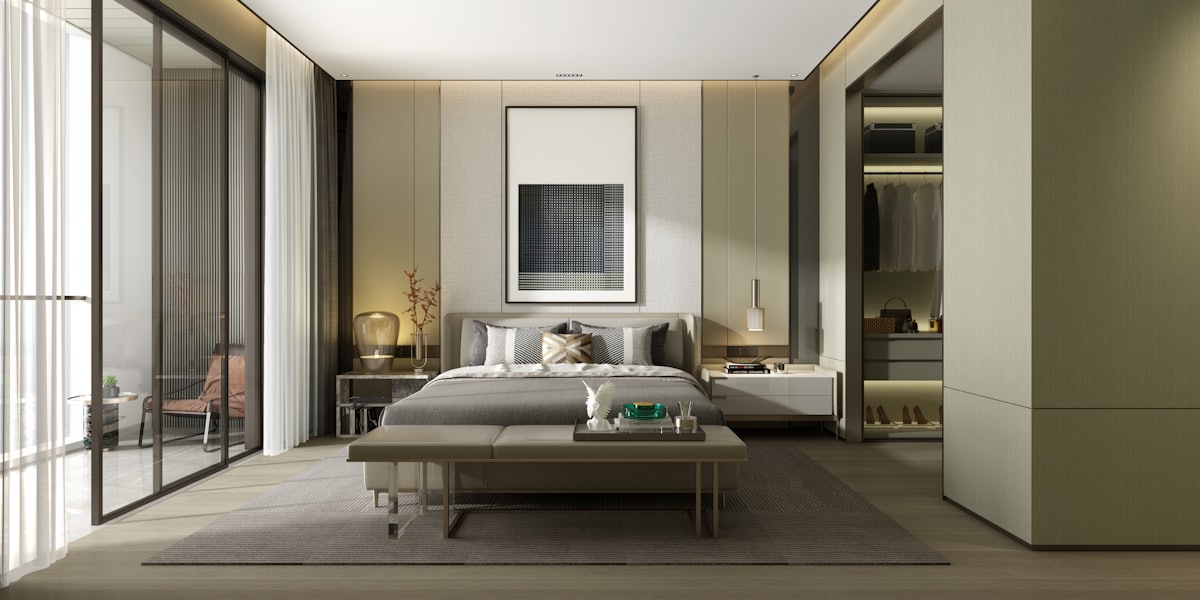
Symmetry helps too: matching lamps and nightstands on both sides make the room feel intentional and fair, even when one side is tidier than the other.
The gadget conflict
Phones and chargers are their own small war. A tidy fix: a charging spot inside each person’s nightstand drawer (cords hidden, phones out of sight and reach), one shared alarm or a sunrise clock instead of two competing phone alarms, and a no-screens-on-the-shared-surfaces rule. It’s a design decision as much as a discipline one — if there’s a dedicated, hidden home for the tech, it stops colonizing the room.
The movement conflict: light sleeper vs restless partner
If one of you wakes at every turn and the other is a thrasher, the bed itself is part of the fix. A larger mattress than you think you need — sizing up from a queen to a king buys each person real space — dramatically cuts how often one sleeper’s movement reaches the other. Motion-isolating mattresses, like memory foam and pocketed-coil designs, absorb a partner’s shifting instead of transmitting it across the bed. And the Scandinavian trick of two single duvets pairs perfectly here, because separate bedding means one person rolling over no longer drags the covers or the cold air along with them. None of this shows in a styled photo, but it’s the compromise that most often decides whether two people actually sleep — so budget for the mattress before the throw pillows.
Agree on a calm shared palette
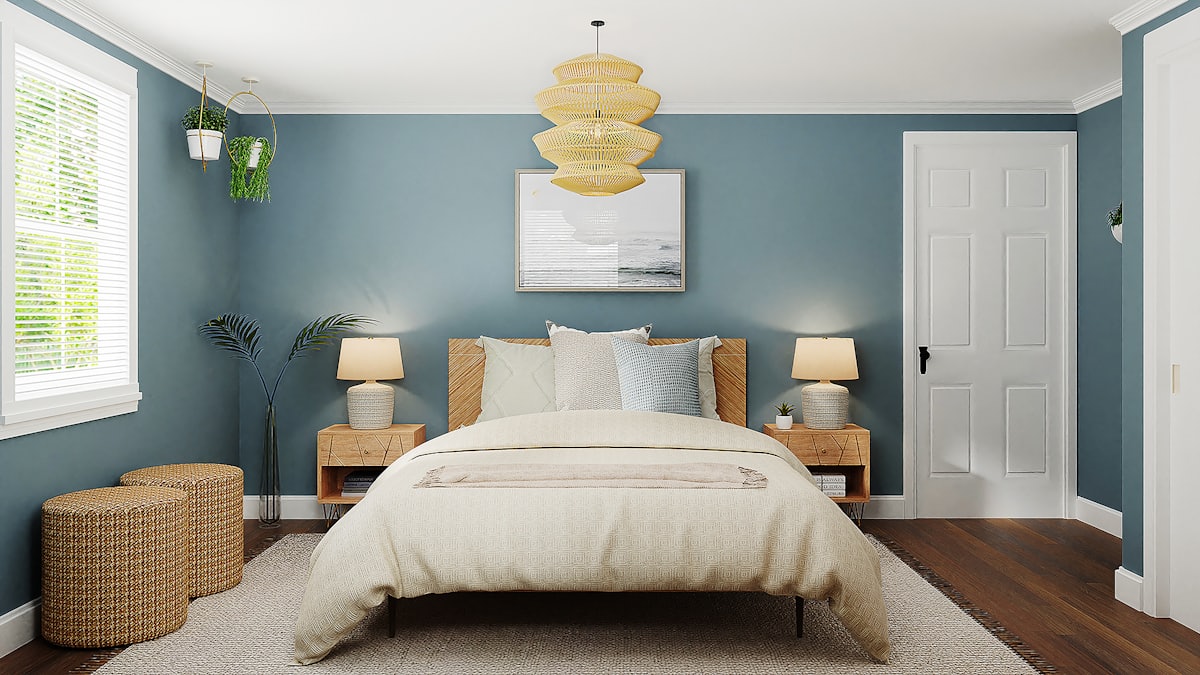
Color is the one thing you can’t split by side, so it’s worth agreeing on deliberately. Aim for a low-stimulation palette — soft greens, muted blues, warm greiges — that reads restful to both of you rather than energizing to one and draining to the other. Because color reacts so strongly to a room’s specific light, preview a shortlist on a photo of your actual wall before committing; our roundup of bedroom color ideas is a good place to build the shortlist, and testing shades in your own room’s daylight and lamplight settles the pick fast.
Preview the compromise before you rearrange
The advantage of settling all of this on a photo first is that you can test the whole compromise — the split lighting, the calmer palette, a layout that gives each person a proper nightstand and reading corner — without moving furniture or buying anything. An AI room preview is a photorealistic mock-up generated from one photo of your real bedroom, so both of you can see the shared version and agree on it in about ten seconds. Generate a couple of directions, compare them with the before/after slider, and walk into the actual rearrange already agreeing. Try it on your own bedroom in the interactive demo.
Frequently Asked Questions
How do couples with different sleep styles share a bedroom?
Design for two people, not an average of one. Use split solutions — individual reading lights, two separate duvets, and each person’s own nightstand rules — so a night owl and an early riser, or a hot and a cold sleeper, each get what they need in the same bed.
What is the dual duvet method?
The dual duvet method, common in Scandinavia, gives each sleeper their own single-size duvet on a shared bed instead of one large shared one. It ends the nightly tug-of-war and lets one person have a heavier, warmer duvet while the other stays cool.
How do you handle one partner going to bed earlier?
Give the earlier sleeper darkness and the later one low, warm, localized light. A dimmable individual reading light plus blackout curtains lets the night owl read or wind down without keeping the early riser awake.
What bedroom color is best for a couple?
Pick a calm, low-stimulation tone you both find restful — soft greens, warm greiges and muted blues are reliable, widely-liked choices. Preview a shortlist on a photo of your actual wall so you agree on one that suits the room’s light.
Two sleep styles, one bedroom? Design the compromise before you move a thing with Architectural AI — download it on the App Store, photograph your bedroom, and preview the calm, shared version you’ll both sleep better in.
Keep reading