One Room, Two Kids: Fair Zones and Peace Treaties
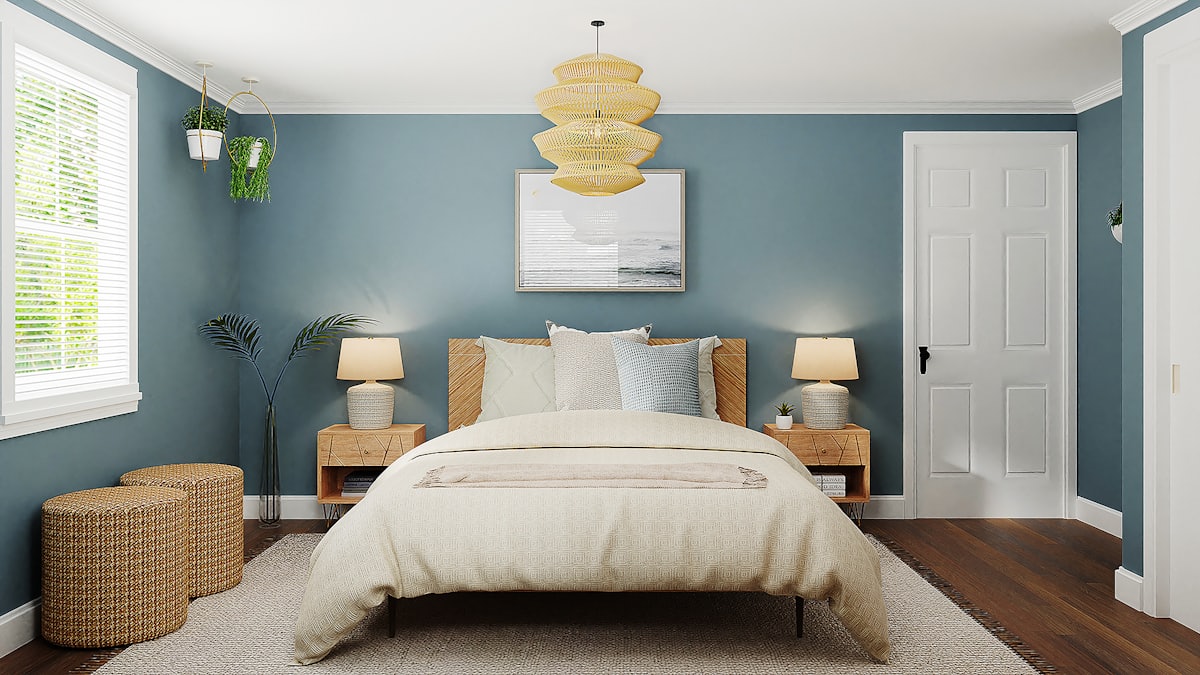
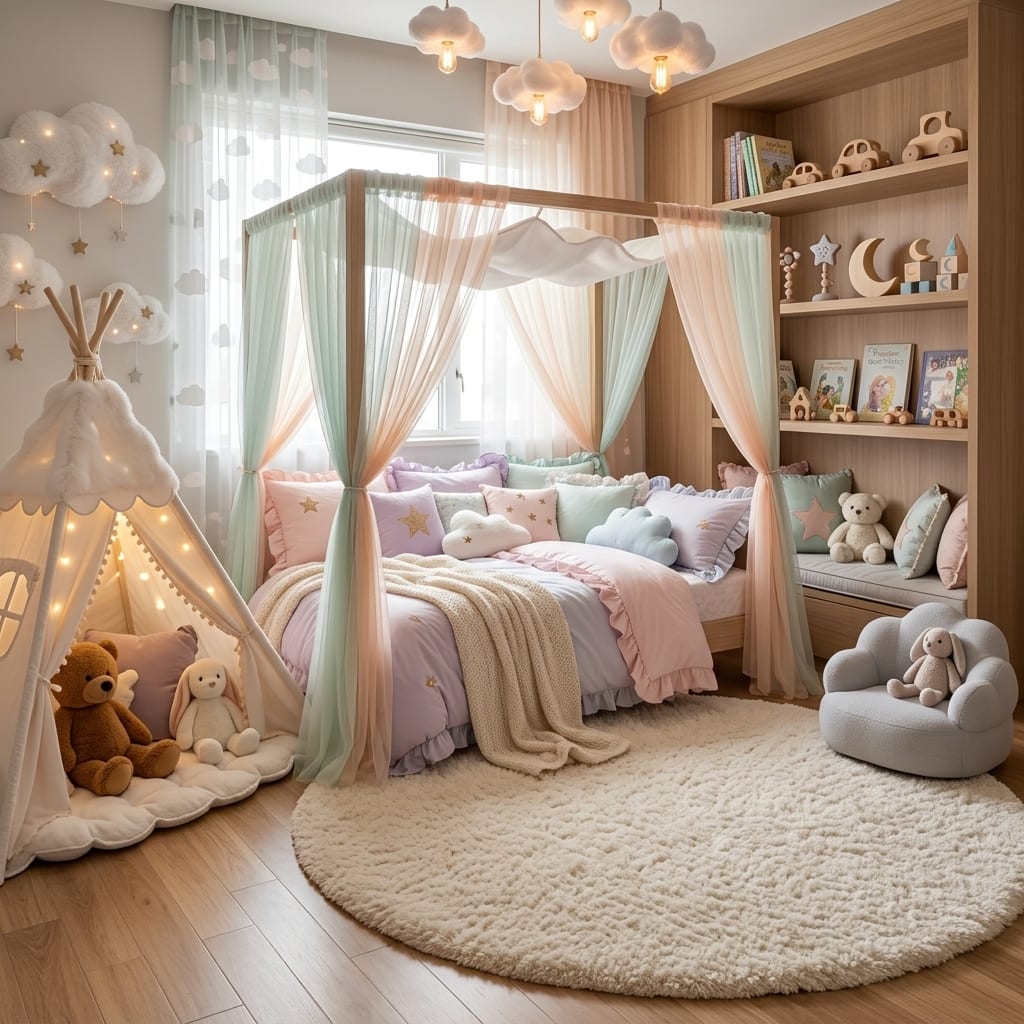
A shared kids’ bedroom works when each child gets a fair, clearly defined zone of their own and the room agrees on a neutral shared base — not when you force everything to match. Two children in one room fail over the same three things every time: territory, sleep, and taste. Solve them with design — equal zones, separated light and sound, a shared base with personal corners — and the room stops being a nightly negotiation. Here’s how to draw the borders so both kids feel it’s theirs.
How do you divide the room fairly?
Fairness in a shared room means symmetry in what matters, not identical everything. Each child needs three things that are unmistakably theirs: their own bed, their own storage, and a patch of wall or shelf they get to decorate. Get those equal and the rest of the room can be shared and neutral without anyone feeling shortchanged.
Start by mirroring the layout. If the room allows, place the two beds so neither is obviously the “better” spot — matched distance from the window, the door, the radiator. Give each child a personal storage unit rather than one shared dresser they’ll fight over, and mark a clear personal zone at each bed: a shelf, a pinboard, a lamp. The shared center — the floor, the play space, the doorway path — stays neutral ground.
Symmetry or personalization: which wins?
The instinct is to buy two of everything for a tidy, symmetrical look. It photographs well, but it ignores that most siblings are different people who want to feel different. The better approach is a shared frame with personal fill: identical bed frames and matching storage units (so the bones look calm and intentional), but each child chooses their own bedding, art and accent color inside their zone.
This gives you the visual order of symmetry where it helps — the big, expensive, hard-to-change pieces — and the individuality of personalization where it matters most to the kids. A shared color scheme with two personal accents almost always beats either total matching or total free-for-all.
Bunk beds, loft beds, or two beds?
The bed decision usually comes down to floor space, and each option trades something.
| Option | Best for | The trade-off |
|---|---|---|
| Bunk beds | Small rooms, similar-age kids | Top bunk is harder to access; less private; who gets the top? |
| Loft bed + zone below | Freeing floor for desks/play | Only suits one child unless doubled; height limits |
| Two low beds | Younger kids, equality, easy access | Uses the most floor area |
| Trundle bed | Rooms shared part-time | Less permanent; daily setup |
There’s no universally right answer — a small room with same-age siblings often wants a bunk to buy back floor space for zones, while young children or a larger room are usually happier with two accessible low beds. Whatever you choose, settle the top-bunk question in advance, because “who sleeps up high” is the single most common shared-room argument.
Separate sleep, light and sound
Two children rarely run on the same schedule, and mismatched bedtimes wreck a shared room unless you design for it. The goal is to let one child wind down while the other sleeps, without a nightly standoff over the light switch.
- Independent light: give each child their own dimmable, warm bedside lamp so one can read while the other sleeps. A single overhead switch controlled by whoever’s awake is a recipe for conflict.
- A blackout layer at the window so early sun or a late reader’s lamp doesn’t wake the other.
- Soft goods for sound: a rug, curtains and upholstered surfaces absorb the noise that bounces around a hard-floored, two-kid room.
- A visual divider if ages differ a lot — an open shelf, a curtain, or the backs of the two beds meeting — gives each child a sense of their own space without walling off the room.
Let each child preview their own corner
The peace treaty gets much easier to negotiate when both kids can see their ideas instead of arguing them in the abstract. Take one photo of the room and generate each child’s personal zone in their preferred direction — one calm and cool, one bright and bold — on the actual walls. Two things happen: each child feels heard because their choice is visibly real, and you spot clashes before you’ve spent anything.
You can try both visions on your own room photo in the interactive demo, then dial each zone in with quick edits — Change Wall Color for a shared base that flatters both accents, Add Plants or lighting tweaks to soften a busy side. Our broader kids room design guide covers the theme layer, and letting each child lean into their own personality — even something as playful as a zodiac-inspired accent for their side — gives them ownership of their corner without letting either one repaint the whole room.
Storage: the quiet peacemaker
Most sibling friction is really a storage shortage in disguise. When two kids share too little space to put things away, “your stuff is on my side” becomes a daily complaint. Give each child clearly personal, labeled storage — their own drawers, their own bin, their own shelf — plus a small amount of genuinely shared storage for communal toys, and a lot of the territorial fighting simply evaporates. Run the Smart Storage quick edit on the room photo to see where dual storage could go before you buy furniture that only serves one child.
The bottom line for parents
Two kids in one room isn’t a compromise you impose — it’s a set of borders you design. Give each child an equal zone, their own bed and storage, and a personal corner they control; keep the shared base neutral so two accents can coexist; separate the light and sound so different bedtimes stop colliding. Preview both children’s picks on the real room first, and you’ll settle most of the arguments on screen instead of at bedtime.
Frequently Asked Questions
How do you divide a bedroom between two kids fairly?
Give each child a clearly defined, equal zone — their own bed, a personal storage unit and a small patch of wall to decorate — and keep the shared middle neutral. Fairness comes from symmetry in the things that matter (space, storage, a say in their own corner), not from making everything identical.
Are bunk beds or two separate beds better for a shared room?
Bunk or loft beds save floor space and free room for zones and play, which is often the right call in a small room, but they make the top bunk harder to access and can feel less private. Two low beds are easier and more equal but eat floor area. Choose based on the room’s size and your children’s ages.
How do you handle two kids with different bedtimes?
Separate the light and sound. Give each child their own dimmable bedside light so one can read while the other sleeps, add a blackout layer at the window, and use a rug and soft furnishings to soak up noise. A room zoned for two routines beats trying to force one shared schedule.
How can each child personalize a shared room without it clashing?
Agree a shared base — wall color, flooring, bed style — then give each child a defined personal zone they control: their bedding, their wall art, their color accent. Previewing both children’s choices on the real room first lets you find a scheme where two personalities coexist instead of fighting.
Refereeing a two-kid bedroom? Draw the borders on screen first with Architectural AI — download it on the App Store, preview both children’s picks on your real room, and settle the debate before you spend a cent.
Keep reading