Playroom Design That Hides the Chaos
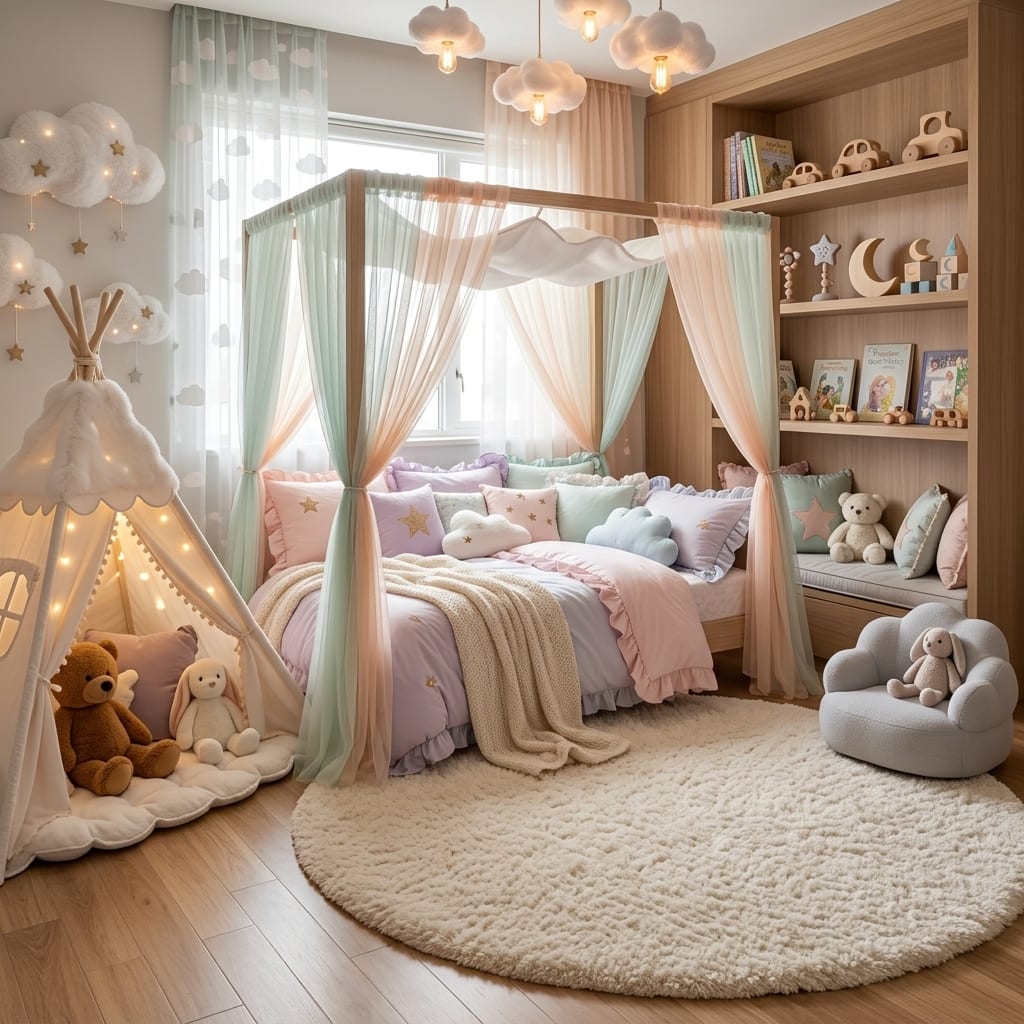
A playroom stays tidy when it’s designed to hide the chaos by default: mostly closed storage, one clear home per toy category, and defined zones a child can reset in five minutes. The reason most playrooms spiral isn’t too many toys — it’s that everything is visible, homeless and mixed together, so tidying means an adult sorting a floor-sized jumble instead of a kid dropping things into obvious bins. Fix the system, not the symptom, and the room forgives a busy family. Here’s the design that does the heavy lifting for you.
Why do playrooms always look chaotic?
The core problem is visual noise. A playroom typically packs the loudest colors, the most varied shapes and the highest object count of any room in the house — and when all of it is on open display, the eye reads “mess” even right after a tidy-up. The second problem is homelessness: if a toy has no obvious place to live, it lives on the floor.
Good playroom design attacks both. It reduces what’s visible at any moment, and it gives every category an unmistakable home. Do that and the room looks calm even mid-play, and returns to order in the time it takes to sing a clean-up song.
Closed storage versus open storage: what’s the right mix?
Closed storage is any container that hides its contents — cabinets, lidded boxes, baskets, drawers. Open storage keeps things visible and reachable — low shelves, cubbies, wall rails. Each has a job, and the mistake is using only one.
Lean mostly closed. The bulk of the collection — the pieces not in daily rotation, the visually busy sets, the “someday” toys — belongs behind doors or in opaque boxes so the room reads quiet. Reserve a small amount of open, child-height shelving for the current favorites and the books, because toys a child can see and reach are toys a child will actually use and put back.
- Closed (hide the bulk): cabinets, lidded storage benches, opaque baskets with labels, under-bench drawers.
- Open (daily favorites only): one low bookshelf, a few front-facing book ledges, a single cubby unit for in-use toys.
- Label everything with pictures for pre-readers so tidying needs no adult translation.
Design zones so play has boundaries
A zone is a small, defined area dedicated to one kind of play — and zoning is the difference between a room that scatters and a room that self-organizes. When building lives in one spot, reading in another and messy art in a third, toys tend to stay near their zone, and clean-up becomes local instead of total.
Three zones cover most families:
- Build/pretend zone: an open patch of soft flooring or a rug, with the construction and figure toys stored at its edge.
- Read/calm zone: a corner with a small chair or floor cushion, a book ledge and warm light — the room’s off-switch.
- Mess zone: art and craft near a wipeable surface and, ideally, away from carpet, with supplies in closed storage that only comes out with supervision.
Before you move furniture to carve these out, it’s worth testing the layout on a photo. The layout guide for living spaces covers the zoning principles, and you can preview a rearranged room in seconds rather than dragging shelving around to find out a plan doesn’t work.
Choose a palette adults can live with
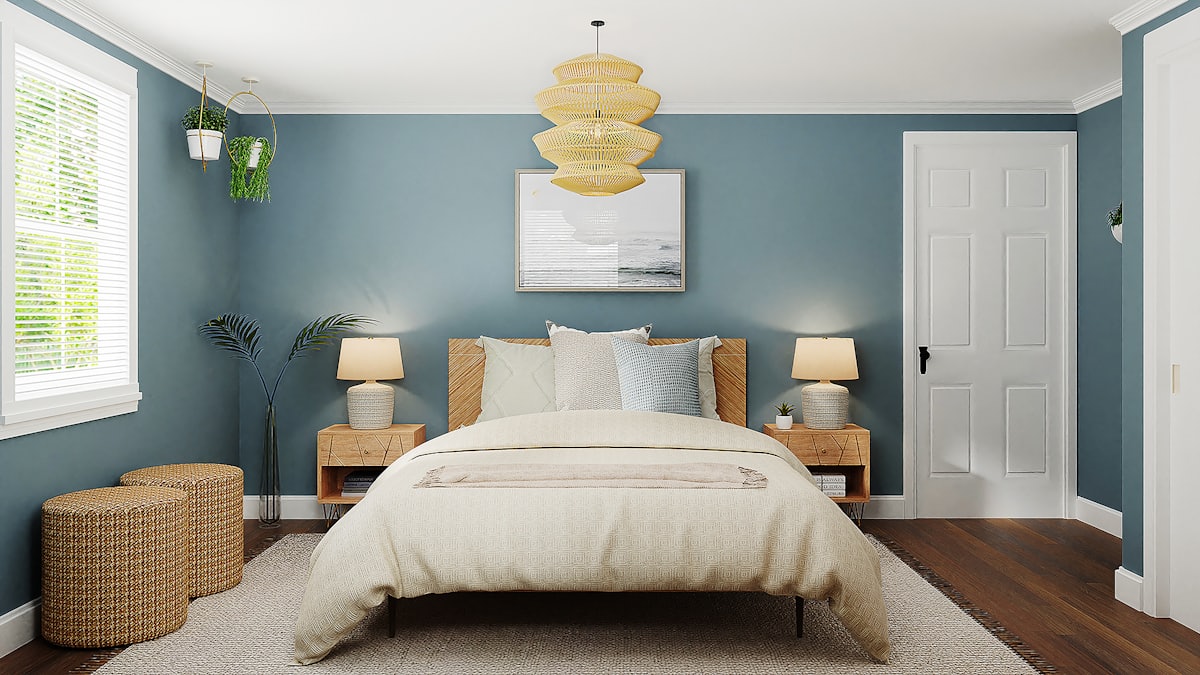
Here’s the quiet secret of a stylish playroom: the color should come from the toys, not the room. Anchor the walls and the large storage in a warm neutral or a muted, grown-up tone — soft sage, warm clay, greige, chalky blue — and let the rainbow of plastic provide all the energy the space needs. When the loud primaries are tucked inside neutral closed storage, the room stays playful for the kids and calm for the adults who also have to sit in it.
Wall color is the highest-leverage decision here and the easiest to misjudge from a chip. Photograph the room, run the Change Wall Color quick edit, and audition a few calm candidates on the real walls under your actual light before committing a can. Because this is a room that takes abuse, pair the color choice with wipeable, hard-wearing finishes.
Use a declutter preview as your motivation
The hardest part of taming a playroom is starting — the current state is so overwhelming that “later” wins. A surprisingly effective push is to see the finished, calm version first. Upload a photo of the room at its messiest and run an AI Declutter or Clean Room preview: in seconds you get the same space cleared of the chaos, which reframes the job from “impossible” to “worth an afternoon.”
It’s also a genuine planning tool. The decluttered image shows you how much the room’s bones improve with the mess gone, which tells you where storage needs to absorb capacity and where a zone naturally wants to sit. Our deep dive on virtual decluttering explains how to use it for motivation and planning — and it’s honest work, because seeing the clean version tends to make the real clean-up happen. For more theme and storage ideas as the room evolves, the kids room design guide is a good next stop.
Build in a five-minute reset
Every sustainable playroom has a reset that a child can do alone. Aim for a room where tidying is “put each thing in its labeled home” rather than “sort, categorize, then find space.” That means enough total closed capacity to swallow everything, homes obvious enough that a four-year-old doesn’t need to ask, and a habit — a song, a timer, a before-dinner ritual — that triggers it.
If clean-up currently requires you, the system is too complex. Simplify categories, add closed capacity, and lower the shelves until the child can run the reset without help. That, more than any single beautiful object, is what makes a playroom livable.
The bottom line for parents
You will never win the toy war by tidying harder. Win it with design: mostly closed storage to hide the visual chaos, a little open storage for daily favorites, clear zones so play stays contained, and a calm palette that lets the toys be the color. Preview the decluttered version to motivate the first push and plan the storage — then let the room do the organizing for you.
Frequently Asked Questions
How do I organize a playroom so it actually stays tidy?
Give every toy category one clearly defined home, favor closed storage for the visual mess and open storage only for the toys in daily use, and build distinct zones so play has boundaries. A room that’s easy for a child to reset in five minutes stays tidy; one that needs an adult to sort it never does.
Open shelves or closed storage for toys?
Use both, deliberately. Closed cabinets, lidded boxes and baskets hide the bulk of the collection so the room reads calm, while a small amount of open, low shelving keeps the current favorites reachable. The ratio you want is mostly closed, a little open.
How do I make a playroom look good for adults too?
Anchor the room in a warm neutral or muted palette on the walls and large storage, then let the color and character come from the toys and a few playful accents. When the loud primaries live inside closed storage, the room stays child-friendly and adult-tolerable at the same time.
Can I see my playroom decluttered before I start organizing?
Yes. Upload a photo and an AI declutter preview shows the same room clear of the mess in seconds — a surprisingly effective motivator, and a way to test where storage and zones should go before you buy a single bin.
Staring down a playroom that’s winning? See it calm first with Architectural AI — download it on the App Store, run a declutter preview on your real room, and plan the storage and zones before you buy a single bin.
Keep reading