Styling a Student Apartment for Under $100
You can make a student apartment look intentional for under $100 by spending on four things that carry a whole room — warm light, one large textile, a single wall moment, and something living — instead of scattering the money across small stuff that just reads as clutter. “Looks decorated” comes from a few high-impact anchors, not from quantity, which is exactly why a $100 room can outclass a $400 one. The move that protects the budget: preview the room on a photo of your actual space first, so you never waste a $20 you can’t get back.
Where does $100 actually go?
Split the budget the way a stylist would — most of it on the few pieces that change how the whole room feels, a little held back for the finds you can’t plan. Here’s a split that consistently reads intentional:
| Category | Budget | What it buys |
|---|---|---|
| Warm light | ~$25 | A secondhand or discount lamp plus a 2700K warm bulb, or a clip light |
| One large textile | ~$30 | A rug, throw blanket, or curtain — the biggest lever for color and softness |
| A single wall moment | ~$20 | Thrifted frames for a small gallery, a removable wallpaper accent, or a tapestry |
| Something living | ~$10 | A pothos or snake plant in a thrifted pot, or dried stems |
| Flex and thrift finds | ~$15 | A pillow cover, a basket, a piece of ceramic you fall for |
None of these numbers are precious — shift $10 from the wall to the textile if your room is cold and bare. The point is the shape of the spend: big levers first.
Why do four anchors beat twenty trinkets?
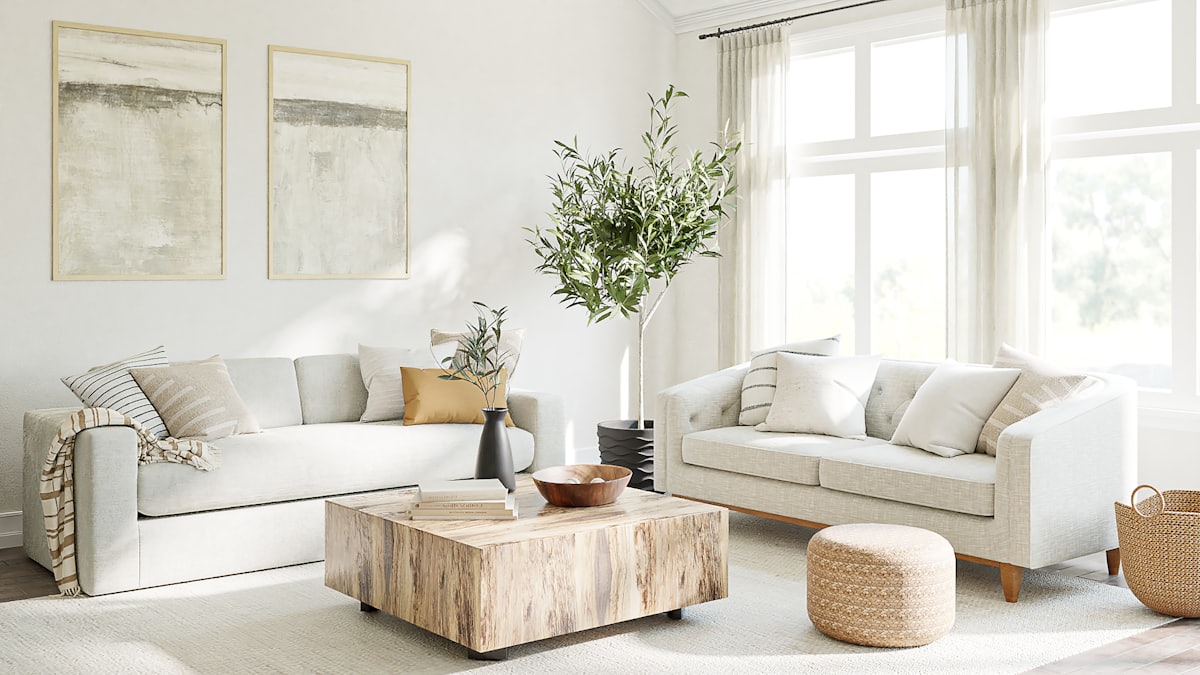
A room reads as designed when a few elements are deliberate and the rest is calm. Twenty small objects do the opposite — they fill every surface and make the space feel busy and cheaper than it is. Interior stylists lean on a handful of anchors precisely because the eye needs places to rest, and empty surface is not a problem to solve.
So resist the dollar-store haul of tiny décor. One good throw folded over the bed does more than a shelf of knickknacks. One warm lamp does more than a string of fairy lights and an LED strip and a salt lamp. When money is tight, subtraction is a free design tool — and it’s the core idea behind home decor ideas on a budget, which is worth reading alongside this.
How do you stretch a thrift budget?
Thrift stores, marketplace apps, and end-of-semester move-out piles are where a student budget multiplies. A few tactics turn cheap into “where did you get that?”:
- Buy the cover, not the pillow. Thrifted or discount pillow covers over inserts you already own cost a few dollars and swap the whole color story of a couch.
- Spray paint unifies. Three mismatched thrifted frames or a dated brass lamp become a matched set for the price of one can of spray paint.
- Time the calendar. Move-out weekends near any campus dump full furniture, lamps, and rugs on the curb and in “free” marketplace posts. Set an alert.
- One statement, thrifted. A single large secondhand mirror or piece of art anchors a wall for under $20 and reflects light like a window.
Thrift-eye takes a few trips to develop — the full method of reading a secondhand piece is in the thrift-store makeover guide, the sister article to this one.
What should you skip entirely?
The fastest way to blow a $100 budget is on things that look cheap no matter what you paid for them, so learning what not to buy protects the anchors that actually matter. A few to walk straight past:
- Matching “decor sets.” Bundles of tiny vases, faux books, and coordinated trinkets read as filler on a shelf. One real object you love beats a matched set of nothing.
- Undersized wall art. A single small print marooned on a big wall makes the room look emptier, not fuller. Go large and thrifted, or group several small frames tightly into one shape.
- Obviously fake plants. A bad artificial plant ages a room the second someone notices. A real low-maintenance one — pothos, snake plant, ZZ — costs less and looks alive; good dried stems are the only safe fake.
- This-semester trend pieces. The very-online color or shape of the month dates fast, and you’ll resent having spent real money on it. Buy neutral bones, and let trends live only in a $5 pillow cover you won’t mind swapping out next year.
Skipping these isn’t deprivation — it’s redirecting the same dollars toward the few things that carry the room instead of crowding it.
How do you avoid wasting the $20s?
The way most student decor budgets actually die is not one big mistake — it’s a slow bleed of $15 and $20 impulse buys that never fit the room and end up in a drawer. The fix is to see the change before you pay for it.
Photograph your room and preview a direction first. Architectural AI lets you drop in a photo and try a warmer, styled version of the space — add plants, test a small-space layout, or see whether a deep-green throw or a rust one suits the room — in about ten seconds. Its palette picker even lets you test an exact color on your real wall before you commit a cent to paint samples or a rug. You’re not designing the whole apartment in an app; you’re settling the one or two “will this actually work?” questions that otherwise cost you a return trip and a restocking fee.
The under-$100 shopping checklist
Take this list to the thrift store and the checkout so the budget lands where it should:
- One lamp and a 2700K warm bulb — light before anything else.
- One large textile — rug, throw, or curtain — in a color you genuinely like.
- One wall moment — a small gallery of thrifted frames, a tapestry, or a removable accent.
- One living thing — a low-maintenance plant in a secondhand pot.
- A few flex finds, chosen slowly, only if they earn their place.
- Nothing bought before you’ve pictured it in the actual room.
Stick to it and the room looks considered, not broke — which is the whole difference.
Before you spend a dollar of that hundred, see the room first. Photograph your space and preview a styled version free on the App Store — no signup, results in about ten seconds — and put the budget only where it earns its keep.
FAQ
Can you really decorate an apartment for under $100? Yes, if you spend on a few high-impact anchors instead of many small pieces. Warm light, one large textile, a single wall moment, and something living carry a room; scattered trinkets just read as clutter and drain the budget.
What should a student spend on first? Warm light first — a lamp with a 2700K bulb changes the mood of a whole room for around $15. Then one large textile (a rug, throw, or curtain), because soft surfaces add the most warmth per dollar.
How do thrift stores stretch a decor budget? Thrift and marketplace finds multiply your budget several times over. Frames, lamps, ceramics, and baskets cost a few dollars secondhand, and a can of spray paint unifies mismatched pieces into a set.
How do I avoid wasting money on decor that doesn’t work? Preview the room before you buy. Photograph your space, test a color or a layout in an AI design app, and only spend once you can see it working — most wasted decor money is small impulse buys that never fit the room.
Keep reading