Which Room to Furnish First? A 6-Month Plan for an Empty House
Furnish the bedroom first — you have to sleep there the first night, and it’s the cheapest room to finish well — then the main living area where your waking hours go, then the kitchen and dining essentials you use daily. Save guest rooms, the home office, and purely decorative spaces for last. Spread the whole thing over about six months so each room is done on purpose, instead of filled in a panic the week you move in.
An empty house is thrilling for about a day, then it starts to feel like a to-do list with no top. The way out isn’t to buy faster — it’s to buy in the right order, one room at a time, starting where it matters most.
Which room should you furnish first?
The bedroom, and it’s not close. Three reasons make it the obvious first move:
- You have to sleep somewhere on night one. A functioning bedroom is non-negotiable in a way a styled living room never is.
- It’s the cheapest room to finish well. A bed, a nightstand, a lamp, some storage, and a curtain for light control — and the room reads done. Compare that to a living room’s sofa, seating, coffee table, rug, and lighting.
- A rested you makes better decisions. Every other room in the house benefits from a homeowner who slept, not one running on an air mattress and adrenaline.
Finish the bedroom, sleep well, and everything downstream gets easier.
Why furnish in this order?
After the bedroom, the sequence follows one honest question: how many hours a week will you actually spend in this room? Spend your early money where your life happens, and let the low-traffic rooms wait.
That gives a natural order: bedroom → primary living area → kitchen and dining essentials → bathrooms and entry → home office (if you work from home) → guest rooms, formal spaces, and decorative rooms last. The guest room that hosts your in-laws twice a year does not deserve a furniture budget before the sofa you’ll sit on every single night. Ranked by hours-per-week, the priorities stop being a debate.
A six-month plan for an empty house
Here’s the sequence laid out as a calm, month-by-month rhythm. Adjust to your life — if you work from home, the office jumps up the list — but the shape holds:
| Month | Focus | What “done” looks like |
|---|---|---|
| 1 | Bedroom + sleep | Bed and mattress, nightstand, lamp, curtains, a dresser |
| 2 | Living room bones | Sofa, a coffee or side table, a warm light source, a rug |
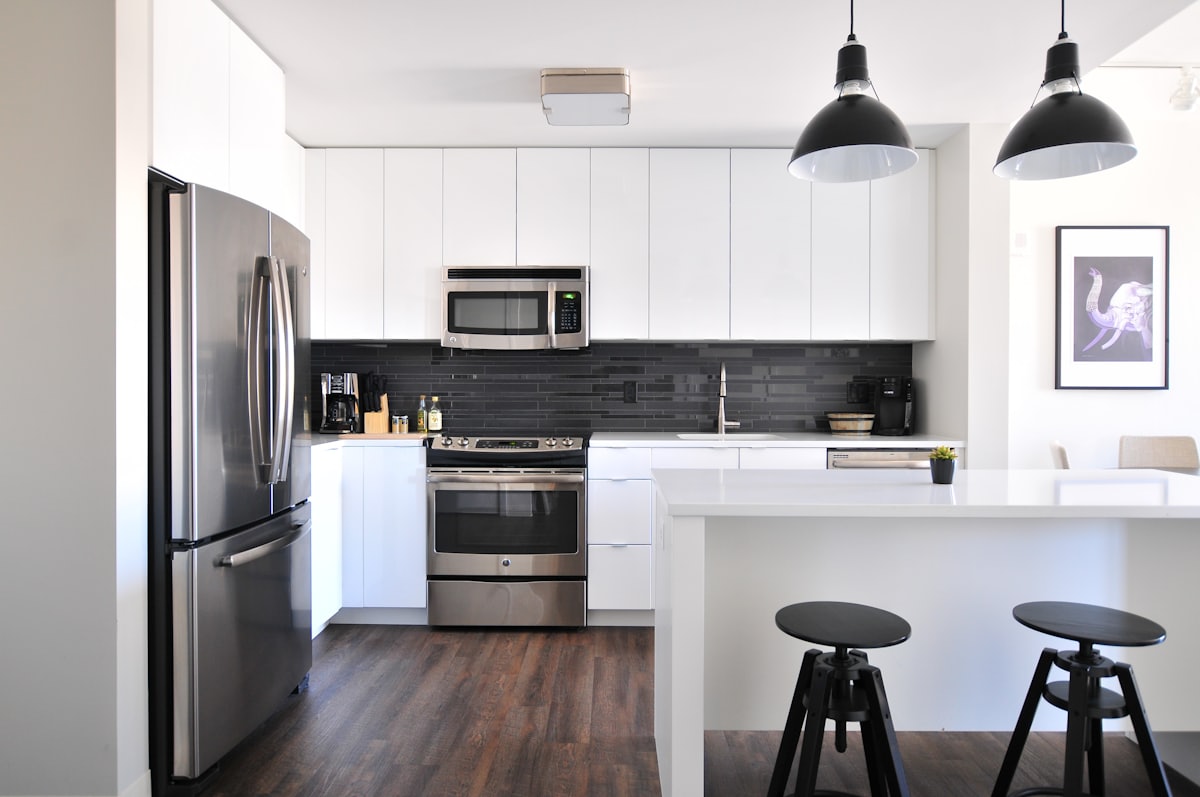
| 3 | Kitchen + dining | Table, enough chairs, the storage that makes cooking work |
| 4 | Bathrooms + entry | Storage, a framed mirror, towels, a landing spot for keys |
| 5 | Office or flex room | Desk, a chair that supports you, task lighting |
| 6 | Refine + personalize | Art, plants, second-priority rooms, paint you waited on |
Notice month six is the first time art and “extras” appear. That’s deliberate. A house furnished in this order is livable from month one and finished — genuinely finished, not just full — by month six. For a step-by-step version of tackling any single one of these rooms, see furnishing an empty room: where to start, and for the bigger-picture settling-in view, how to design a new house after moving in.
How much should you spend each month?
The budget rhythm matters as much as the order. A few rules that keep new owners out of trouble:
- Don’t go house-poor. Keep a real cash cushion, because new homes surprise you — a water heater, an appliance, a repair the inspection missed. Furniture can wait; a broken furnace can’t.
- Buy one good thing, not five mediocre ones. In the high-hours rooms, the best single piece you can afford beats a room full of filler you’ll replace within a year.
- Thrift and wait on the low-traffic rooms. The guest room and the formal dining room are exactly where secondhand and patience pay off.
- Let the room prove it needs the piece. If you’ve lived without something for a month and never once missed it, it wasn’t a priority — that still-empty corner just saved you a purchase you’d have regretted.
Spending in this rhythm means every month the house gets meaningfully better in the room you’re actually living in, without a single stressful, wallet-emptying weekend.
What if you work from home?
If your income depends on a room, that room moves up the list — usually to second or third, right behind the bedroom. A folding table in the corner of the living room is fine for a week, not for a career, and back pain from a dining chair is a false economy. Prioritize a real desk, a chair that supports you for eight hours, and light that won’t wreck a video call, even if it means the guest room waits until next year. This is the one place where “buy the best you can afford” applies hardest, because you’re in it more than any room but the bedroom.
Sharing that room with a guest bed or a partner complicates it, but the order still holds: solve the work setup first, then make it double up or disappear second. A room that earns its keep deserves to be furnished before a room that hosts twice a year.
Lock each room’s direction before you buy
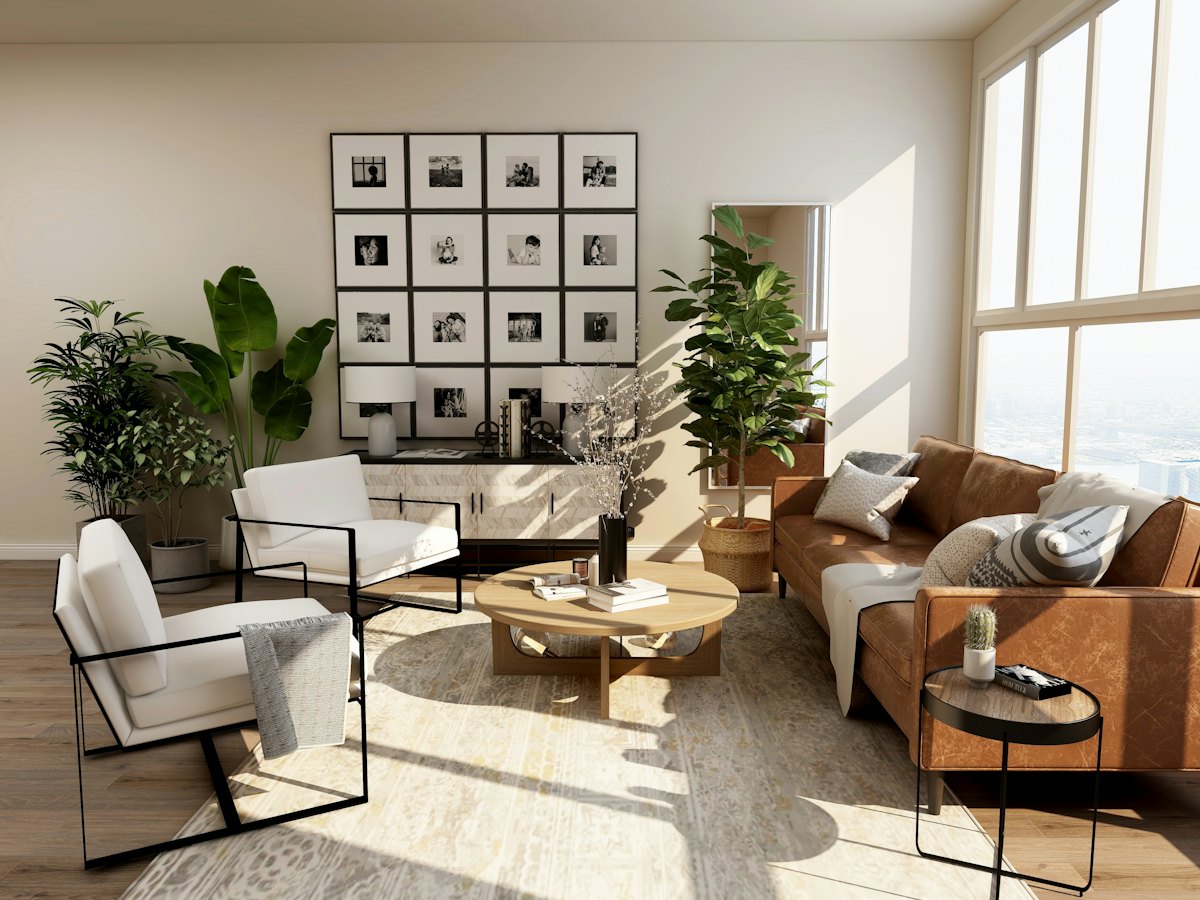
An empty room is genuinely hard to design because there’s nothing there to react to — no scale, no anchor, no reference. That blankness is what leads to panic-buying. The fix is to give yourself a reference before you shop: photograph the empty room and preview a layout and style on it, so you’re buying toward a plan instead of guessing into a void.
Architectural AI turns a photo of an empty room into a furnished, styled preview in seconds — try a few themed worlds to find a full mood, or apply single styles to compare directions on your actual space. You can do this on the live demo before you buy anything. Lock the direction for each room in this plan, and every purchase after that has something to match.
An empty house doesn’t get furnished in a weekend, and it shouldn’t. Start with the bedroom, follow the hours, and give yourself six patient months. You’ll spend less, love more of it, and never once sleep on that air mattress longer than a night.
Want to see an empty room furnished before you spend? Architectural AI is free to download and previews your real space in seconds — try it on the App Store.
FAQ
Which room should I furnish first in a new house? The bedroom. You have to sleep there the first night, it needs only a few pieces to feel finished, and being well-rested helps you make better decisions on every room after it. Then move to the main living area, then kitchen and dining.
In what order should I furnish an empty house? Furnish by hours-per-week: bedroom first, then the primary living area, then kitchen and dining essentials, then bathrooms and entry, then a home office if you work from home, and purely decorative or guest rooms last.
How long should it take to furnish a whole house? Around six months is a healthy pace for most first-time owners. It spreads the cost, keeps a cash cushion for surprise repairs, and lets each room teach you what it needs before you buy for it.
How do I decide on furniture for an empty room I can’t picture? Preview it. An empty room is hard to design because there’s nothing to react to, so photograph it and use an AI preview to test a layout and style before buying — it gives you a reference to commit to.
Keep reading