Blending Two Decor Styles: A Field Guide
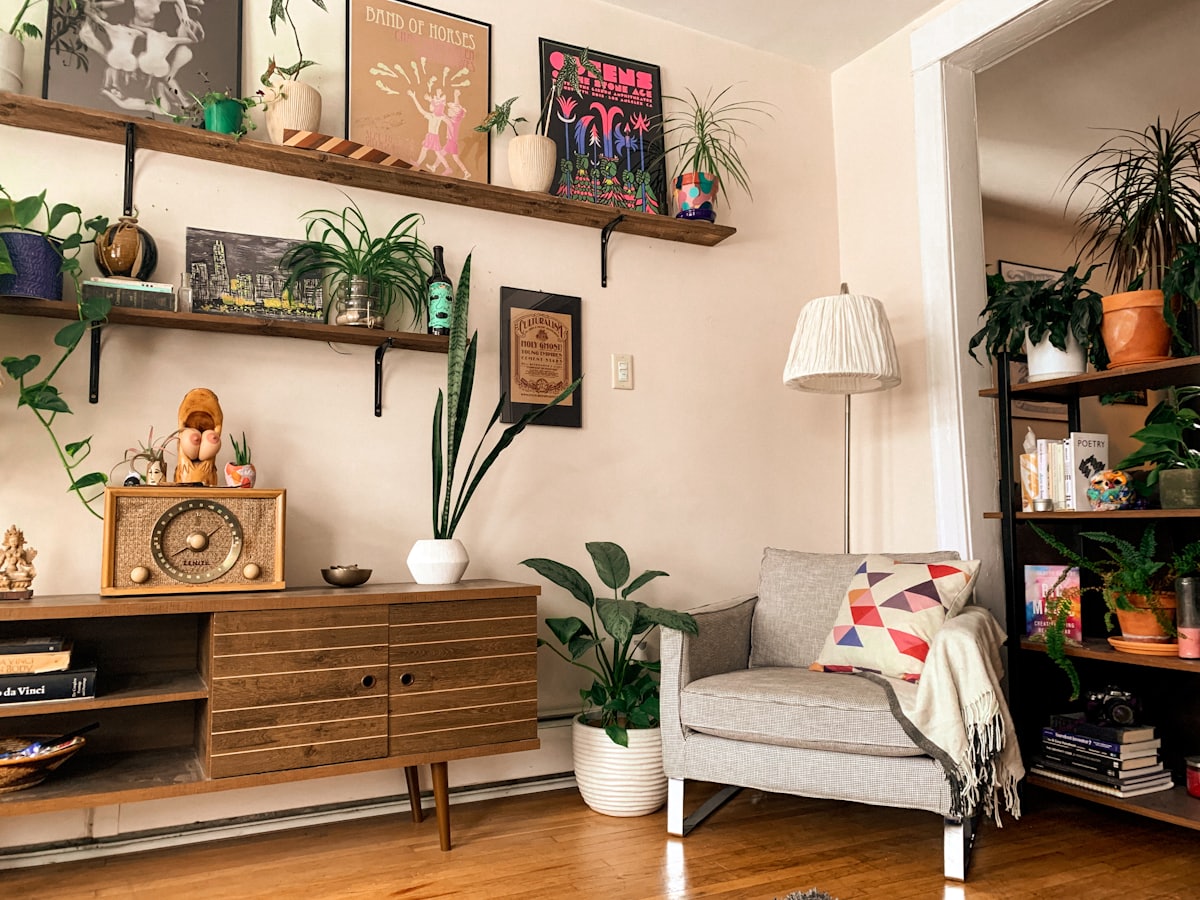
Blending two decor styles comes down to one structural rule and one unifying trick: let one style dominate the room (roughly 70%) while the other plays accent (roughly 30%), and tie the two together with a few bridge elements — a shared palette, a repeated material, and consistent metal finishes. Get that ratio and those shared threads right and almost any two styles can share a room. This is the field guide for doing it deliberately, whether you’re merging two partners’ tastes or just can’t choose between two looks you love.
Why blending styles works better than picking one
Blending is the practice of combining two distinct aesthetics into a single coherent room instead of committing to one off-the-shelf style. And it’s not a compromise — it’s usually the better result. Rooms decorated in one pure, catalog-perfect style tend to look like showrooms: correct, but a little soulless, like nobody actually lives there. The spaces that feel personal and collected almost always mix something austere with something warm, something old with something new. A blend is what a real, lived-in room looks like.
For couples, this is the whole ballgame. When one partner leans minimal and the other leans cozy, “pick a winner” leaves someone unhappy. A blend gives you a room that’s genuinely both — which is why couples so often end their style debates in the middle rather than at one extreme.
The one rule: dominant and accent
The single most common blending mistake is going 50/50 — half industrial, half farmhouse, in equal measure — which reads as indecision, not design. Instead, pick a dominant style that sets the room’s bones (walls, big furniture, flooring feel) and an accent style that adds personality through smaller, swappable pieces. A rough 70/30 split gives the eye a clear “home base” while the accent supplies contrast. If you’re not sure which should lead, let the room decide: the dominant style is usually whichever suits the architecture and light you already have.
A simple way to assign the ratio: whichever style you’d be comfortable seeing on the walls and the largest pieces is your dominant; the other lives in textiles, art, lighting and accessories, where it’s cheap and easy to adjust. Because the accent lives in the swappable layer, you can dial the blend over time — start subtle, then push it further once you see how the room reads. Keeping the loud style in the changeable pieces is also what makes a blend forgiving: if the mix ever tips too far, you’re moving cushions, not replacing a sofa.
Bridge elements: the threads that hold a blend together
A bridge element is a single design thread — a color, a material, or a finish — repeated across pieces from both styles so they read as one intentional collection rather than a collision. Bridge elements are the difference between “eclectic” and “messy.” The reliable ones:
- A shared palette. Limit the whole room to two or three colors that appear in pieces from both styles. When an industrial steel shelf and a boho rug share the same warm terracotta, they suddenly belong together. Testing exact shades on a photo of your actual wall with a palette picker keeps the color story tight.
- A repeated material. Let one material — most often a wood tone — recur throughout, so the same walnut ties the modern table to the rustic bench.
- Consistent metals. Matching your metal finishes (all brass, or all matte black) across lamps, hardware, and frames is a tiny change that instantly makes a mixed room feel curated.
- A shared sense of scale and negative space. Give the busier style room to breathe. Empty wall and floor space is itself a unifier — it lets two different vocabularies coexist without shouting over each other.
A field guide to named blends
The easiest way to blend is to borrow a combination that’s already proven. Each of these pairs an austere style with a warmer one — the classic recipe for a blend that has structure and soul.
| Blend | What it combines | Bridge elements | Best for |
|---|---|---|---|
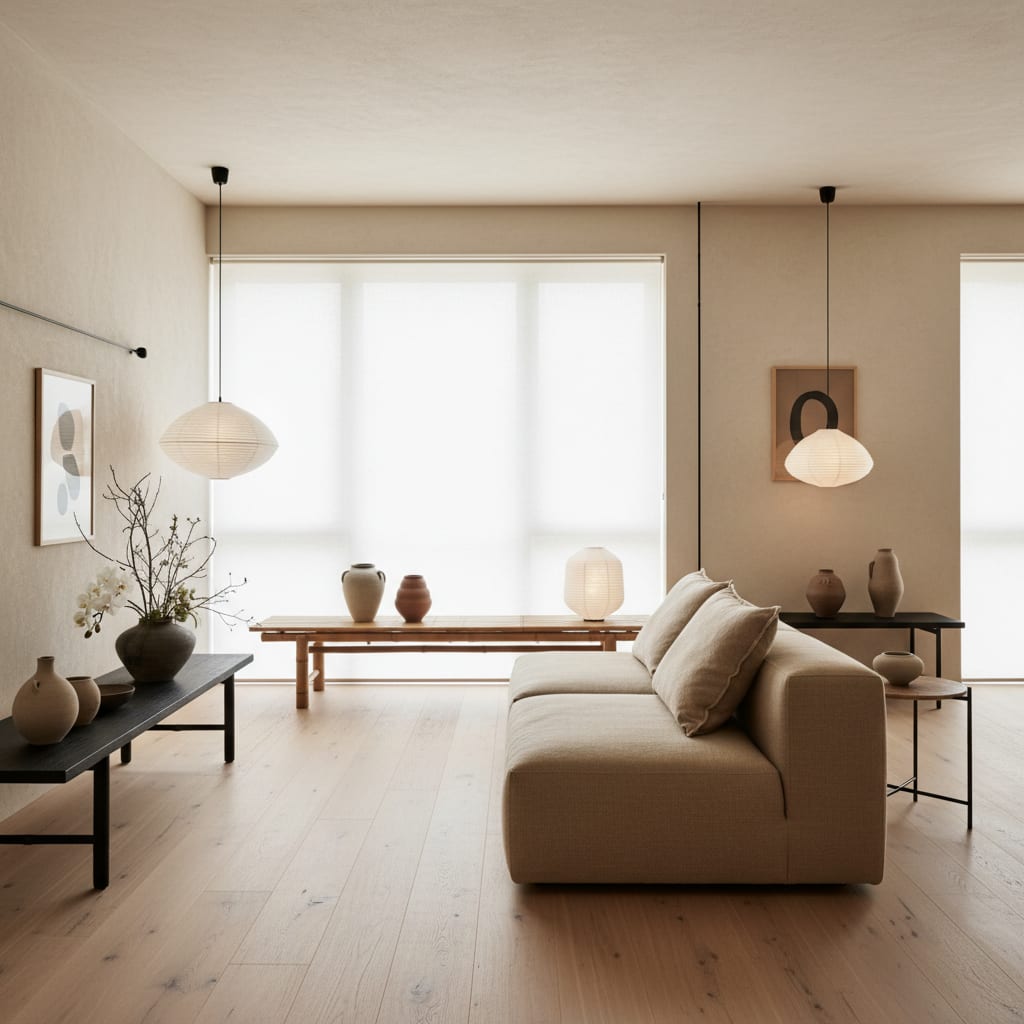
| Japandi | Japanese minimalism + Scandinavian warmth | Light woods, muted earth palette, low clean-lined furniture | Couples split between “too stark” and “too cluttered” |
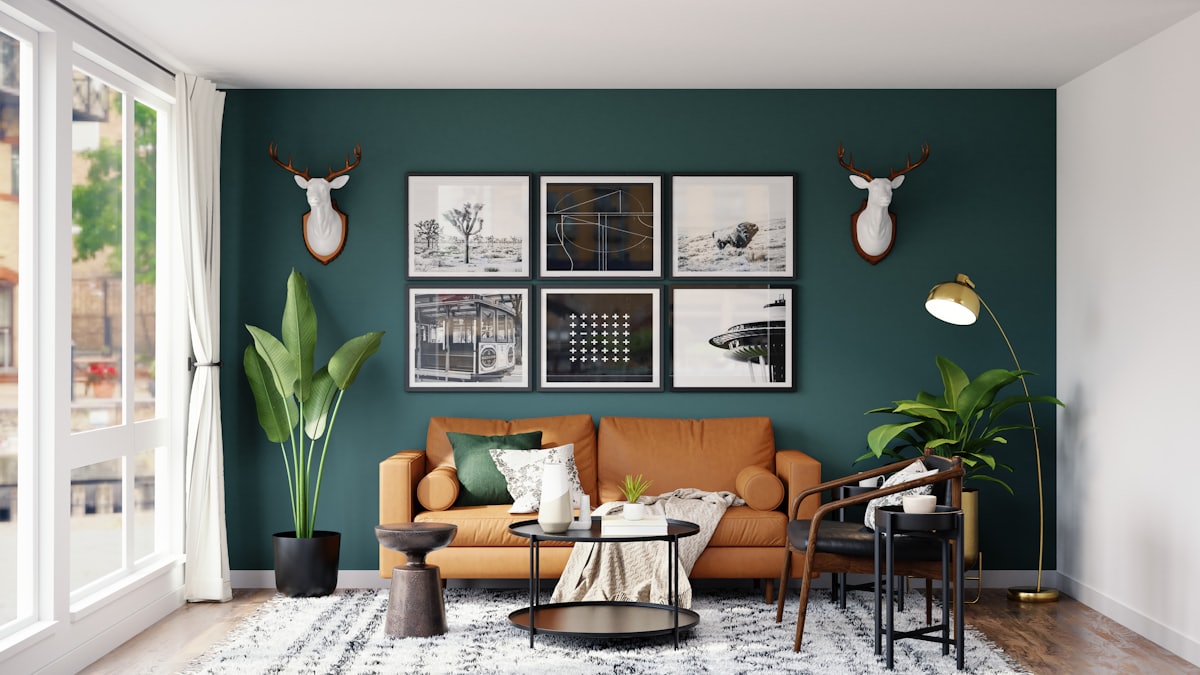
| Modern industrial | Raw industrial (brick, steel, concrete) + boho softness | Warm wood, leather, layered textiles, lots of plants | Lofts and open plans that feel cold on their own |
| Transitional | Classic/traditional + contemporary | Clean-lined traditional silhouettes, neutral palette, subtle texture | Making inherited or traditional pieces feel current |
| Modern farmhouse | Rustic country + modern minimalism | Reclaimed wood, black metal, crisp white walls | Warming up a modern build without going full country |
| Coastal Scandi | Airy coastal + Scandinavian simplicity | Pale woods, white-and-blue palette, natural fibers | Bright rooms that want calm, not kitsch |
Japandi is worth calling out because it’s the most reliable peacemaker of the bunch — genuinely minimal and genuinely warm at once. If it sounds like your middle ground, the full Japandi design guide breaks down the palette and pieces, and you can preview your own room in it via the Japandi style.
Where blends go wrong (and how to fix it)
- No dominant style. The 50/50 trap. Fix it by demoting one style to accent — you’ll be surprised how quickly the room resolves.
- Missing bridge elements. Two styles with nothing in common look like a mistake. Add one shared color or repeat one material and the whole thing clicks.
- Competing focal points. If each style brings its own loud hero piece, they fight. Pick one focal point and let the other style support it.
- Clashing scale. A delicate antique next to a chunky industrial slab can jar. Match visual weight, or use negative space to give each room to be itself.
Preview your blend before you commit
Blending is exactly the kind of thing that’s hard to picture and expensive to get wrong — you can’t really know if industrial-plus-boho works in your light until it’s assembled. So preview it first. An AI room preview is a photorealistic mock-up generated from one photo of your real room, so you can see your space rendered in a specific blend in about ten seconds, then use the before/after slider to judge it against the room as it stands. Generate a couple of ratios — more minimal, more cozy — and one will usually feel obviously right. Try it on your own room in the interactive demo before you buy a single piece or open a can of paint.
Frequently Asked Questions
How do you blend two decor styles?
Pick one style as the dominant base (about 70%) and the other as the accent (about 30%), then tie them together with bridge elements — a shared palette, a repeated material and consistent metal finishes. That dominant-plus-accent structure keeps a blend from looking like two rooms fighting.
What is a bridge element in interior design?
A bridge element is a single design thread — a color, material or finish — repeated across pieces from two different styles so they read as one intentional collection. Shared bridge elements are what separate a deliberate blend from a mismatch.
What are examples of blended interior styles?
Japandi blends Japanese minimalism with Scandinavian warmth; modern industrial softens raw brick and metal with boho textiles and plants; and transitional style bridges classic and contemporary with clean-lined traditional shapes. Each pairs an austere style with a warmer one.
How do I know if two styles will work together before buying?
Preview the blend on a photo of your real room first. Generating your space in a hybrid direction shows whether the two styles cohere in your actual light and proportions, so you commit to furniture and paint only after you’ve seen it work.
Trying to merge two tastes into one room? See the blend before you buy with Architectural AI — download it on the App Store, photograph your space, and preview your two styles as one on your own room.
Keep reading