Small Airbnb, Big Reviews: Design That Photographs Larger
A small Airbnb photographs larger when you strip visual clutter, maximize light, and use scale tricks that give the eye room to breathe — not when you cram in more furniture to “fill” it. Space you can see reads as space, so the winning formula is an uncluttered frame, bright even light, a well-placed mirror, and storage that keeps guests’ stuff out of sight. Plan the declutter with an AI preview to build your photo-day shot list, then tidy and shoot the real room. Here’s how to make a compact rental feel generous and earn big reviews.
Why do small rentals photograph small — and how do you fix it?
The reason small rooms look cramped in photos usually isn’t the square footage — it’s visual weight: the amount of stuff, contrast and clutter competing for attention in the frame. A room’s perceived size is driven by how much empty, calm surface the eye can find. Bare floor, unbroken wall, and clear tabletops all read as “room to spare,” while a busy surface reads as “no space left.”
That’s good news for hosts, because visual weight is almost entirely under your control. You don’t need to knock down a wall; you need to remove clutter, lift furniture off the floor visually, bounce in light, and shoot smart. Every trick below is really the same move — reduce visual weight so the space can breathe.
Scale tricks that make a small Airbnb feel bigger
- Declutter first, always. The single biggest lever. Clear surfaces, hide cables, remove anything that isn’t earning its place. An empty counter photographs as generous space.
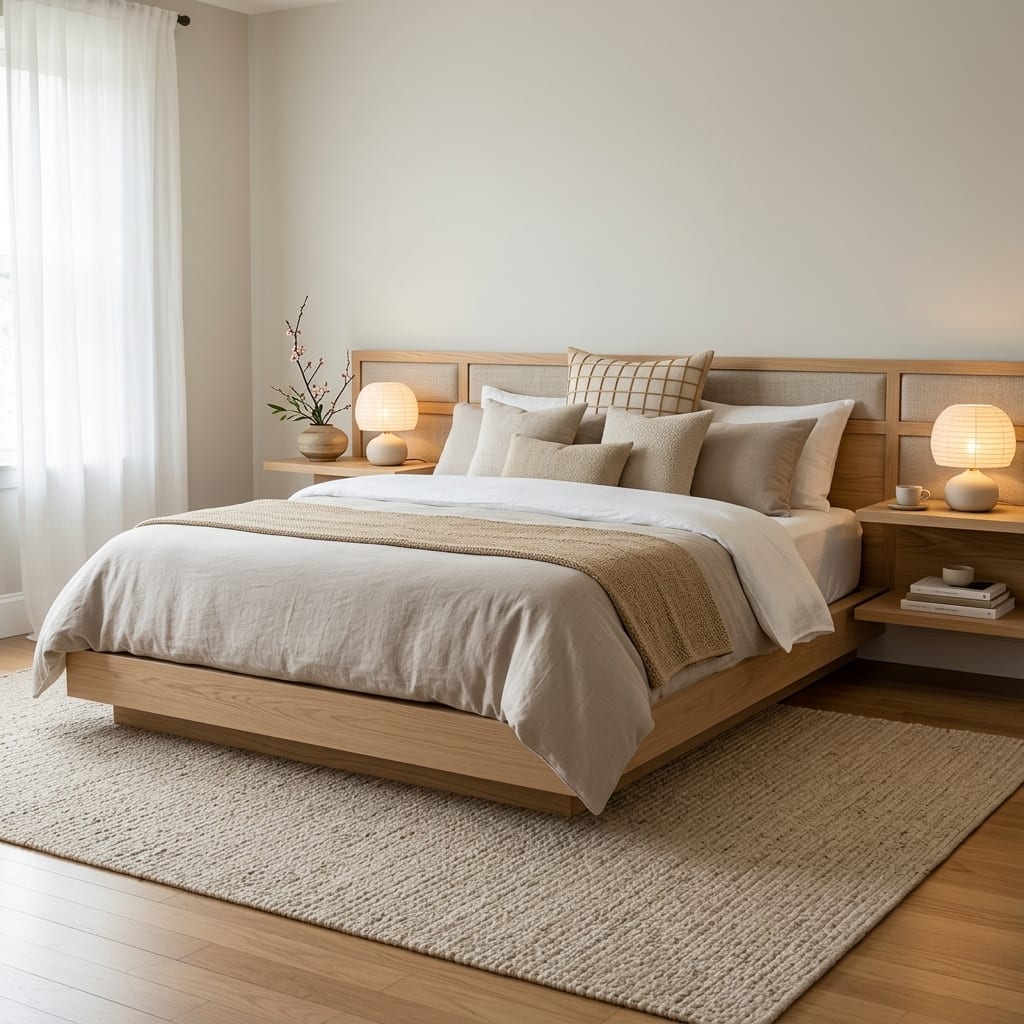
- Choose furniture with visible legs. Sofas, beds and chairs raised on legs let the floor show through underneath, which the eye reads as more floor — and more room.
- Keep furniture low and appropriately scaled. A too-big sofa or a tall, heavy wardrobe eats a small room. Lower profiles keep more wall visible above them, lifting the ceiling perceptually.
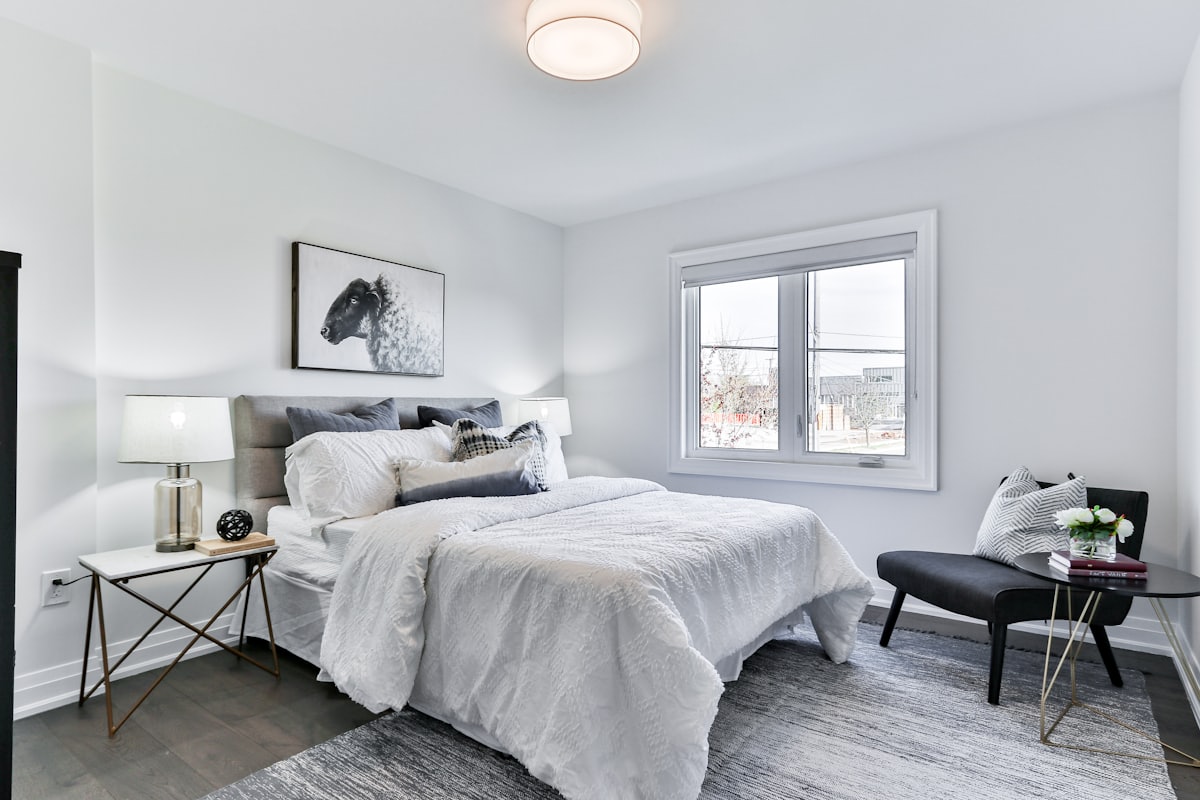
- Go light and tonal. Pale walls and a palette that doesn’t jump around visually make edges recede. High contrast chops a small room into pieces; soft tonal color makes it feel continuous and larger.
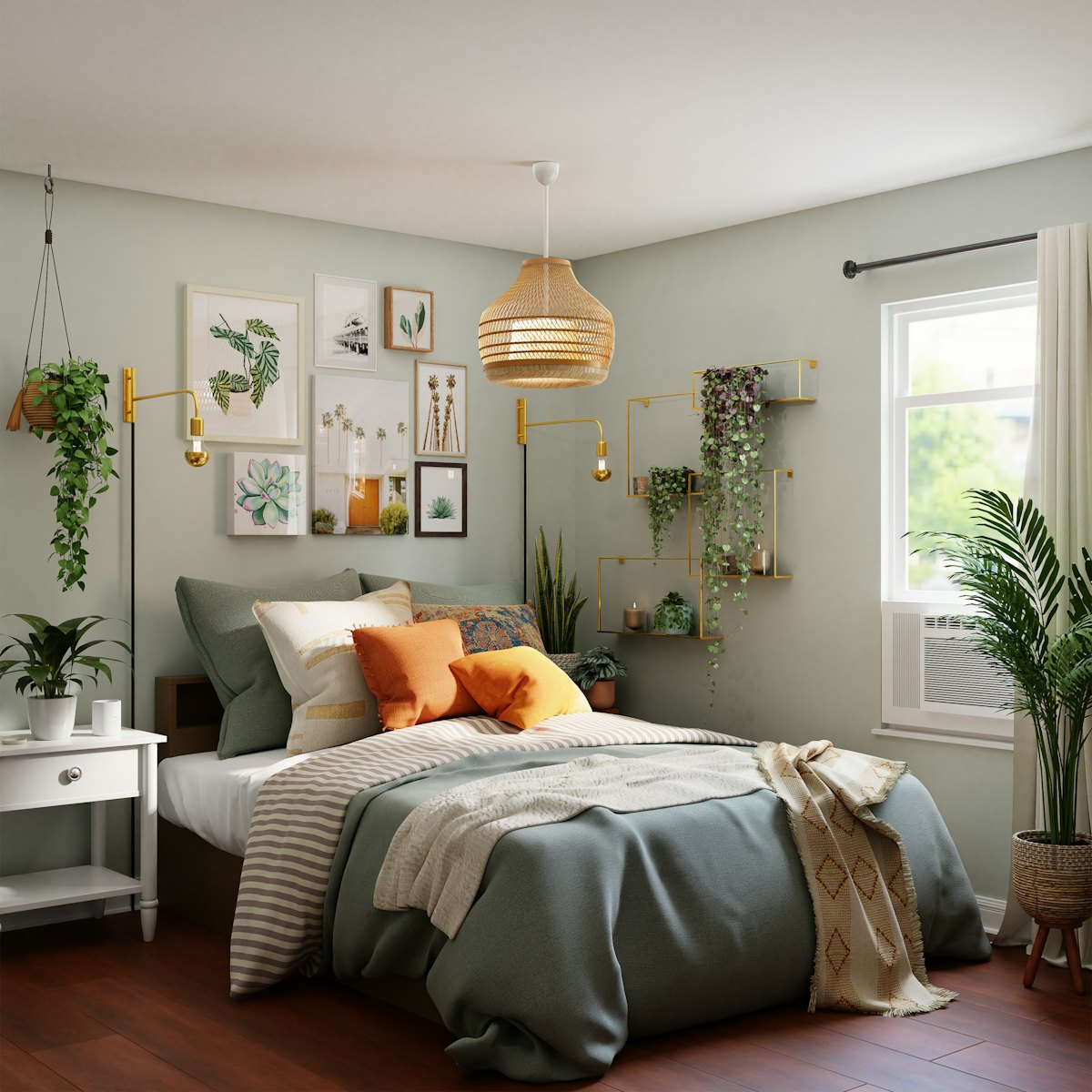
- Leave negative space on purpose. Resist filling every corner. One empty, styled corner signals abundance more than three full ones.
- Use vertical lines. Floor-to-ceiling curtains hung high and wide, or a tall narrow bookshelf, draw the eye up and make ceilings feel taller.
One more that hosts get backwards: use a rug that’s large enough to sit under the furniture, not a small mat floating in the middle. A too-small rug visually chops the floor into fragments and shrinks the room, while a generous rug with the front furniture legs resting on it unifies the space and reads as bigger. In a compact room, one large, low-contrast rug does more than any amount of small decor.
For the deeper version of these principles, our guide to small apartment design goes further, and the design mistakes that make a room look smaller covers the traps to avoid.
Mirror and light placement
Light is the other half of feeling spacious, and mirrors are how you multiply it.
- Put one large mirror opposite or beside a window. It bounces daylight deeper into the room and visually doubles the sense of space. One big mirror beats a cluster of small ones, which just adds visual weight.
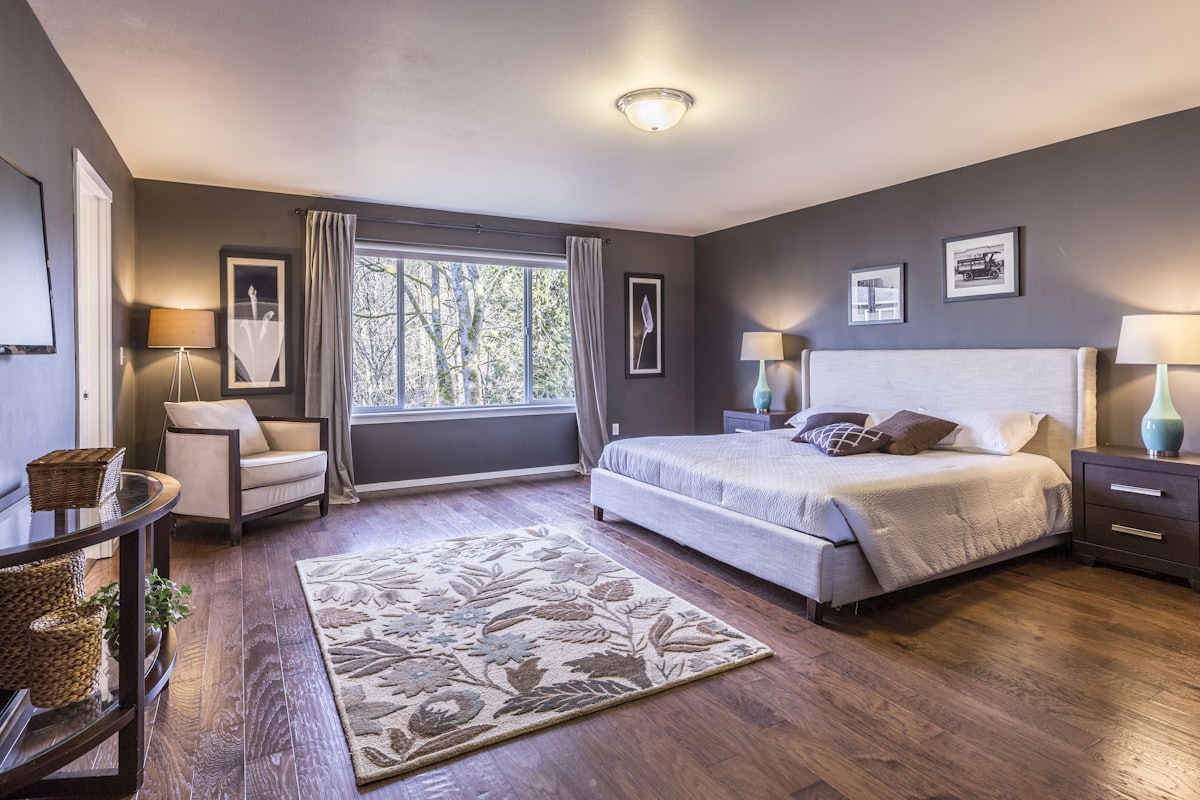
- Layer the artificial light. A small room lit by a single harsh overhead feels like a cell. Two or three warm light sources at different heights — a floor lamp, a bedside lamp — give it depth and warmth.
- Free the windows. Keep window areas clear and dress them with sheers or high-hung curtains so the maximum amount of daylight gets in. Natural light is the cheapest “square footage” you’ll ever add.
- Warm, consistent bulbs. Mismatched color temperatures make a space feel patchy and smaller. Standardize on warm white throughout.
Storage guests actually use
Storage in a small rental has two jobs: keep your stuff out of the photo, and give guests somewhere obvious to put theirs so the room stays uncluttered during the stay. The mistake is optimizing for hidden capacity guests never touch.
What guests on a short stay genuinely use:
- Luggage space. A clear spot — a luggage rack, a bench, an empty shelf — where a suitcase lives open without blocking a walkway. This is the number-one storage need and the most overlooked.
- A few open hooks. By the door and in the bathroom, for coats, bags and towels. Guests hang; they rarely fold.
- Somewhere to hang clothes. Even a slim rail with a handful of hangers reads as thoughtful.
- A clear bedside surface. For a phone, glasses and a charger. Keep it empty so it stays useful.
Everything else — your supplies, spare linens, cleaning kit — should be behind closed storage, out of both the guest’s way and the camera’s frame. Guests don’t unpack into deep drawers for a weekend, so accessible-and-obvious beats deep-and-hidden.
Declutter-mode previews for photo day
The highest-leverage thing you can do before shooting a small rental is see it clean first — and this is exactly what a declutter preview is for. Upload a photo of the room and a one-tap declutter or clean-room mode shows it stripped of visual noise in seconds. That preview becomes a precise shot list: everything the AI removed is something you physically clear before the camera comes out. Seeing the calm version first is also weirdly motivating — it’s much easier to tidy toward a target you can already picture. Our piece on virtual decluttering digs into why seeing the clean version beats relying on willpower.
You can also preview scale decisions the same way: test whether a lower sofa, a lighter wall color, or a mirror on that wall actually opens the room up on your specific layout before you buy or move anything. With results in seconds and no signup, it’s a few minutes on the interactive demo.
Then the rule every host must follow: the AI preview is for planning, not for your listing. Your photos must show the real room a guest will stay in. So you preview the declutter, physically tidy and stage the actual space, and photograph that. An honestly-shot small room that’s been styled to breathe will out-book a cramped one every time — and it won’t blindside guests on check-in. For the full host playbook, see AI room makeovers for Airbnb hosts.
Frequently Asked Questions
How do I make a small Airbnb look bigger in photos?
Declutter hard, shoot in bright even light, frame straight-on from a corner to show depth, keep furniture low and legs visible, and let the floor and walls breathe. Space you can see reads as space, so an uncluttered, well-lit frame photographs larger than a busy one.
Where should I put mirrors in a small rental?
Place a mirror opposite or adjacent to a window so it bounces daylight into the room, and use one large mirror rather than several small ones. It visually doubles the light and depth, which makes a compact space feel and photograph bigger.
What storage do Airbnb guests actually use?
Luggage space, a few open hooks, a clear surface by the bed, and somewhere to hang clothes. Guests rarely unpack into deep drawers for a short stay, so prioritize obvious, accessible spots over hidden capacity — and keep it uncluttered so it reads as generous.
Can AI show my small room decluttered before I shoot?
Yes. A one-tap declutter or clean-room preview shows the space stripped of visual noise in seconds, giving you a shot list of what to physically remove before photo day — then you tidy the real room and shoot it honestly.
Making a compact rental photograph its best? Preview it first with Architectural AI — download it on the App Store, test declutter, lighting and scale tricks on a photo of your actual room, then tidy the real space and shoot the honest photos that earn big reviews.
Keep reading